

Circuit Diagram
A Circuit Diagram is one of the simplest ways to understand how electricity flows through a circuit. Have you ever looked at the wiring of a gadget and wondered, “How do electricians understand all these connections?”
Well, they do not guess, they read circuit diagrams!
This is exactly why it makes sense to learn about circuit diagrams at a student level. This article provides insights into what a circuit diagram is and the symbols used.
Table of Contents
- What is a Circuit Diagram?
- How do We Read a Circuit diagram?
- Important Components Symbols of Circuit Diagram
- Example of Circuit Diagram
- Types of Circuit Diagram
- Frequently Asked Questions on Circuit Diagram

What is a Circuit Diagram?
A circuit diagram (also called an electrical diagram or electronic schematic) is like a map for electricity. It shows how all the parts of a circuit are connected, but in a simple, easy-to-understand way.
Have you ever wondered how your phone, fan, or light bulb works inside? Understanding circuit diagrams is like having a map of electricity; it shows how all the components are connected and how current flows through a circuit.
Instead of drawing real pictures of wires, bulbs, or batteries, circuit diagrams use standard symbols. This makes it easier for electricians, technicians, or students to see how the components relate to each other and how electricity flows through the circuit.
Now, let's understand how exactly a circuit diagram can be read in the next section.
How Do We Read a Circuit Diagram?
Now we already know that understanding a circuit diagram is like reading a map for electricity. Let’s take a look at a simple circuit diagram.
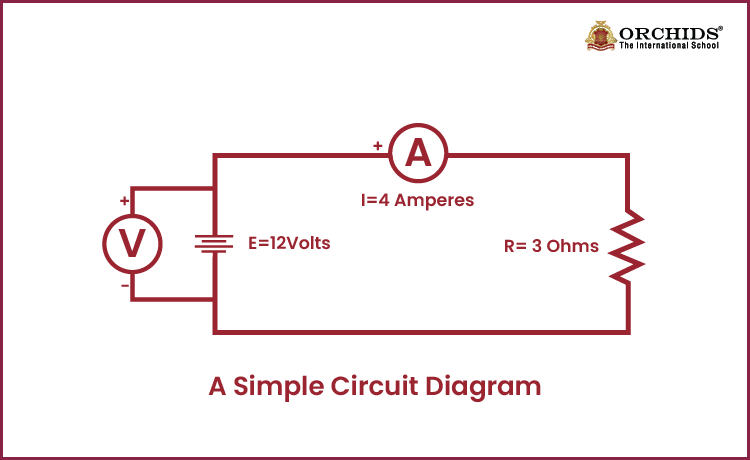
Here, in the above circuit diagram, components such as a voltage source, a voltmeter, an ammeter, and a resistor are shown.
By learning the symbols for each component, such as resistors, capacitors, inductors, switches, and more, we can easily see how the different parts are connected and how electricity flows through the circuit.
Important Component Symbols of Circuit Diagram
Now that we know what a circuit diagram is, let’s explore the important symbols you’ll see in most circuits. Learning these symbols of components is like learning the alphabet of electricity!
1.Wire and Connection Symbols
- A wire joint is shown as a dot where two or more wires meet, indicating that the wires are electrically connected at that point.

- When wires cross without a dot, it means they do not connect and are simply passing over each other.

2. Power Supply Symbols
- A Battery is made of two or more electric cells connected in series. The positive terminal of one cell connects to the negative terminal of the next. Batteries give more power than a single cell, perfect for bigger circuits.
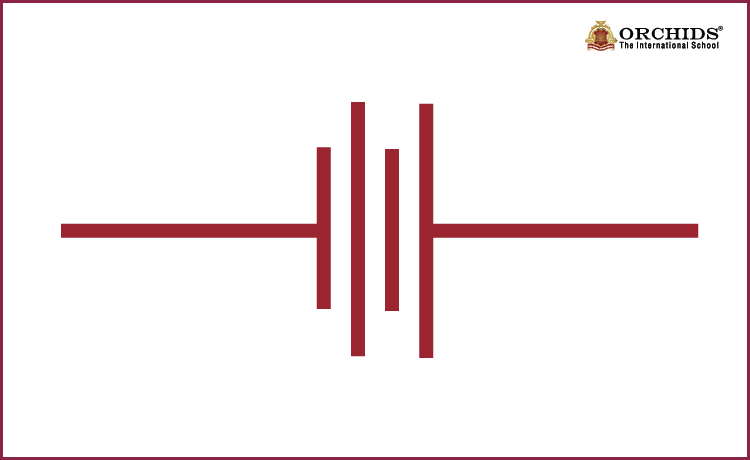
- A DC supply provides electrical energy, and DC (Direct Current) always flows in one direction.
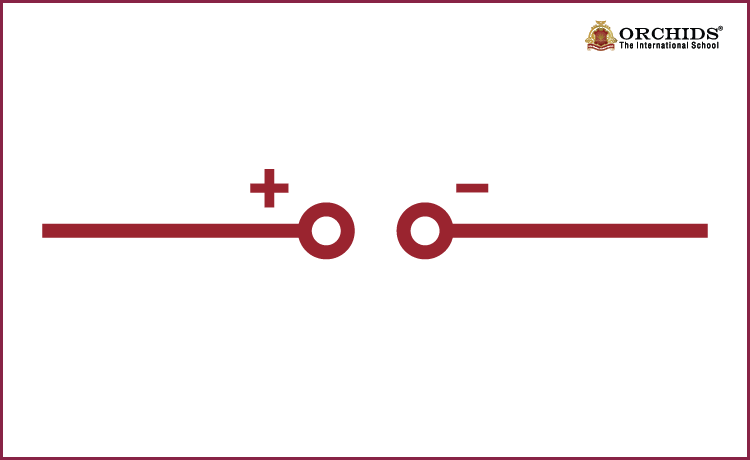
- An AC supply also provides electrical energy, but AC (Alternating Current) keeps changing its direction.

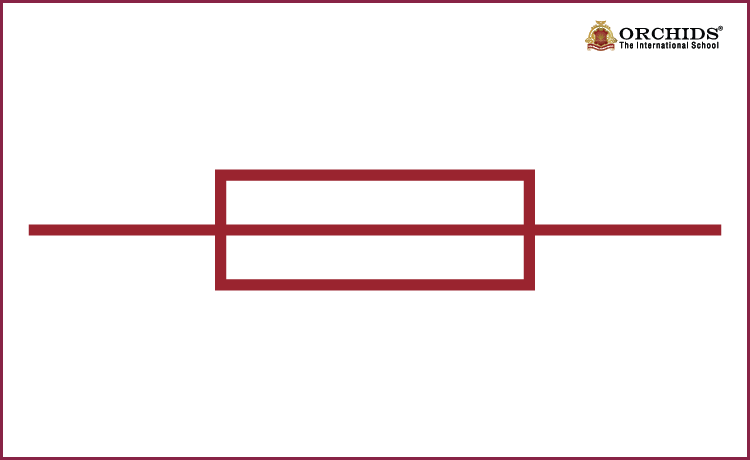
- A fuse is a safety device that melts or “blows” if too much current flows, protecting the circuit from damage.
- A transformer has two coils linked by an iron core and is used to increase or decrease AC voltage; the energy transfers through the magnetic field, so the coils are not electrically connected.

- The earth (ground)symbol shows a connection to the earth or the 0V reference point of a circuit, depending on whether it is mains power or an electronic circuit.
-Symbol.webp "Earth (ground) Symbol")
3. Output Device Symbols
- An electric bulb is represented by a circle with a cross inside, which shows the filament that lights up. For example, the light bulbs in your room can be drawn using this symbol in a circuit diagram.

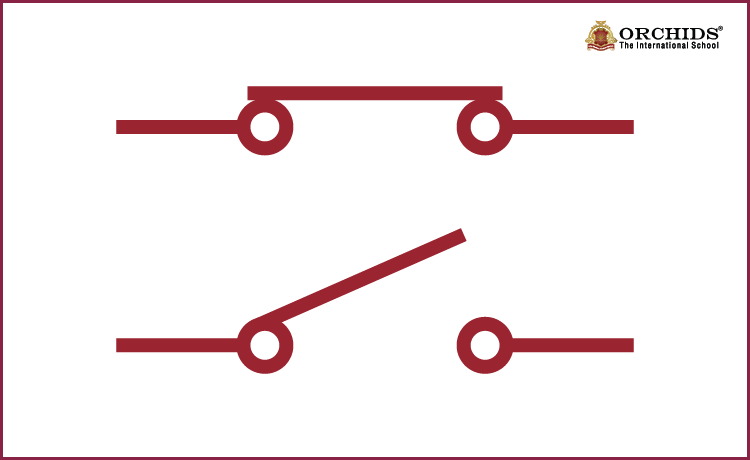
4. Switch Symbols
- A switch is shown as a line with a gap. When the switch is closed, the gap is bridged and current flows, and when the switch is o pen, the gap remains and the current stops. Switches are used to turn circuits on or off.
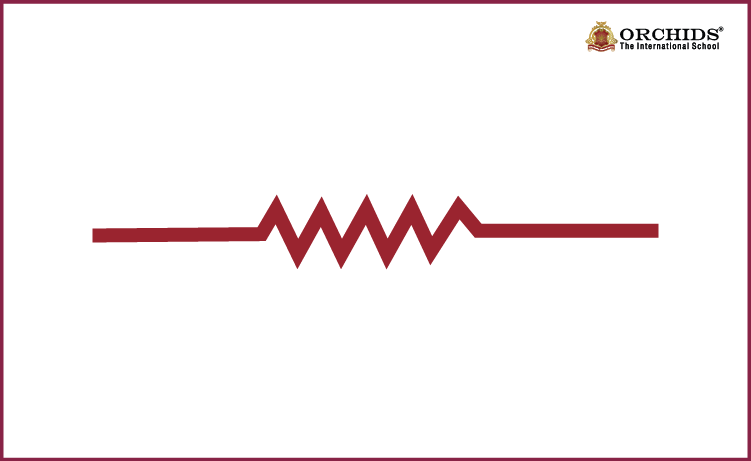
5. Resistor Symbols
- A resistor is shown as a zigzag line and is used to limit the flow of electric current, protecting other components in the circuit.
- A variable resistor, also called a rheostat or potentiometer, is shown as a resistor symbol with an arrow across it. Its resistance can be adjusted, like in a radio’s volume control or a fan speed regulator.

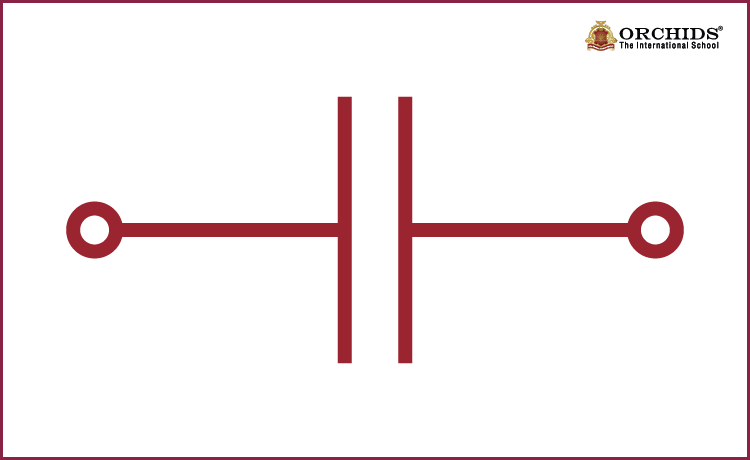
6. Capacitor Symbols
- A fixed capacitor is represented by two parallel lines with a space between them. It stores electric charge and is not polarized, so it can be connected in any direction.
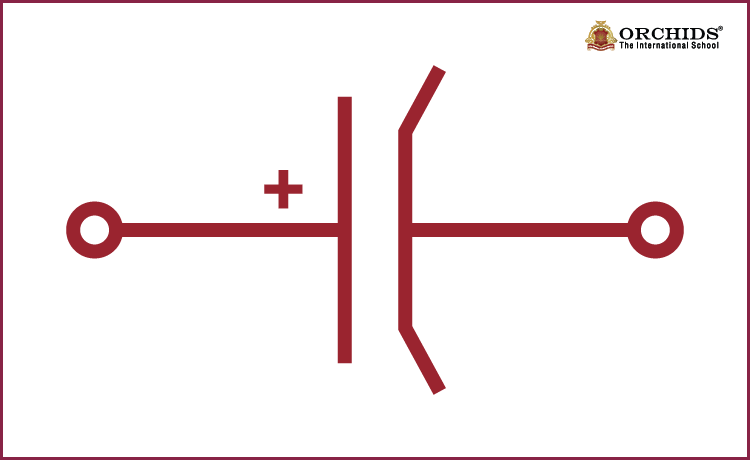
- A polarized capacitor has one curved line (positive) and one straight line (negative), and must be connected in the correct direction. An example is an electrolytic capacitor used in circuits.
7. Diode Symbols
- A diode is a device that allows electric current to flow in only one direction.

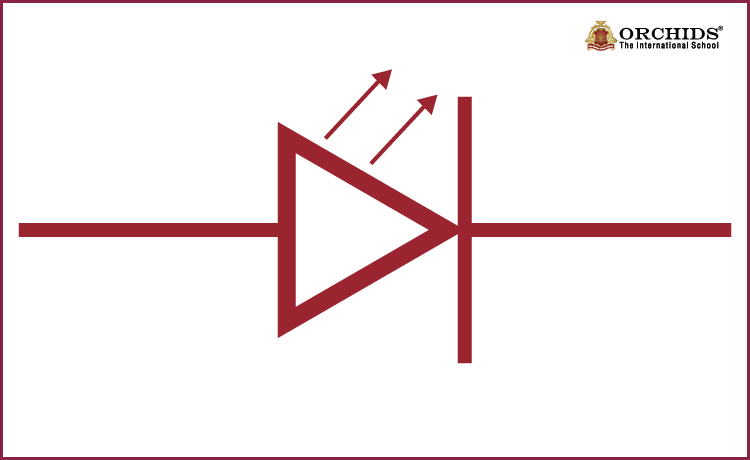
- An LED is a device that converts electrical energy into light. It is the most common light-producing electronic component.
- A Zener diode is used to maintain a constant (fixed) voltage in a circuit.

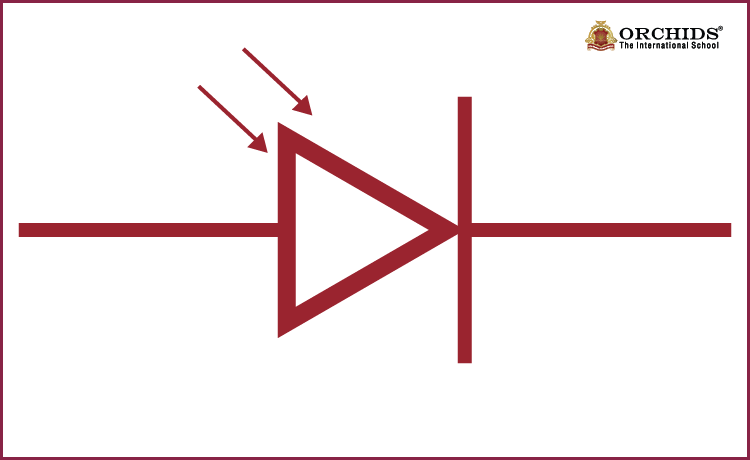
- A photodiode is a light-sensitive diode that produces current when light shines on it.
8. Transistor Symbols
Transistors are special components that can amplify current or act as switches in a circuit. Here are the common types of transistors:
- NPN Transistor amplifies current and can be used with other components to make amplifiers or switching circuits. Most students use NPN transistors first when learning about BJTs.

- PNP Transistor works similarly to NPN transistors but with opposite current flow. Used for amplifying or switching circuits.

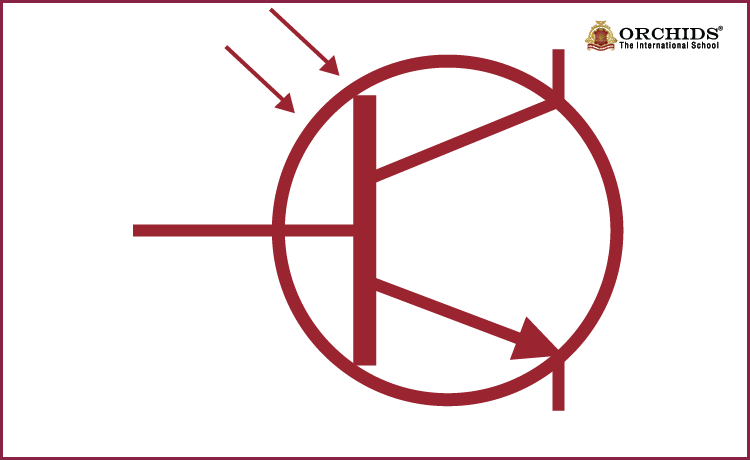
- A phototransistor is a light-sensitive transistor that allows current to flow depending on the amount of light falling on it. Often used in light sensors or automatic lighting circuits
9. Meters
- An Ammeteris shown as a circle with the letter “A” inside and is used to measure electric current.

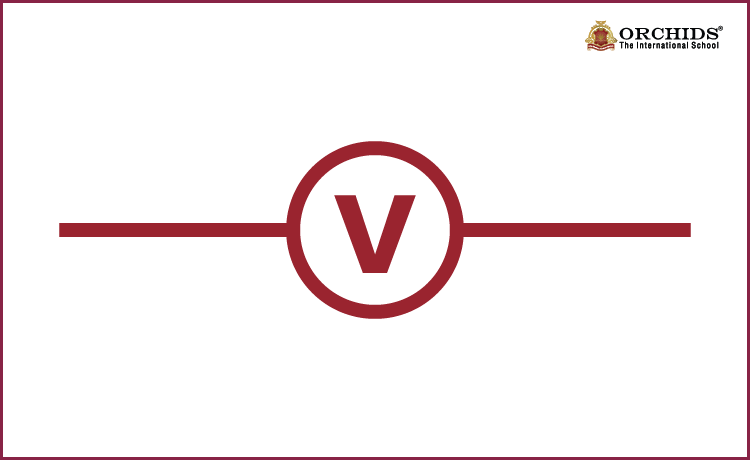
- A Voltmeter is represented by a circle with the letter “V” inside and is used to measure the voltage or potential difference between two points.
- A Galvanometeris a very sensitive meter used to measure tiny currents, usually 1 mA or less. It can detect small changes in current that an ammeter may not notice.
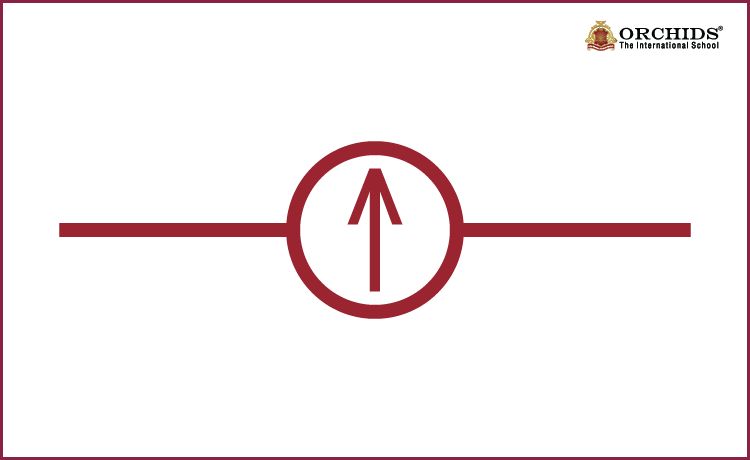
- An Ohmmeter measures the resistance of a component or circuit. Most multimeters have an ohmmeter setting, making it easy to check resistors or wires.

10. Inductor
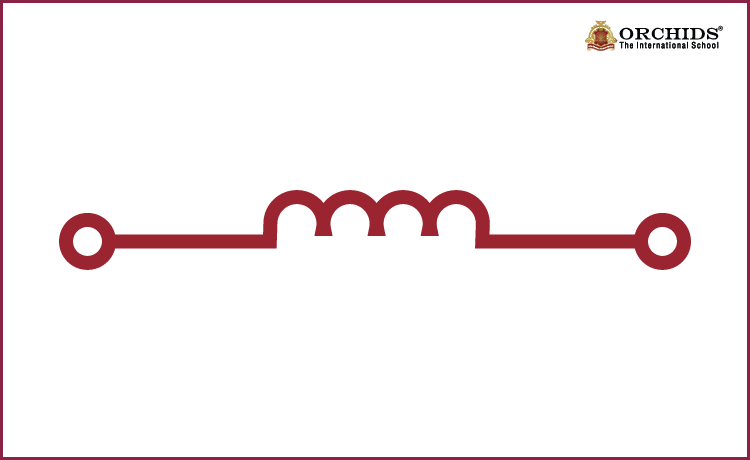
- An inductor is shown as a coil of loops and stores energy in the form of a magnetic field.
Example of Circuit Diagram
Let’s look at a simple example to understand how electric circuit diagrams work.
Example: A single electric cell is connected to a switch and a bulb to form a basic electric circuit.
Solution: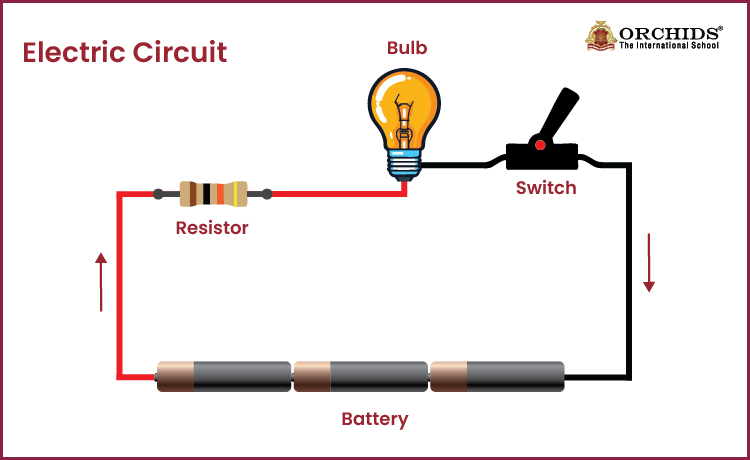
To represent this circuit in diagram form, we include:
- One electric cell (positive and negative terminals shown)
- A switch connected in series with the cell
- A bulb connected after the switch
- Wires that join all the components in a complete loop
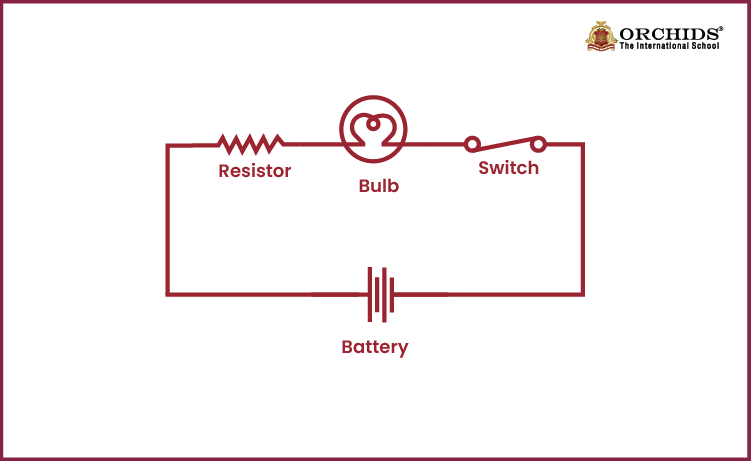
When the switch is open, the circuit is incomplete, and the bulb stays OFF.
When the switch is closed, the circuit becomes complete, allowing current to flow from the cell to the bulb, making it glow.
Types of Circuit Diagram
There are six main types of electric circuit diagrams used to represent electrical circuits. Let's discuss them one by one,
- A block diagram represents different parts of a system using simple blocks connected by lines.
- A schematic diagram is a 2D technical drawing of a circuit. It shows how components are connected using standard electrical symbols, but it does not show the physical appearance of the components.
- A pictorial diagram uses pictures or realistic icons of the components along with labels. This helps beginners easily identify parts of a circuit.
- A single-line diagram, which is also called a one-line diagram, represents a three-phase power system using single lines and standard symbols.
- An open circuit is a circuit where the current does not flow because the path is incomplete.
- A closed circuit is a circuit where the current flows uninterrupted from the power source to the load and back through wires.
Till now, we have learned that electric circuit diagrams make it easier to read, draw, and analyse any electrical circuit. With the right symbols and structure, even complex circuits become simple to understand.
Frequently Asked Questions on Circuit Diagram
1. What is a circuit diagram?
A circuit diagram is a visual representation of an electrical circuit using standard symbols to show components and their connections.
2. How to make a circuit diagram simply?
To make a circuit diagram, identify the components, use the correct symbols for each part, and connect them with lines (wires) to show how current flows.
3. What are the five types of circuit diagrams?
The five common types are: Block Diagram, Schematic Diagram, Pictorial Diagram, Single-Line Diagram, and Circuit Layout (Open or Closed circuit representation).
4. Why are circuit diagrams important?
Circuit diagrams make it easy to understand, design, and troubleshoot electrical circuits. They use standard symbols so anyone can read them clearly.
5. What are electrical circuit symbols?
Electrical circuit symbols are standardised shapes used to represent components such as resistors, capacitors, switches, and meters. These symbols help simplify complex circuits.
Science isn't just a subject, it's the way of seeing the world. Curious how Orchids The International School teaches it that way? Talk to our admissions team.
Admissions Open for 2026-27
What type of concept pages would you prefer?
CBSE Schools In Popular Cities
- CBSE Schools in Bangalore
- CBSE Schools in Mumbai
- CBSE Schools in Pune
- CBSE Schools in Hyderabad
- CBSE Schools in Chennai
- CBSE Schools in Gurgaon
- CBSE Schools in Kolkata
- CBSE Schools in Indore
- CBSE Schools in Sonipat
- CBSE Schools in Delhi
- CBSE Schools in Rohtak
- CBSE Schools in Bhopal
- CBSE Schools in Aurangabad
- CBSE Schools in Jabalpur
- CBSE Schools in Jaipur
- CBSE Schools in Jodhpur
- CBSE Schools in Nagpur
- CBSE Schools in Ahmednagar
- CBSE School In Tumkur











Orchids The International School is one of India's leading chains of CBSE and ICSE schools, with 110+ schools across the country.