

Volcanoes
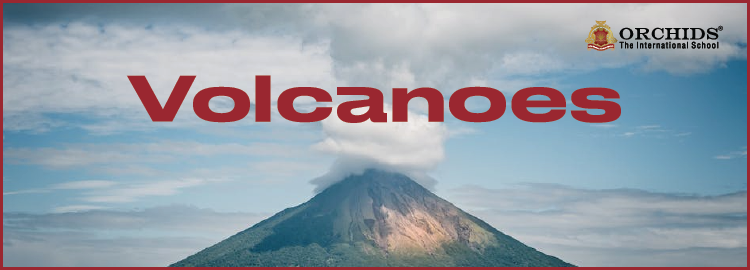
Volcanoes are one of the most interesting phenomena on Earth. They are landforms, usually mountains, where molten rock, which is called magma, erupts through the surface of Earth. These eruptions not only shape landscapes but can also impact climate and human and every living being.
You can find volcanoes all over the world. Some remain dormant for centuries, while others remain active and unpredictable. This article mainly focuses on what a volcano is, its different stages, why volcanoes erupt, and their types.
Table of Contents
- Must-Know Facts About Volcanoes
- What is a Volcano?
- Different Stages of Volcanoes
- Reason Behind the Eruption of Volcanoes
- Different Types of Volcanoes
- Frequently Asked Questions on Volcanoes

Must-Know Facts About Volcanoes
|
What is a Volcano?
A volcano is essentially a vent in the crust of Earth that allows magma, gases, and volcanic debris to escape from deep within the planet.
In simple language, a volcano can be defined as,
|
“A volcano is an opening on the surface of any planet like Earth or Moon that allows hot material from inside to escape. When this hot material comes out, it causes a volcanic eruption.” |
Beneath the surface lies a pool of molten rock, called magma, which is under immense pressure. When this pressure builds beyond the strength of the surrounding rock, it forces its way to the surface, erupting as lava, ash, gases, and fragments of rock.
You may wonder after knowing that volcanic eruptions can take many forms, ranging from explosions that hurl rocks and ash high into the sky to gentle lava flows that spread gradually over large areas.
The intensity of an eruption depends on the magma’s composition, gas content, and the structure of the volcano itself.
Different Stages of Volcanoes
The stages of volcanoes are classified based on their activity:
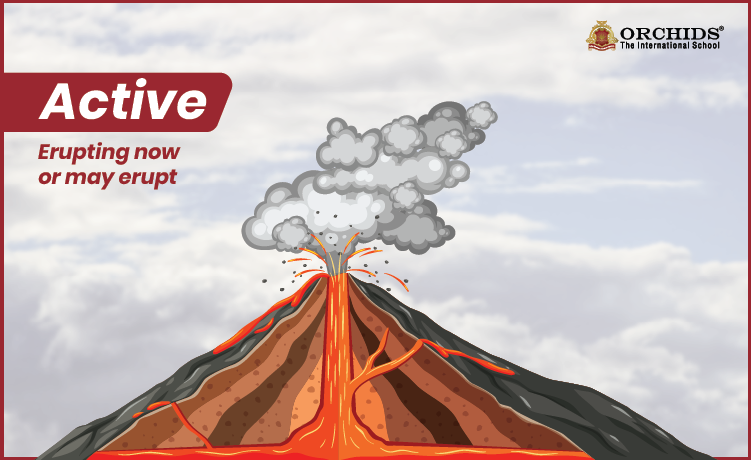
- Active Volcanoesare currently erupting or are expected to erupt in the near future. Examples include Mount Etna in Italy and Kilauea in Hawaii.
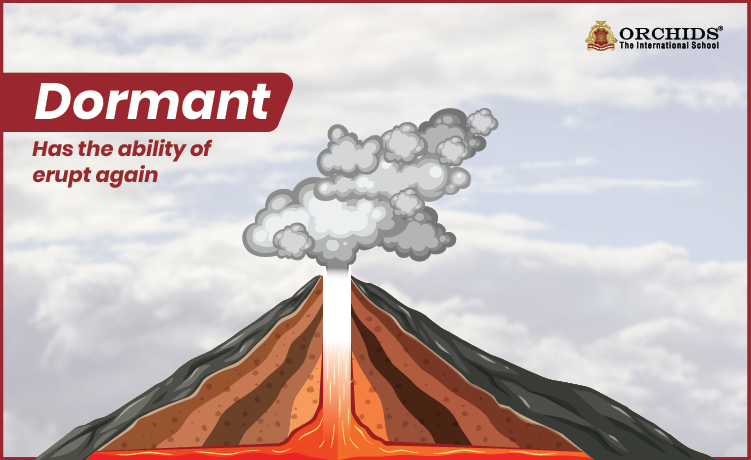
- Dormant Volcanoes are temporarily inactive but may erupt again. Mount Fuji in Japan is a well-known dormant volcano.
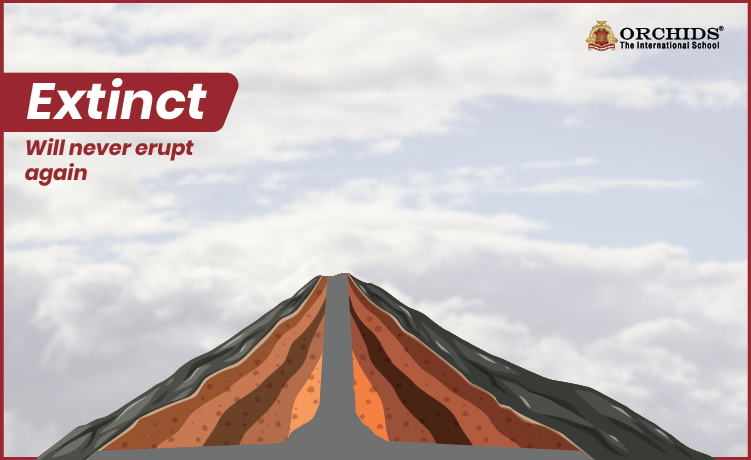
- Extinct Volcanoes have not erupted for thousands of years and are not expected to erupt again. Tamu Massif is considered the largest extinct volcano in the world.
What is the Reason Behind the Eruption of Volcanoes?
Volcanic eruptions occur due to the build-up of pressure within the Earth’s crust. Tectonic plates are massive slabs of rock that constantly move and interact.
Their friction and collisions generate heat and pressure, which in turn cause magma to rise.
Once it reaches the surface, the magma emerges as lava. Trapped gases within the magma expand rapidly during eruptions, propelling lava, ash, and pyroclastic materials into the air.
Different Types of Volcanoes
Volcanoes vary widely in shape, size, and eruption style. Scientists typically categorise them into the following types:
- Cinder Cone Volcanoes are the simplest and smallest types of volcano. They form when lava fragments are explosively ejected from a volcanic vent and fall around it, creating a circular or oval-shaped cone with a bowl-like crater at the top. They rarely exceed 1,000 feet in height.
- Composite Volcanoes (Stratovolcanoes)are large, symmetrical mountains built from alternating layers of lava, volcanic ash, and debris. Interestingly, these volcanoes can rise as much as 8,000 feet above their base and are known for both explosive eruptions and lava flows.
- Shield Volcanoes have broad, gentle slopes formed almost entirely by fluid lava flows. Lava spreads widely from the vent, creating a shield-like shape.
Their eruptions are usually non-violent and effusive, making them less dangerous than composite volcanoes.
- Lava Domes are smaller, dome-shaped volcanoes formed when highly viscous lava piles up near the vent rather than flowing away. The outer layer cools and hardens while magma continues to push upward, eventually causing the dome to crack and spill fragments.
- Some volcanoes are extraordinarily powerful and rare. Such as, Supervolcanoescan eject thousands of cubic kilometres of material in a single eruption.
- Calderasform when a volcano collapses in on itself after a massive eruption, leaving a large depression.
Till now, we have studied what volcanoes are, how they form, their stages, and different types. This article helps students to prepare for natural disasters and appreciate the powerful forces that continue to shape our planet. Volcanoes are more than just mountains; they are dynamic windows into the interior of Earth. Their eruptions shape landscapes, influence climates, and have a profound impact on human civilisation.
Frequently Asked Questions on Volcanoes
1. What is a volcano?
A volcano is an opening in the Earth's crust through which molten rock, gases, and ash escape. It can form mountains over time due to repeated eruptions.
2. What is a volcanic eruption?
A volcanic eruption happens when magma, gases, and ash burst out from beneath the Earth’s surface. It’s a dramatic way the Earth releases built-up pressure.
3. What are active volcanoes?
Active volcanoes are those that have erupted recently or show signs of potential eruption. These volcanoes are constantly monitored for safety.
4. What causes a volcano?
A volcano forms when magma rises due to pressure differences, gas expansion, and cracks in the Earth's crust. These forces push molten rock upward, creating eruptions.
5. What are the types of volcanoes?
The types of volcanoes include shield, cone, and lava dome varieties. Each type depends on how viscous the magma is and how it erupts.
6. Can a volcanic eruption be predicted?
While exact timing is hard, scientists study earthquakes, gas emissions, and ground deformation to anticipate a volcanic eruption. Early warnings save lives.
7. Which are the most famous active volcanoes?
Some famous active volcanoes are Mount Etna, Kīlauea, and Mount Vesuvius. They captivate scientists and tourists alike with their spectacular eruptions.
Science isn't just a subject, it's the way of seeing the world. Curious how Orchids The International School teaches it that way? Talk to our admissions team.
Admissions Open for 2026-27
What type of concept pages would you prefer?
CBSE Schools In Popular Cities
- CBSE Schools in Bangalore
- CBSE Schools in Mumbai
- CBSE Schools in Pune
- CBSE Schools in Hyderabad
- CBSE Schools in Chennai
- CBSE Schools in Gurgaon
- CBSE Schools in Kolkata
- CBSE Schools in Indore
- CBSE Schools in Sonipat
- CBSE Schools in Delhi
- CBSE Schools in Rohtak
- CBSE Schools in Bhopal
- CBSE Schools in Aurangabad
- CBSE Schools in Jabalpur
- CBSE Schools in Jaipur
- CBSE Schools in Jodhpur
- CBSE Schools in Nagpur
- CBSE Schools in Ahmednagar
- CBSE School In Tumkur











Orchids The International School is one of India's leading chains of CBSE and ICSE schools, with 110+ schools across the country.