

Biogas Energy
Biogas energy is a clean and renewable form of fuel which is made from everyday waste such as food scraps, plant material, and animal dung. It turns things we usually throw away into a useful source of power.
This article mainly focuses on how biogas production works, how a biogas plant works, and why biogas is an eco-friendly energy source that is becoming so important for our future.
Table of Contents
- What is Biogas?
- What is Biomass?
- Biogas Plant
- How is Biogas Produced?
- Advantages of Biogas
- Disadvantages of Biogas
- Frequently Asked Questions on Biogas Energy

Important Facts Everyone Should Know About Biogas
|
What is Biogas?
Have you ever noticed how kitchen waste or leftover food starts to smell after a few days? That smell is actually a clue; organic waste can release energy when it breaks down! Interesting!
Biogas is a special type of fuel which is made when things like food waste, cow dung, plant leaves, and agricultural leftovers decompose without any oxygen, and this process is called anaerobic decomposition.
In simple language, biogas is defined as,
|
“Biogas is a renewable energy made when organic waste such as animal dung, food scraps, agricultural residue, plant waste or sewage breaks down without oxygen, producing a gas mixture mainly of methane and carbon dioxide.” |
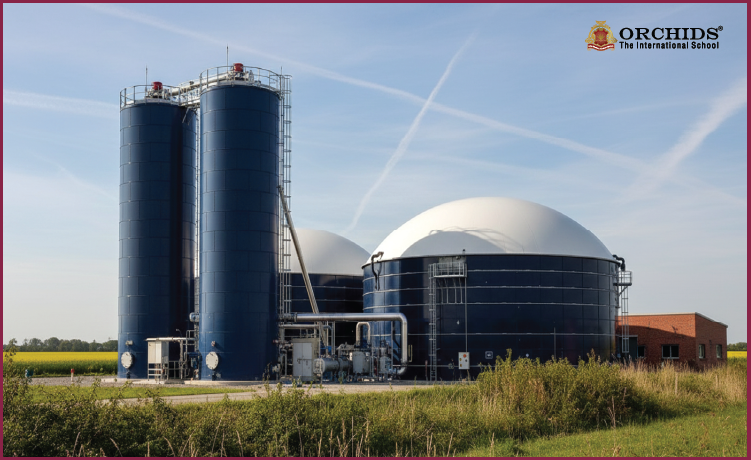
The gas produced is a mixture of different gases, such as:
- Methane is the main gas that helps biogas burn like a real fuel
- Carbon dioxide
- A tiny amount of hydrogen sulphide and moisture
Now you know, all the waste from your home, such as vegetable peels, leftover rice, stale bread, could actually power a stove or even light a bulb if converted into biogas!
It's all about biogas, but there is one more term that is relevant to this is biomass. Let's discuss it in our next section.
What is Biomass?
Biomass is organic matter that comes from plants and animals, either living or recently alive. It includes things like:
- Crop residue from farms
- Animal waste
- Forest leaves and branches
- Food scraps
- Even municipal solid waste
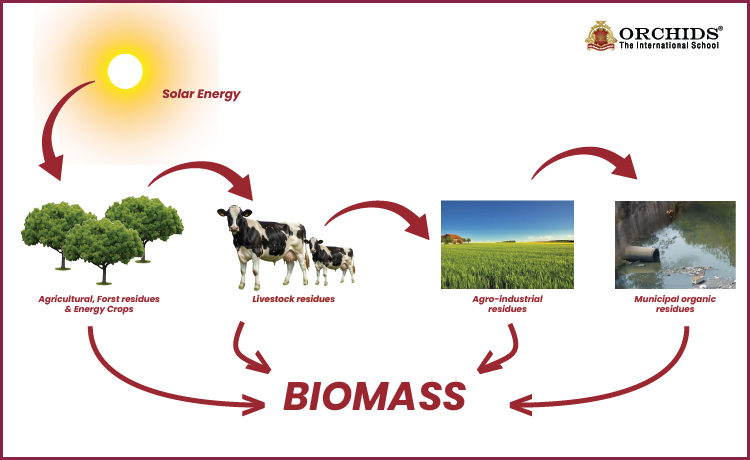
In simple words, biomass can be defined as
|
“Biomass is organic matter that can be used as a renewable energy source.” |
You may wonder, biomass contains about 75% carbon, along with other elements like hydrogen, oxygen, and nitrogen. Tiny amounts of minerals such as alkali metals and heavy metals are also present.
The banana peel you threw away today once carried energy from the sun through the plant. And now, that same peel can be used again to produce useful energy!
Biomass may look like waste, but actually, it is a powerful resource waiting to be transformed.
Biogas Plant
A biogas plant is a special system where organic waste is turned into biogas. It works like a giant, sealed dome that provides the oxygen-free (anaerobic) conditions needed for waste to decompose and produce fuel. Here is the biogas plant diagram for your reference.
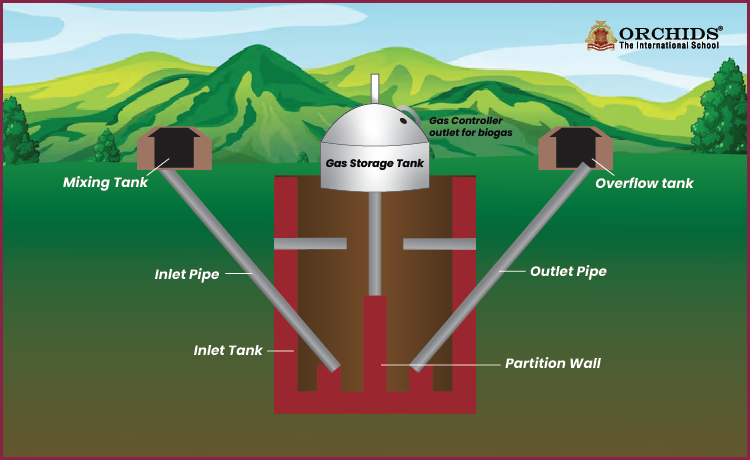
Inside a biogas plant, microorganisms break down materials like cow dung, food leftovers, and agricultural waste, releasing biogas that can be used for cooking, lighting, and heating.
A typical biogas plant has five main parts. Let's discuss them.
- The inlet is the entry point where the slurry, which is a mixture of water and organic waste, is poured into the plant.
- Fermentation Chamber is the main chamber where bacteria get to work! They break down the waste in the absence of oxygen and slowly produce biogas.
- The biogas produced is collected in a dome-shaped storage area above the chamber.
- 4. Once the waste is fully digested, the leftover slurry flows out through the outlet. This leftover material is rich manure for fields.
- The stored biogas travels through the exit pipe and is taken out for use in homes or nearby areas.
Now we know what a biogas plant looks like with each part, but how exactly biogas production happens will be discussed in our next section.
How is Biogas Produced?
In a biogas plant, all this organic waste is turned into a useful fuel through a step-by-step natural process. To understand biogas production in detail, let's go through these steps.
First, all the waste, such as food leftovers, plant residue, sewage, and animal dung, is mixed with water to make a thick liquid called slurry.
This slurry is then poured into the biogas plant. Inside the plant, tiny microorganisms work together (in the absence of oxygen) to slowly break down the waste and release biogas.
This complete process happens in four main stages:
Step 1- In hydrolysis, complex substances like carbohydrates, proteins, and fats are broken down into simpler molecules.
Step 2- The Second step is Acidification. In these steps, special bacteria called acidogenic bacteria convert these simple molecules into items like:
- Ammonia
- Hydrogen
- Carbon dioxide
- Organic acids
Step 3- In the next step of Acetic Acid Formation, the organic acids produced earlier are now converted into acetic acid, along with some hydrogen, ammonia, and carbon dioxide.
Step 4- Finally, Methanogenic bacteria step in for methane formation. They convert acetic acid and other products into methane and carbon dioxide, the main gases in biogas.
This methane-rich gas is what we use for cooking, heating, and generating electricity.
Advantages of Biogas
Biogas comes with many benefits that make it a smart and eco-friendly energy choice. Let’s discuss them one by one.
- Biogas burns without producing smoke, which means it does not release harmful gases like CO₂, CO, NO₂ or SO₂. These results, a cleaner air and a healthier environment.
- After producing biogas, the leftover slurry becomes a nutrient-rich manure. Farmers can use it in fields, which reduces the amount of waste dumped into landfills.
- It is Cheaper Technology becausesetting up a biogas plant does not require a huge investment. Once built, it becomes self-sufficient within a few months and continues to produce fuel and manure.
- Biogas plants generate employment, especially in rural areas, by offering work in waste collection, plant maintenance, and distribution.
- Biogas comes from waste, and waste is generated every single day. That makes biogas a renewable and never-ending source of energy.
Disadvantages of Biogas
Even though biogas has many advantages, it also has a few limitations that everyone should know.
- Biogas production works well in small communities, but making it efficient for large industries is still a challenge.
- Even after purification, biogas often contains impurities. When compressed and stored, it can even corrode metal containers.
- It is Unstable and Hazardous because of Methane, which is the main part of biogas. It is highly inflammable. If it leaks and mixes with oxygen, it can cause fire or explosions. This is why biogas plants must be handled with care.
Till now, we have learned that biogas energy is one of the smartest ways to turn everyday waste into something useful and powerful. It not only provides clean fuel for cooking and lighting but also helps reduce pollution, manage waste efficiently, and support rural communities.
Frequently Asked Questions on Biogas Energy
1. What is biogas?
Biogas is a clean fuel made when organic waste, like food scraps or cow dung, decomposes without oxygen. It mainly contains methane, which helps it burn easily for cooking or heating.
2. What is biogas used for?
Biogas is commonly used for cooking, heating water, and even generating electricity. It’s a renewable option that helps reduce waste and pollution.
3. What is a biogas plant?
A biogas plant is a system where organic waste is collected and broken down to produce biogas. It works like a sealed tank where bacteria convert waste into useful fuel and manure.
4. Can you explain a biogas plant diagram?
A biogas plant diagram shows parts like the inlet, digester, gas storage, outlet, and pipelines. It helps students understand how waste enters the plant and how gas is produced and collected.
5. What is gobar gas?
Gobar gas is simply biogas made mainly from cow dung. It is widely used in rural areas because it is cheap, clean, and easy to produce at home or in small plants.
6. What is biogas production?
Biogas production is the process of converting waste materials into fuel through anaerobic digestion. In this process, bacteria break down the waste and release methane-rich gas.
7. How to produce biogas?
Biogas is produced by mixing organic waste with water and letting it decompose inside a sealed biogas plant. Over time, microorganisms break down the waste and release methane gas for use.
8. What is the main component of biogas?
The main component of biogas is methane, which makes it a good fuel for cooking and heating. Carbon dioxide is the second major component, along with small traces of other gases.
Science isn't just a subject, it's the way of seeing the world. Curious how Orchids The International School teaches it that way? Talk to our admissions team.
Admissions Open for 2026-27
What type of concept pages would you prefer?
CBSE Schools In Popular Cities
- CBSE Schools in Bangalore
- CBSE Schools in Mumbai
- CBSE Schools in Pune
- CBSE Schools in Hyderabad
- CBSE Schools in Chennai
- CBSE Schools in Gurgaon
- CBSE Schools in Kolkata
- CBSE Schools in Indore
- CBSE Schools in Sonipat
- CBSE Schools in Delhi
- CBSE Schools in Rohtak
- CBSE Schools in Bhopal
- CBSE Schools in Aurangabad
- CBSE Schools in Jabalpur
- CBSE Schools in Jaipur
- CBSE Schools in Jodhpur
- CBSE Schools in Nagpur
- CBSE Schools in Ahmednagar
- CBSE School In Tumkur











Orchids The International School is one of India's leading chains of CBSE and ICSE schools, with 110+ schools across the country.