

Rectifier
A rectifier is an electronic component that converts alternating current (AC) into direct current (DC), allowing electricity to flow in only one direction. Have you ever wondered how your phone charger turns AC from the wall into usable DC power? That’s exactly what a rectifier does! Since most devices run on DC while power grids supply AC, rectifiers play an important role in almost all electronic devices. This article provides a detailed understanding of a rectifier, how it works, including its types and applications.
Table of Contents
- What is Rectifire
- Working of Rectifier
- Types of Reacifier
- Advantages and Disadvantages of Rectifire
- Real-Life Application of Rectifire
- Frequently Asked Questions on Rectifier

What are Rectifires
A rectifier is an electronic device that converts an alternating current (AC) into a direct current (DC) by using one or more P-N junction diodes. A diode behaves as a one-way valve that allows current to flow in a single direction. This process is known as rectification.
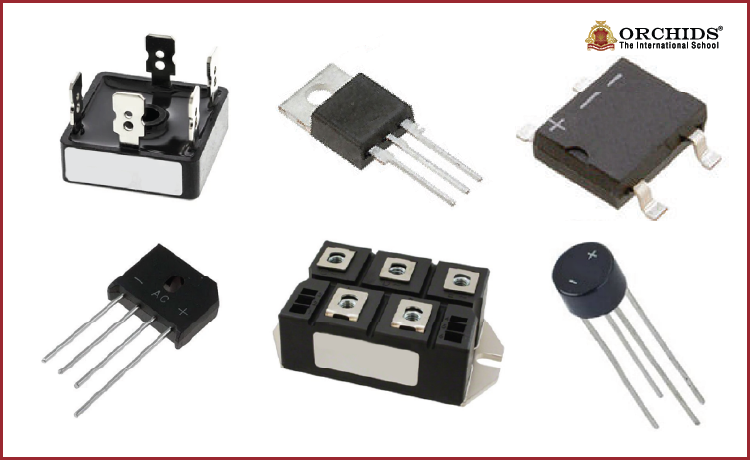
Do you know the exciting part? Rectifiers can come in many forms, such as solid-state diodes, vacuum tubes, mercury-arc valves, or silicon-controlled rectifiers. But the most common ones today are silicon-based diodes, which are efficient, compact, and reliable. But how does a rectifier actually do its job? Let’s understand it step by step.
Working of Rectifier
Do you know? In rectification circuits, P-N junction diodes play an important role. A diode is made by joining a P-type material and an N-type material. What makes it special is that it lets current flow in only one direction. This is exactly why it’s used to turn AC into DC.
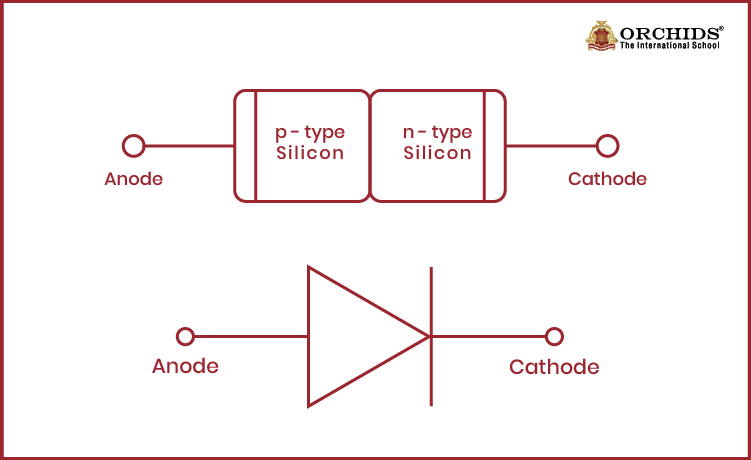
In a power supply, AC keeps changing direction, but our devices need a steady, one-way flow of current. That’s where the diode comes into the picture.
- When the diode is forward-biased, it acts as an open door, which allows current to pass easily through it.
- When it is reverse-biased, the door shuts, and current cannot flow through it.
Because of this unidirectional behaviour, the diode works like a tiny electrical gatekeeper, which blocks the unwanted half of the AC wave and lets the useful part pass through. This is how AC is gradually shaped into DC.
Types of Reacifier
Rectifiers come in several types depending on how they control and convert current. Let’s understand them one by one.
Controlled Rectifier
A controlled rectifier allows you to adjust its output voltage. It uses semiconductor devices like SCRs (Silicon-Controlled Rectifiers), MOSFETs, or IGBTs to control when the rectifier conducts current. There are two main types of controlled rectifiers:
- Half-Wave Controlled Rectifier: A half-wave rectifier uses only one diode. It only converts half of the AC waveform to DC, and the output voltage is pulsating. This means that the voltage is constantly changing between zero and the peak voltage of the AC waveform.
- Full-Wave Controlled Rectifier: Do you know that a full-wave rectifier uses two or more diodes? It converts both halves of the AC waveform to DC, and the output voltage is pulsating. This means that the voltage is constantly changing between zero and the peak voltage of the AC waveform. Full-wave rectifiers are further divided into two types: Bridge rectifiers and Center-tap rectifiers
Uncontrolled Rectifier
Do you know the interesting part about an uncontrolled rectifier? The output voltage cannot be adjusted manually. It typically uses ordinary diodes, which conduct current only when forward-biased. Again, there are two types of uncontrolled rectifire:
- The Half-Wave Uncontrolled Rectifier uses only one diode. Allows only one half of the AC wave to pass and produces pulsating DC, not very smooth, but simple.
- A Full-Wave Uncontrolled Rectifier typically uses two or more diodes. Converts both halves of the AC signal into DC. More efficient than the half-wave version and widely used in power supply circuits.
Advantages and Disadvantages of Rectifire
Advantages of Rectifire
- Rectifiers convert alternating current into direct current.
- They are essential for battery charging in devices and electric vehicles
- They are used in industrial processes such as electroplating and welding
- They play an integral part in renewable energy systems for converting variable AC to DC.
- Cost-effective and reliable for a wide range of applications.
- Facilitates signal processing by converting AC signals to rectified signals. Contributes to energy efficiency in power conversion processes.
Disadvantages of Rectifiers
- Generates harmonics and electrical noise during the conversion process.
- May require additional filtering components to reduce output ripple.
- Maintenance may be required, especially in heavy industrial applications
- High initial costs for certain types of rectifiers and associated equipment.
- Possibility of heat generation, requiring cooling mechanisms in high-power rectifiers.
Real-Life Application of Rectifire
Rectifiers are used in many everyday things around us, often without us even noticing. Here are a few common uses:
- They are used in powering appliances to convert AC from the wall into DC for devices like TVs, chargers, and computers.
- They are used in voltage multipliers such as microwave ovens and other appliances needing specific voltages.
- They are used in powering devices like mosquito repellents and radio modulators.
- Combined with transformers to get the desired DC voltage levels.
- In radio circuits, they act as detectors for extracting audio signals during modulation and demodulation.
Read More: Uses of Rectifire
So far, we learned that rectifiers might seem like very small parts of a circuit, but they are so important in circuits because of their uses. Whether it’s your phone charger, a TV, or large machines in factories, they all depend on rectifiers to turn AC into steady DC.
Frequently Asked Questions on Rectifier
1. Which device is used as a rectifier?
A P-N junction diode is most commonly used as a rectifier.
2. What does rectification mean?
It’s the process of converting alternating current (AC) into direct current (DC).
3. What is the difference between half-wave and full-wave rectifiers?
A half-wave rectifier uses only one diode and converts only half of the AC wave, while a full-wave rectifier uses multiple diodes and converts the entire AC cycle.
4. What is a rectifier used for?
Rectifiers are used in power supplies, chargers, radios, welding machines, and renewable energy systems.
5. What makes bridge rectifiers popular?
Bridge rectifiers are efficient and reliable because they use four diodes to convert both halves of the AC waveform into DC.
6. Is it a rectifier, AC or DC?
A rectifier works with AC but outputs DC. It takes alternating current from the source and converts it into direct current for devices to use.
7. What is the principle of a rectifier?
A rectifier works on the simple principle that a diode lets current flow in only one direction. This “Unidirectional” behavior converts AC into DC.
8. How many types of rectifiers are there?
Rectifiers mainly come in two groups:
-
Controlled rectifiers
-
Uncontrolled rectifiers
Each type has different sub-types like half-wave, full-wave, bridge, and many advanced versions.
Science isn't just a subject, it's the way of seeing the world. Curious how Orchids The International School teaches it that way? Talk to our admissions team.
Admissions Open for 2026-27
What type of concept pages would you prefer?
CBSE Schools In Popular Cities
- CBSE Schools in Bangalore
- CBSE Schools in Mumbai
- CBSE Schools in Pune
- CBSE Schools in Hyderabad
- CBSE Schools in Chennai
- CBSE Schools in Gurgaon
- CBSE Schools in Kolkata
- CBSE Schools in Indore
- CBSE Schools in Sonipat
- CBSE Schools in Delhi
- CBSE Schools in Rohtak
- CBSE Schools in Bhopal
- CBSE Schools in Aurangabad
- CBSE Schools in Jabalpur
- CBSE Schools in Jaipur
- CBSE Schools in Jodhpur
- CBSE Schools in Nagpur
- CBSE Schools in Ahmednagar
- CBSE School In Tumkur











Orchids The International School is one of India's leading chains of CBSE and ICSE schools, with 110+ schools across the country.