

Uses of Rectifier
A rectifier is an important electronic component that changes Alternating Current (AC) into Direct Current (DC).Have you ever wondered how your phone or laptop charges safely from the electricity in your home? Or how radios, welding machines, and even electric cars get their steady power supply? That’s all made possible because of rectifiers.
This article will guide you through what a rectifier is and discover the many real-life uses of rectifiers in homes, industries, and electronic circuits.
Table of Contents

What is a Rectifier?
A rectifier is an electronic component that is used in electronic circuits for converting alternating current (AC) into direct current (DC). But an interesting question arises here: what exactly are they made of?
Rectifier made up of a PN junction diodes, which do the conversion of AC to DC. A PN junction diode permits the flow of electrical current under forward bias conditions and stops it under reverse bias conditions.
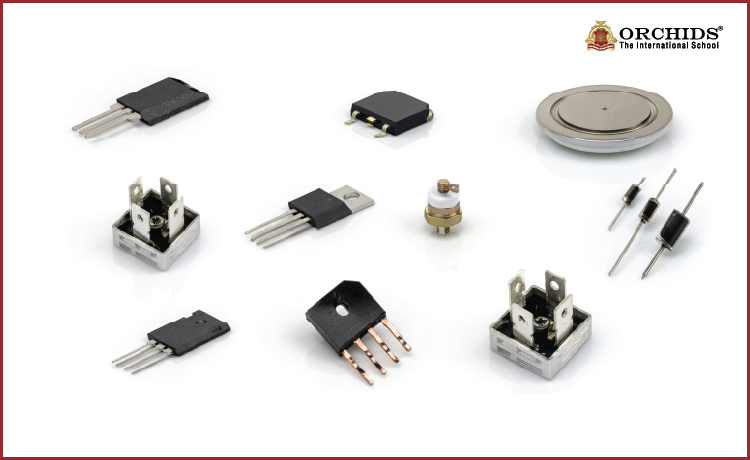
Now, let's discuss the uses of rectifier in our daily life.
Read More: Rectifier
Real-Life Uses of Rectifier
Rectifiers play an important role in modern electronics and also in industrial processes. From charging your phone to powering large machines, rectifiers ensure that electrical energy flows steadily and safely. Let’s discuss the uses of the rectifier, which make our everyday life simple.
1. To begin with, rectifiers are an important component of power supply circuits. They convert AC from the main power source into DC, which is then used to run devices such as:
- Mobile chargers
- Laptops and computers
- Televisions
- Radios
- Home appliances and battery-operated tools
2. Moving from general power supplies to charging systems, rectifiers are widely used in battery chargers for mobile phones, cars, and inverters. They convert AC into DC to charge batteries efficiently. The charger of your smartphone or car battery uses a full-wave bridge rectifier to provide a smooth DC output.
3. Stepping into industrial applications, rectifiers are used in electric welding machines to supply a steady and polarised DC voltage. DC gives better control over the welding arc and results in stronger joints. Bridge rectifiers are used in arc welders and inverter welders.
4. Next, Half-wave rectifiers are used in soldering irons, mosquito repellent heaters, and other small heating circuits. They regulate the amount of current and heat generated in the device.
5. When we look at chemical applications, Rectifiers provide direct current for electrolysis, where electricity causes a chemical change. They are used in:
- Water electrolysis splits water into hydrogen and oxygen gases.
- Metal extraction to refine or extract metals like copper, zinc, or aluminium.
6. From chemistry to industry, rectifiers are widely used in electroplating. Here, rectifiers convert alternating current to direct current to deposit a layer of metal on another surface. A stable DC ensures even coating and a high-quality finish, used in industries such as:
- Automotive
- Jewelry
- Aerospace
- Electronics
7. Moving into communication, rectifiers are used to demodulate AM radio signals (Radio and Communication), which convert modulated signals into audio signals we can hear.
- Half-wave rectifiers detect the amplitude of modulated signals.
- Full-wave rectifiers are used in high-quality receivers for smoother signals.
8. Rectifiers are used in voltage multiplier circuits, which increase voltage without using a transformer. These circuits are mainly used in:
- Cathode Ray Tube (CRT)
- Oscilloscopes
- X-ray machines
- Photocopiers
9. Do you know that many motors and LED lights work only on DC voltage? Rectifiers are used to convert an AC mains supply into DC to power motors, fans, and LED lighting systems.
10. Interestingly, rectifiers often work together with step-up or step-down transformers to get the desired DC voltage. But how does this actually happen?
- Half-wave rectifiers are used for simple, low-current applications.
- Full-wave rectifiers are used for high-current circuits and heavy loads.
11. Some measuring analog instruments, like voltmeters and ammeters, use rectifier circuits to measure AC signals by converting them into DC.
12. In automation and control systems, rectifiers act as reliable DC power sources. They supply steady direct current to sensors, actuators, and control units that help machines operate smoothly and safely.
Till now, we have learnt that rectifiers are essential components that make our modern physics work smoothly. From charging phones to powering industrial machines, they ensure electricity flows steadily by converting alternating current to direct current. Whether half-wave or full-wave, rectifiers keep everything, from small gadgets to large systems, running efficiently.
Frequently Asked Questions on Uses of Rectifier
1. What are the uses of rectifier?
Rectifiers are used in power supplies, chargers, welding machines, electroplating, electrolysis, radios, LEDs, and industrial systems.
2. What are the uses of a half-wave rectifier?
Half-wave rectifiers are used in simple circuits like signal detectors, voltage multipliers, soldering irons, and mosquito repellents.
3. What are the uses of a full-wave rectifier?
Full-wave rectifiers are used in chargers, radios, power supplies, LED drivers, and industrial machines needing steady DC.
4. What is an example of a rectifier in real life?
Your mobile phone charger, laptop adapter, and car battery charger all use rectifier circuits.
5. Is a rectifier used in AC or DC?
Rectifiers convert AC (Alternating Current) into DC (Direct Current).
6. Is a rectifier the same as a battery charger?
A rectifier is a main part of a battery charger that makes AC power suitable for charging batteries.
7. What is another name for a rectifier?
Rectifiers are also known as AC to DC converters.
Science isn't just a subject, it's the way of seeing the world. Curious how Orchids The International School teaches it that way? Talk to our admissions team.
Admissions Open for 2026-27
What type of concept pages would you prefer?
CBSE Schools In Popular Cities
- CBSE Schools in Bangalore
- CBSE Schools in Mumbai
- CBSE Schools in Pune
- CBSE Schools in Hyderabad
- CBSE Schools in Chennai
- CBSE Schools in Gurgaon
- CBSE Schools in Kolkata
- CBSE Schools in Indore
- CBSE Schools in Sonipat
- CBSE Schools in Delhi
- CBSE Schools in Rohtak
- CBSE Schools in Bhopal
- CBSE Schools in Aurangabad
- CBSE Schools in Jabalpur
- CBSE Schools in Jaipur
- CBSE Schools in Jodhpur
- CBSE Schools in Nagpur
- CBSE Schools in Ahmednagar
- CBSE School In Tumkur











Orchids The International School is one of India's leading chains of CBSE and ICSE schools, with 110+ schools across the country.