

Equilibrium
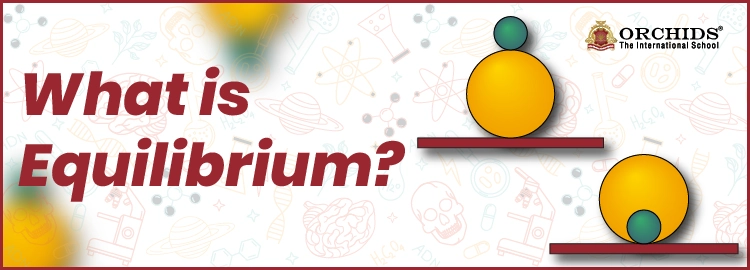
Equilibrium is a condition of the body where neither the internal energy nor the motion of the body changes with time. In simple words, nothing speeds up, slows down, or rotates unless an external force acts on it. Equilibrium is one of the most important concepts in physics because it helps us understand how forces work together to keep objects stable. For example, from a book resting on a table to a satellite orbiting Earth, equilibrium explains why things stay as they are, without tipping, falling, or changing their motion.
This article is a complete guide for students to understand what equilibrium is, its classifications in detail.
Table of Contents
-
What is Equilibrium?
-
Types of Equilibrium
- Frequently Asked Questions on Equilibrium

What is Equilibrium?
In very simple language, Equilibrium can be defined as,
|
“We say a body or object is in equilibrium when the net external force and the net torque acting on it are both zero.” |
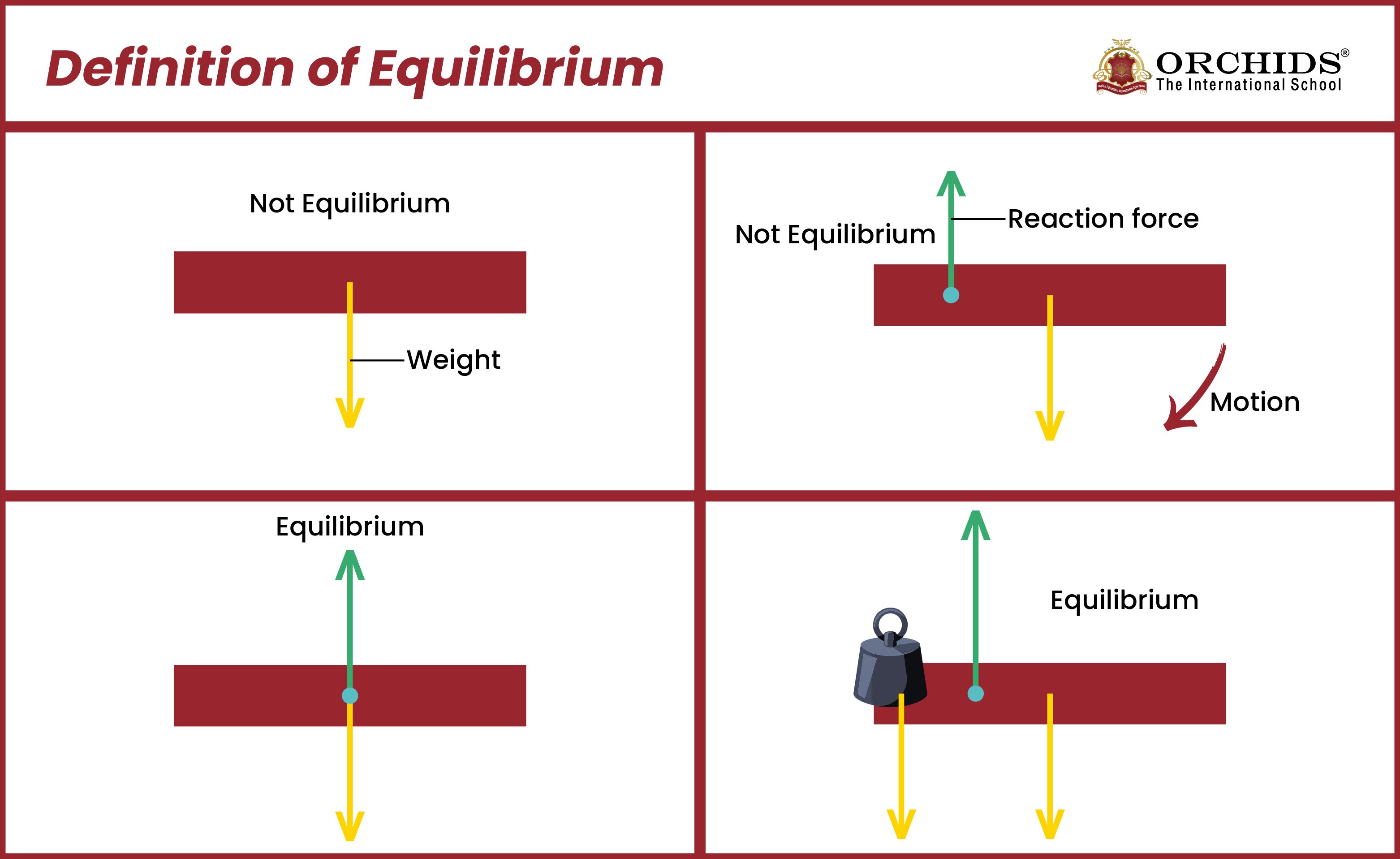
You may be amazed after knowing that, for a rigid body, equilibrium has two parts. They are in translational equilibrium means there will be linear acceleration, and rotational equilibrium, which means there will be no angular acceleration.
If both these conditions of equilibrium are satisfied for a rigid body, it means the body is in equilibrium.
If this sounds confusing, that’s okay! Let’s break it down step by step with an example.
Imagine a rod lying on a table. If we apply two equal and opposite forces on it, but at different points. What will happen?
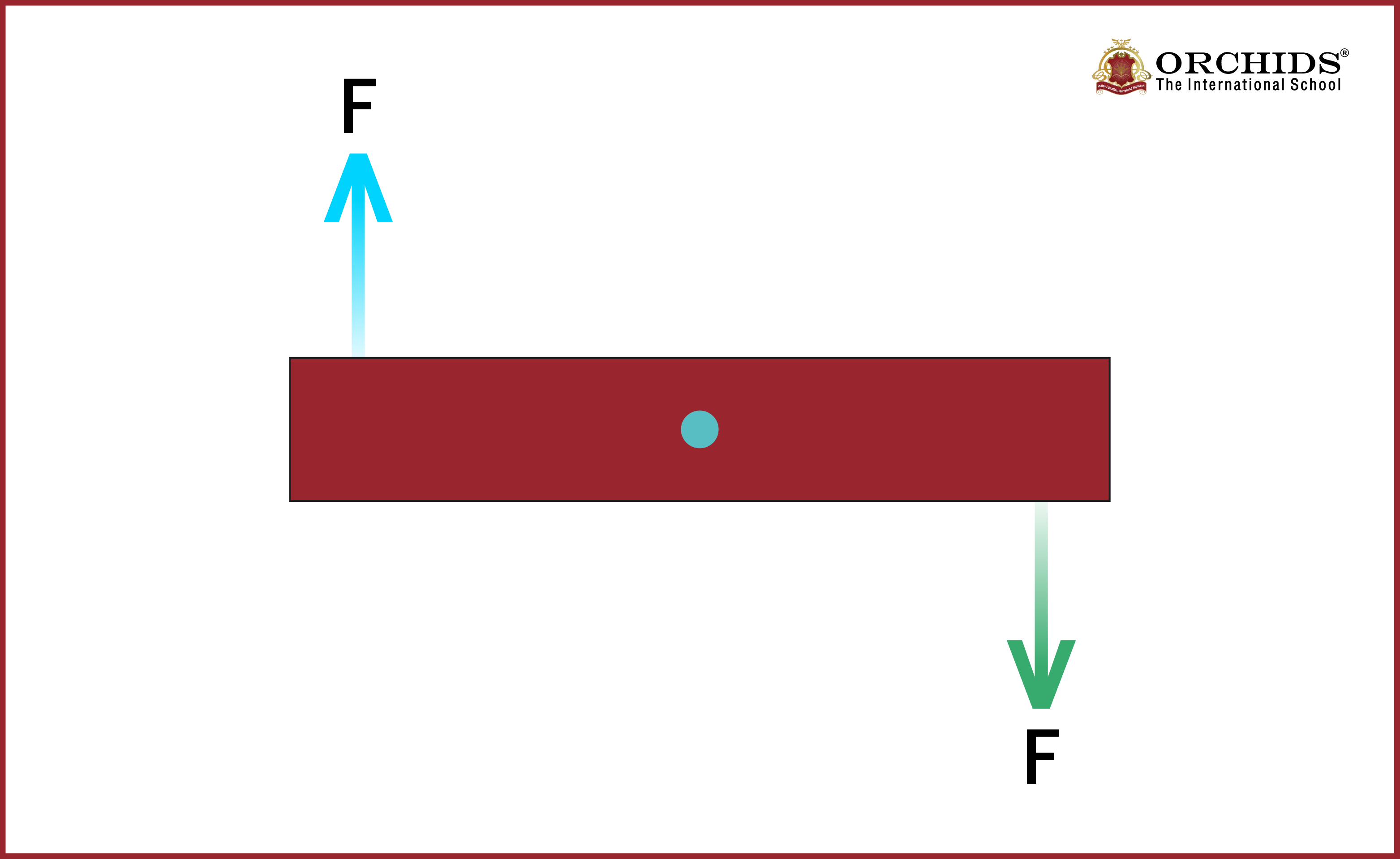
Here will observe how the forces cancel each other. Because of this no movement in a straight line. But they form a couple that makes the rod want to rotate.
So, from this, it can be concluded that the rod is in translational equilibrium, but not rotational equilibrium.
But one interesting question arises here: How many coplanar forces which is not along the same line of action are needed to keep a rigid body in complete equilibrium?
Let's try to analyse this. Here first force cannot balance either motion or rotation, the second one can balance translation but not rotation, and the third one can balance both translation and rotation.
So, here we can conclude that three coplanar forces are required to hold a rigid body in full equilibrium.
Types of Equilibrium
Equilibrium is mainly classified into two types, and they are Static Equilibrium and Dynamic Equilibrium. Let's try to understand them one by one.
-
So if the body is in equilibrium but continues to move with a uniform velocity, it is known as Dynamic Equilibrium.
For Dynamic Equilibrium,
-
The sum of all forces acting on the body is zero (Net Force = 0).
-
The sum of all torques acting on the body may not be zero.
-
On the other hand, if the body is in equilibrium while being at rest, it is termed Static Equilibrium.
In static equilibrium, the body is either at rest or moving with any kind of constant velocity, and it is not accelerating in any direction or rotating. It follows two conditions:
-
The sum of all forces acting on the body is zero (Net Force = 0), which means there is no change in its linear motion.
-
The sum of all torques acting on the body is zero (Net Torque = 0), which means there is no change in its rotational motion.
Apart from static and dynamic equilibrium, bodies also show three kinds of positional equilibrium based on their response to displacement. Let's discuss them in detail,
1. If a slightly displaced body naturally returns to its original position, it is in stable equilibrium.
For example, imagine a ball resting at the bottom of a bowl. If you nudge it gently, it rolls up the side for a moment but quickly settles back down at the lowest point. This happens because the ball’s centre of gravity rises when displaced and then comes back down as it returns, making the original position the most stable.
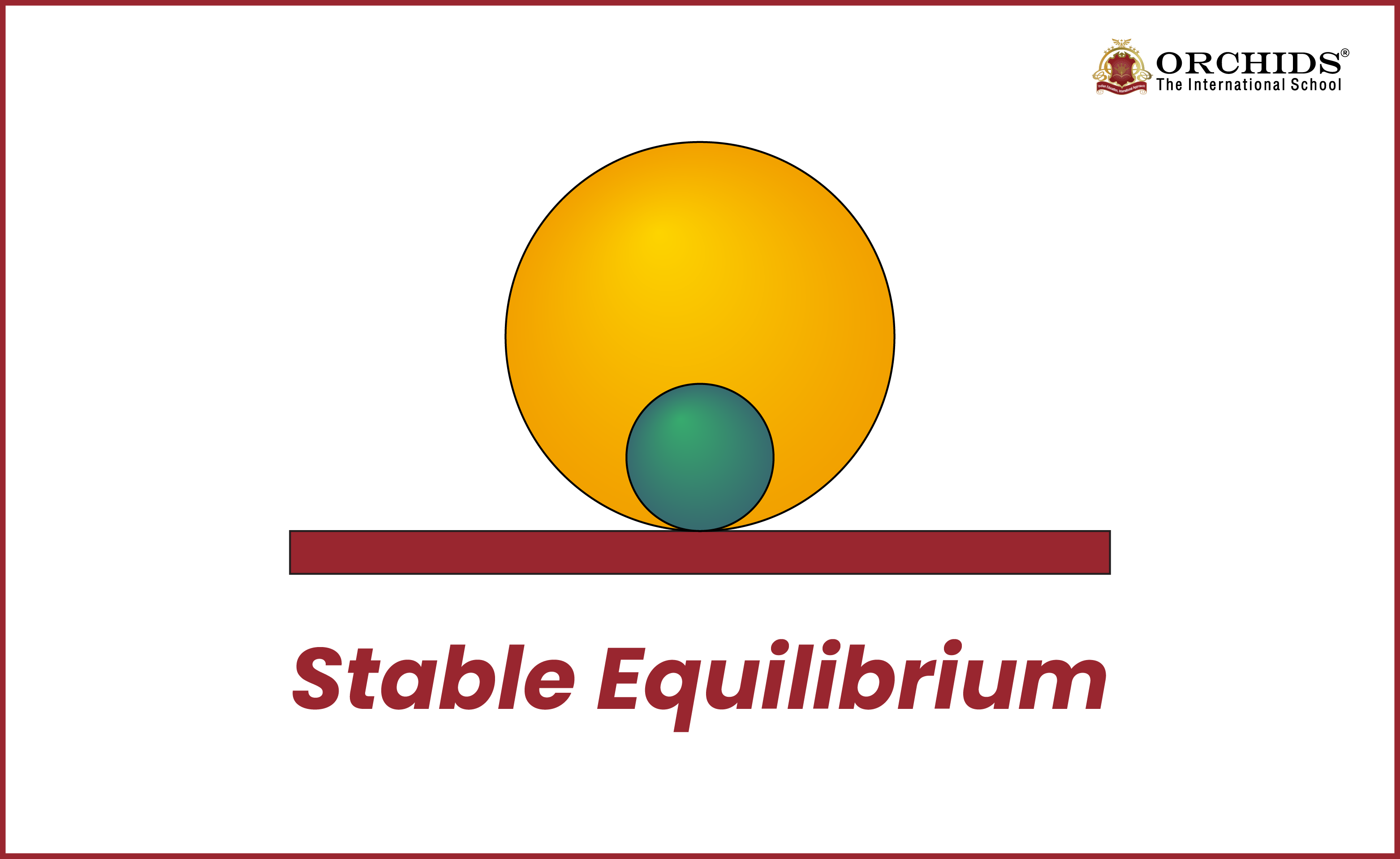
Here, the centre of gravity of the ball rises when displaced and then comes back down as it returns, making the original position the most stable.
2. If a tiny push makes a body move farther away from its starting position, it is in unstable equilibrium.
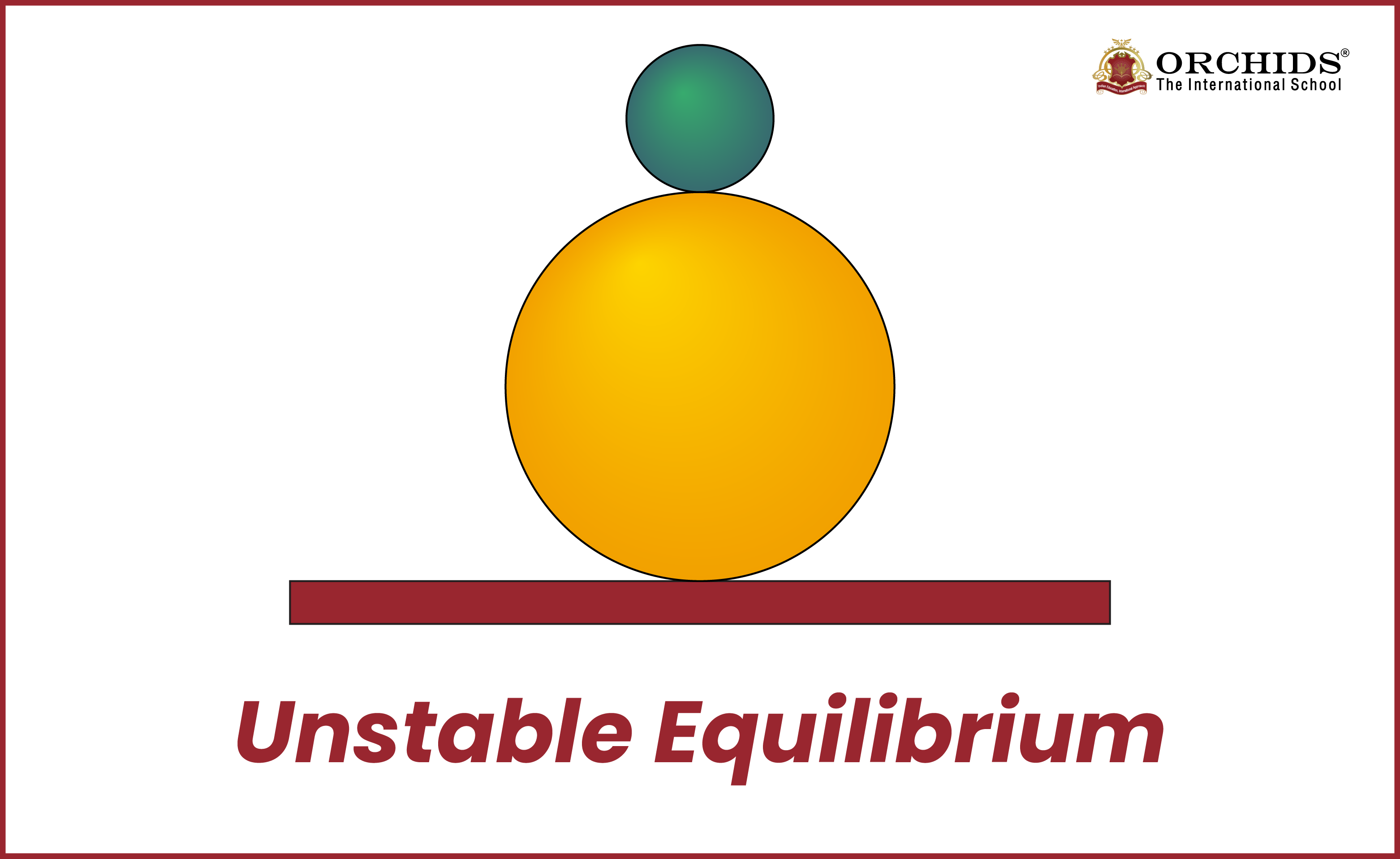
Think of a ball perfectly balanced at the top of a hill. Just the slightest tap sends it rolling down the slope. Here, the ball’s centre of gravity lowers when displaced, so it naturally accelerates away from its initial position, making the original spot highly unstable.
3. If a body, when displaced, stays in the new position without returning or moving away, it is in neutral equilibrium.
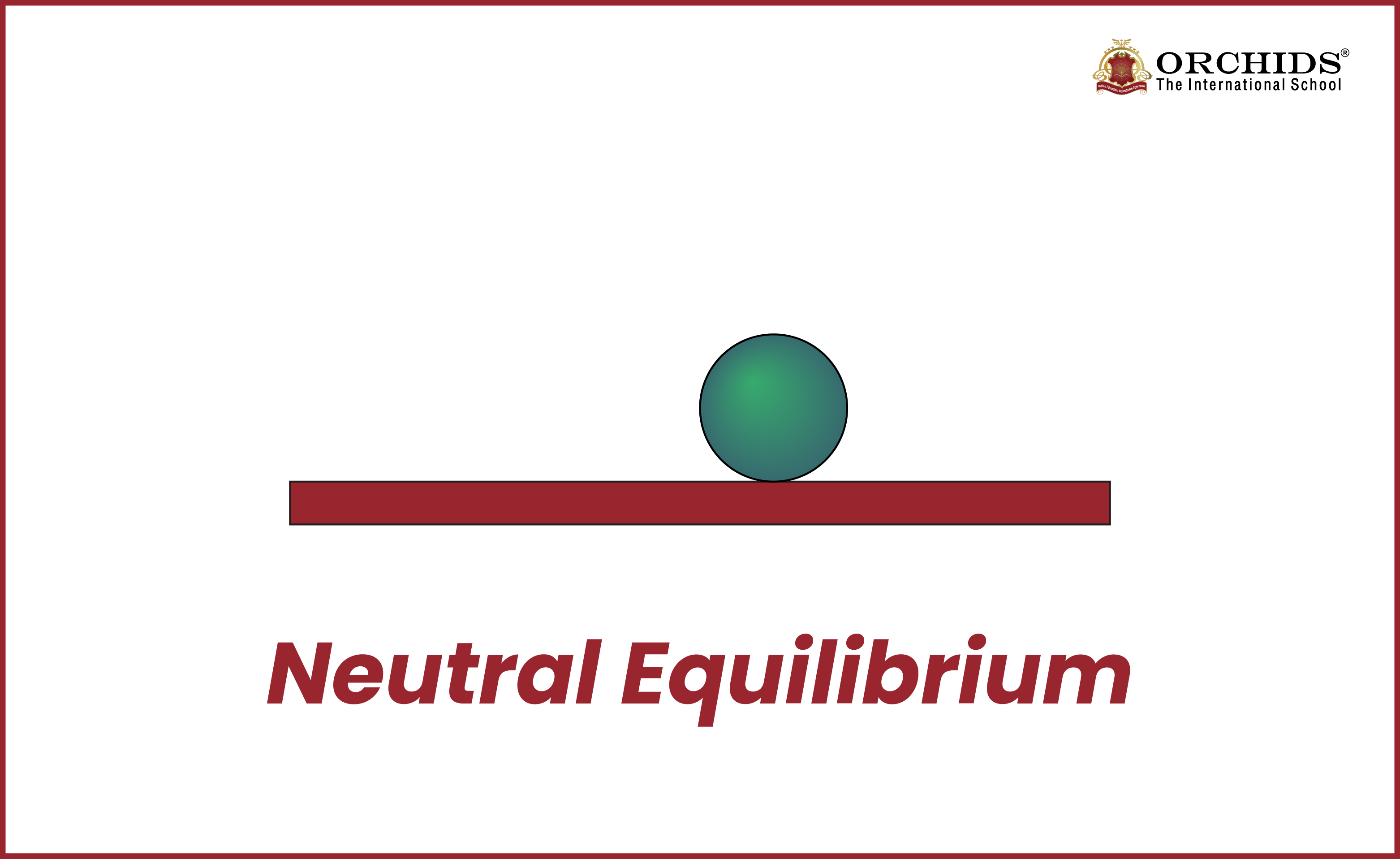
In the above picture, a ball is placed on a flat, level surface. If you give it a small push, you will observe it moves to a new location but doesn’t roll back or keep moving.
These three types of positional equilibrium help explain why some objects remain steady, why others topple easily, and why some can rest anywhere without changing their stability.
Till now, we have studied how equilibrium helps us understand how and why objects stay steady, move uniformly, or tip over. By learning the conditions for translational and rotational balance, and the different types of equilibrium, you see the bigger picture of how forces shape motion in the real world.
Frequently Asked Questions on Equilibrium
1. What is the equilibrium meaning in physics?
The equilibrium meaning in physics, refers to a state where all forces and torques acting on a body cancel each other out. In simple terms, the object doesn’t speed up, slow down, or rotate.
2. What is equilibrium in everyday life?
Equilibrium can be understood through simple examples like a book resting on a table or a car moving at constant speed. In both cases, the forces are balanced, so there is no change in motion.
3. How do you explain the types of equilibrium?
The types of equilibrium are static, dynamic, stable, unstable, and neutral equilibrium. Each type describes how a body behaves when forces act on it or when it is slightly disturbed.
4. What conditions must be followed for equilibrium?
For equilibrium to occur, the net force and net torque on the body must be zero. This ensures the body has no linear or rotational acceleration.
5. Why is understanding the types of equilibrium important?
Understanding the types of equilibrium helps us study whether an object will return to its original position, topple over, or stay wherever it’s moved.
6. What is equilibrium for a rigid body?
A rigid body is in equilibrium means it must satisfy both translational and rotational equilibrium. This ensures the body neither moves in a straight line nor rotates unexpectedly.
7. Can an object be in motion and still be in equilibrium?
Yes, if it moves with a constant velocity, it is in dynamic equilibrium. Even though it’s moving, the forces on it remain perfectly balanced.
Science isn't just a subject, it's the way of seeing the world. Curious how Orchids The International School teaches it that way? Talk to our admissions team.
Admissions Open for 2026-27
What type of concept pages would you prefer?
CBSE Schools In Popular Cities
- CBSE Schools in Bangalore
- CBSE Schools in Mumbai
- CBSE Schools in Pune
- CBSE Schools in Hyderabad
- CBSE Schools in Chennai
- CBSE Schools in Gurgaon
- CBSE Schools in Kolkata
- CBSE Schools in Indore
- CBSE Schools in Sonipat
- CBSE Schools in Delhi
- CBSE Schools in Rohtak
- CBSE Schools in Bhopal
- CBSE Schools in Aurangabad
- CBSE Schools in Jabalpur
- CBSE Schools in Jaipur
- CBSE Schools in Jodhpur
- CBSE Schools in Nagpur
- CBSE Schools in Ahmednagar
- CBSE School In Tumkur











Orchids The International School is one of India's leading chains of CBSE and ICSE schools, with 110+ schools across the country.