

Advantages of Hydroelectric Energy
Advantages of hydroelectric energy are one of those topics that instantly grab our attention. After all, water is something we use every single day, for drinking, cooking, bathing, and cleaning.
But did you know the same water can also light up entire cities?
Hydroelectric energy is one of the oldest and most reliable forms of renewable energy. For generations, it has been trusted to provide clean electricity in many parts of the world.
On a larger scale, dams like the Hoover Dam in the U.S. and Bhakra Nangal in India show how flowing water can light up cities, run industries, and support irrigation.
Today, it produces about 7% of the world’s electricity, while also creating jobs, supporting economies, and helping the environment.
In this article, we will explore what hydroelectric energy is, how it works, and the key advantages that make it such an important source of energy.
Table of Contents
- Important Facts About Hydroelectric Energy
- What is Hydroelectric Energy?
- How is Hydroelectric Energy Produced?
- Advantages of Hydroelectric Energy
- Disadvantages of Hydroelectric Energy
- Frequently Asked Questions Advantages of Hydroelectric Energy

Important Facts About Hydroelectric Energy!
|
What is Hydroelectric Energy?
At first, it might seem like hydroelectric energy is just another energy source, but what makes it special is how reliable it is and how beautifully it connects human needs with the power of nature.
Hydroelectric energy is the electricity generated from flowing or falling water.
For thousands of years, people have relied on water power, starting with simple water wheels that ground grain and powered mills.
Over time, that same idea has grown into massive dams and modern hydropower plants. Today, hydroelectric energy has become the world’s most widely used renewable energy source of electricity,
So, how does rushing water transform into the electricity that lights up our homes? Let’s find out
How is Hydroelectric Energy Produced?
Hydroelectric energy is produced inside a specially designed component known as a hydropower plant. In many ways, it works just like a coal plant, but the key difference lies in the usage of fuel.
To convey the difference in simple terms, coal plants burn coal to produce steam that spins turbines, while hydropower plants simply use the force of moving water to spin turbines and generate electricity.
This naturally raises an important question: how is hydroelectric energy actually produced?
Here’s how the process unfolds:
When rivers are blocked by large dams, they form big reservoirs of water. This stored water has potential energy because it sits high above the ground.
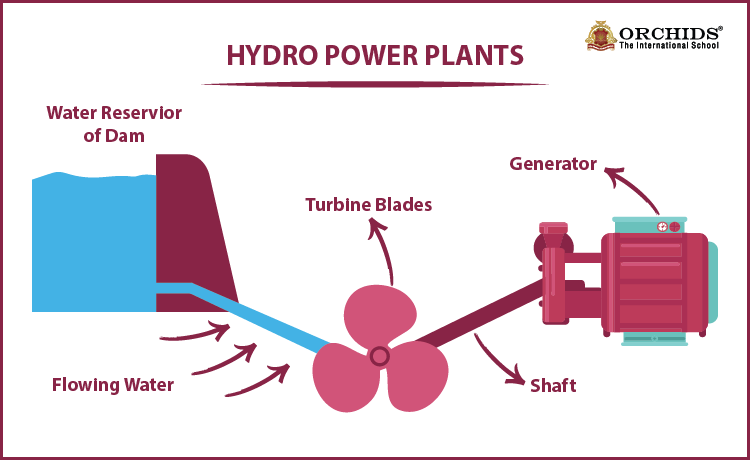
Once water gets released, it rushes down through tunnels called penstocks, where it converts into kinetic energy, spins powerful turbines, and drives generators to produce electricity.
In simple words: moving water → moving turbines → moving electrons → electricity!
At the end, the water again flows back into the river, completing its cycle.
Interestingly!! Not all hydro plants require big dams. Some, called run-of-the-river systems, use the natural flow of rivers to generate power.
Others, like pumped-storage hydropower, act like giant batteries, pumping water uphill during low demand and releasing it later to meet peak demand. Like every energy source, there are advantages and disadvantages to using hydroelectric energy.
To understand why it remains one of the most preferred renewable options, let’s first look at its benefits.
Advantages of Hydroelectric Energy
Hydroelectric power is often praised as one of the most dependable sources of renewable energy, and for good reason.
- Once a dam is built, it can generate electricity at a steady rate for decades. In fact, many hydropower plants are designed to last for generations, making them a long-term investment in clean energy.
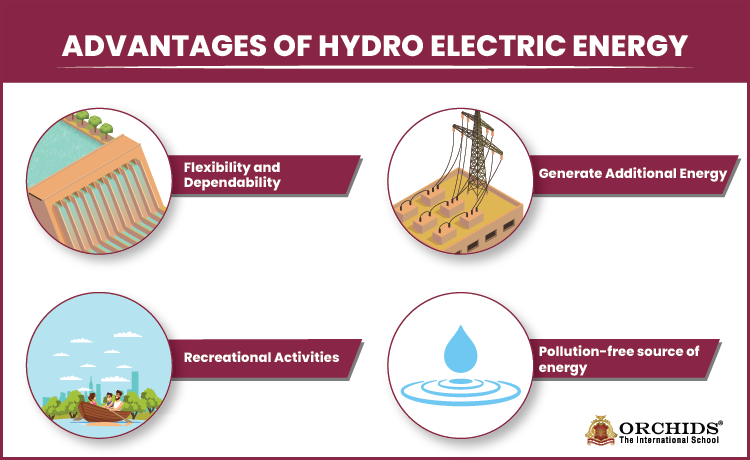
Another big advantage is flexibility.
- If electricity is not needed at a given time, the gates of the dam can be shut, storing water for future use when demand is higher.
This stored water can then be released to generate extra energy whenever required.
Hydropower doesn’t just give us electricity, it also brings along added benefits, such as.
- The large lakes that form behind dams often turn into tourist spots where people enjoy boating, fishing, and water sports.
- At the same time, these reservoirs provide water for irrigation, supporting farming in surrounding areas.
- Perhaps the most important advantage is that hydropower is clean. Since no fuel is burned, no greenhouse gases are released, making it a pollution-free source of energy.
And because it depends on the natural water cycle, it’s considered an inexhaustible source of power.
Of course, hydroelectric energy is not without its challenges. Let’s discuss those next.
Disadvantages of Hydroelectric Energy
- The biggest drawback is cost
Building a dam is extremely expensive and requires precise planning, engineering, and construction.
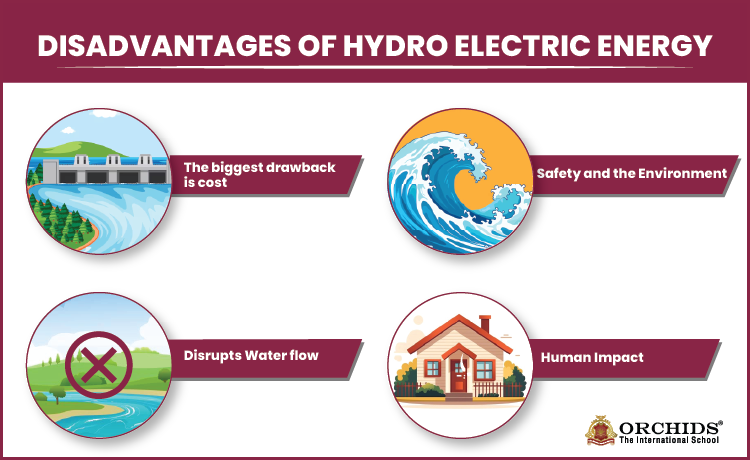
Because of this, hydropower plants must run for many decades to justify their cost, and that depends on the steady availability of water.
- Another concern is safety and the environment. If a dam fails or if heavy floods occur, it can devastate large areas of land and destroy ecosystems.
- Even when things go as planned, constructing a dam means blocking a river, which disrupts the natural flow of water.
- Along with that, it also prevents fish from reaching their breeding grounds and affects animals that depend on them for food. The human impact is also significant.
To build these large projects, people living in the area are often forced to move, which disrupts lives and communities. In some cases, the construction of massive dams can even cause geological disturbances.
So, it’s clear that hydroelectric energy is a strong renewable option, yet its drawbacks remind us that no energy source is perfect.
So far, we have read many advantages of hydroelectric energy, like its steady supply, long-lasting plants, and the added benefits it brings to farming and recreation. That’s why, the next time you come across a hydropower project or hear about a new dam being built, think of it not just as a wall across a river, but as one of the cleanest and most dependable sources of electricity we have.
Frequently Asked Questions Advantages of Hydroelectric Energy
1. Why is hydropower called clean energy?
Because it doesn’t burn fuel or release greenhouse gases. The power comes directly from moving water, making it one of the cleanest energy sources.
2. Can hydropower plants run all year round?
Yes, but their output depends on rainfall and water availability. In dry seasons, electricity production can drop.
3. Do hydropower dams affect fish and wildlife?
They can, which is why many modern dams are built with fish ladders and elevators so aquatic species can migrate freely.
4. Can small rivers be used for hydropower?
Yes! These are called small or micro-hydropower projects, and they’re often used in remote villages to supply local electricity.
5. Is hydropower only about electricity?
Not at all. Dams also help with irrigation, flood control, navigation, water storage, and even tourism.
Science isn't just a subject, it's the way of seeing the world. Curious how Orchids The International School teaches it that way? Talk to our admissions team.
Admissions Open for 2026-27
What type of concept pages would you prefer?
CBSE Schools In Popular Cities
- CBSE Schools in Bangalore
- CBSE Schools in Mumbai
- CBSE Schools in Pune
- CBSE Schools in Hyderabad
- CBSE Schools in Chennai
- CBSE Schools in Gurgaon
- CBSE Schools in Kolkata
- CBSE Schools in Indore
- CBSE Schools in Sonipat
- CBSE Schools in Delhi
- CBSE Schools in Rohtak
- CBSE Schools in Bhopal
- CBSE Schools in Aurangabad
- CBSE Schools in Jabalpur
- CBSE Schools in Jaipur
- CBSE Schools in Jodhpur
- CBSE Schools in Nagpur
- CBSE Schools in Ahmednagar
- CBSE School In Tumkur











Orchids The International School is one of India's leading chains of CBSE and ICSE schools, with 110+ schools across the country.