

Albert Einstein
Albert Einstein is one of the most famous scientists the world has ever seen. He always looked at things differently and asked questions that most people didn’t even think about. He really wanted to know how the universe works from the tiniest particles to the endless space all around us.
Because of his ideas, we understand energy, time, and matter much better today. Even the technology we use every day, like computers, satellites, and medical machines, depends on his theories. Isn’t it amazing how one person’s curiosity could change the way we see the whole world?
This article will take you through Einstein’s life, his big ideas, and his discoveries, and show how they continue to affect both science and our daily lives.
Table of Contents
- All About Albert Einstein
- His Amazing Discoveries and Contributions
- Frequently Asked Questions on Albert Einstein

All About Albert Einstein
Albert Einstein was born on 14 March 1879 in Württemberg, Germany. Even as a child, he was curious about the world. He loved solving puzzles and imagining how things worked.
His father, Hermann, was an engineer, and his mother, Pauline, encouraged his interests in music and reading.
Einstein spoke slowly as a child but was amazed by patterns and numbers. At school, he often questioned his teachers instead of just memorising lessons.
And in 1896, he went to the Swiss Federal Institute of Technology in Zurich to study mathematics and physics.
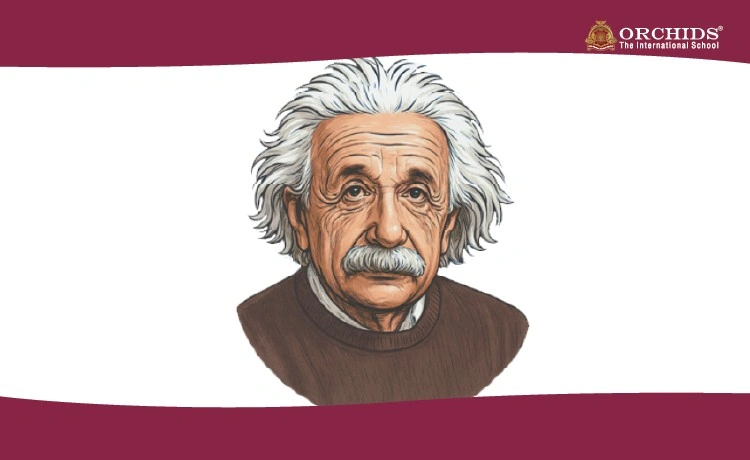
Here, he developed his habit of “thought experiments,” imagining scenarios in his mind to solve complex problems.
The fact!! Over time, his curiosity, hard work, and unique thinking earned him worldwide recognition, obtaining the Nobel Prize in Physics in 1921 for his work on the photoelectric effect.
Take a glimpse at a table showing different perspectives on his life:
|
Place |
Period / Age |
What He Did |
|
Munich, Germany |
Childhood |
Attended Luitpold Gymnasium and showed early interest in mathematics and physics |
|
Aarau, Switzerland |
Teenage years |
Attended a cantonal school and appreciated the liberal teaching style |
|
Swiss Federal Institute of Technology, Zurich |
1896–1900 |
|
|
Bern, Switzerland |
Early career, 1902–1909 |
|
|
Princeton, USA |
Later career, 1933–1955 |
|
|
Berlin, Germany |
1914–1933 |
|
Curious how Einstein came up with these ideas? Let’s go through them.
His Amazing Discoveries and Contributions
Albert Einstein changed the way we understand the universe. He looked closely at space, time, energy, and light, and came up with completely new ideas.
Let’s explore some of his most important discoveries:
- First, Einstein used Avogadro’s Number, which tells us how many particles are in one mole of a substance.

While studying the movement of tiny particles in fluids, he found a way to connect this number with the size of molecules. This means scientists could measure atoms and elements more accurately.
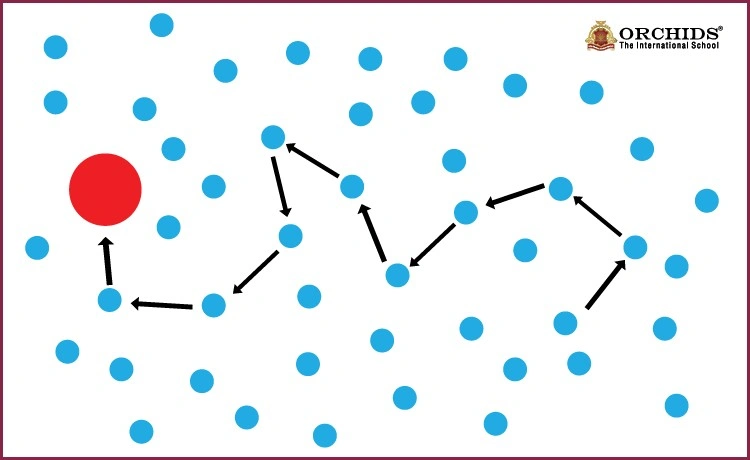
- Next, he studied the random movement of tiny particles in liquids, called Brownian movement. Einstein explained why these particles move in a zigzag way. This work helped prove that atoms and molecules really exist.
- Then, in 1905, Einstein suggested that light is made of small packets of energy called photons. He showed how light can knock electrons off metals. This idea helped scientists understand the strange behaviours of light and laid the foundation for quantum physics.
- After that, he came up with the Special Theory of Relativity. This theory shows how space and time are connected. It is based on two main ideas:
- The laws of physics are the same for everyone, no matter how they move.
- Light always travels at the same speed, no matter who is observing it.
Because of this theory, he came up with the famous equation E=mc², which shows how mass and energy are related.
- Einstein also explained the photoelectric effect. This happens when light hits a material and releases electrons, called photoelectrons.
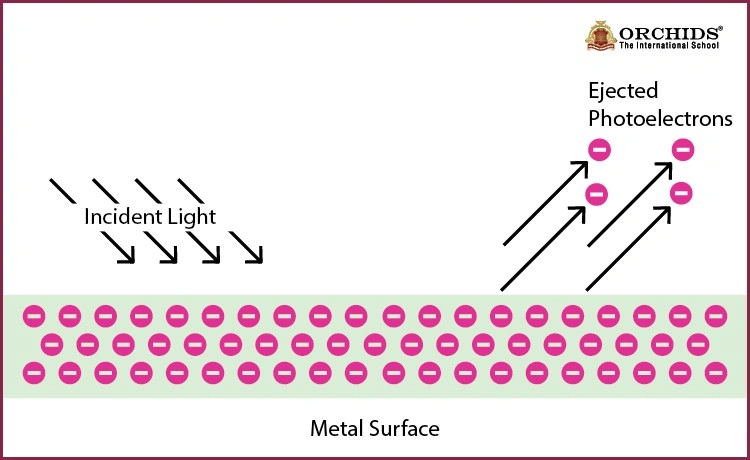
This discovery is very important in modern physics and won him the Nobel Prize in 1921.
- Then, in 1915, Einstein published the General Theory of Relativity. This theory explains gravity not just as a force, like Newton thought, but as the way space and time bend around objects.
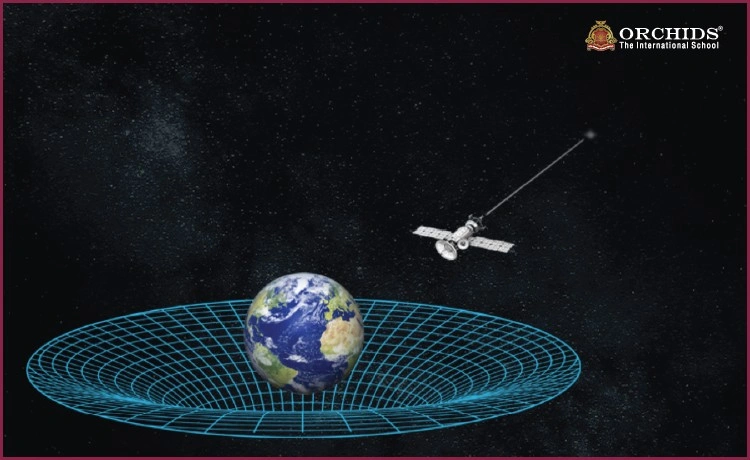
This helps explain black holes, the bending of light near stars, and how the universe grows.
- Finally, Einstein worked with Indian scientist Satyendra Nath Bose to study a special state of matter called the Bose-Einstein Condensate. When atoms are cooled almost to absolute zero, they group and act like a single particle. This discovery is important for understanding quantum physics.
So far, we have learned that Einstein's work didn’t just change physics. Einstein’s Theories and Discoveries continue to influence the way we understand the universe even today.
Frequently Asked Questions on Albert Einstein
1. What made Einstein famous?
Einstein became famous for his revolutionary ideas about light, energy, time, and space. His equation E=mc² and the photoelectric effect are some of his most famous contributions.
2. Why is the photoelectric effect important?
It explains how light can knock electrons out of a material. This principle is used in solar panels, cameras, and many modern devices.
3. Did Einstein only study space and time?
No, he also studied tiny particles, light, and how atoms behave. His work covers both the very large (planets, stars) and the very small (atoms, photons).
4. Who did Einstein collaborate with?
One famous collaboration was with Satyendra Nath Bose, where they studied the Bose-Einstein Condensate.
5. How did Einstein’s work affect everyday life?
From GPS satellites to solar energy and electronics, Einstein’s theories help make modern technology possible.
6. Was Einstein just about science?
Not at all. He was also a thinker who cared about peace, humanity, and education. He often spoke about curiosity, imagination, and the importance of asking questions.
Science isn't just a subject, it's the way of seeing the world. Curious how Orchids The International School teaches it that way? Talk to our admissions team.
Admissions Open for 2026-27
What type of concept pages would you prefer?
CBSE Schools In Popular Cities
- CBSE Schools in Bangalore
- CBSE Schools in Mumbai
- CBSE Schools in Pune
- CBSE Schools in Hyderabad
- CBSE Schools in Chennai
- CBSE Schools in Gurgaon
- CBSE Schools in Kolkata
- CBSE Schools in Indore
- CBSE Schools in Sonipat
- CBSE Schools in Delhi
- CBSE Schools in Rohtak
- CBSE Schools in Bhopal
- CBSE Schools in Aurangabad
- CBSE Schools in Jabalpur
- CBSE Schools in Jaipur
- CBSE Schools in Jodhpur
- CBSE Schools in Nagpur
- CBSE Schools in Ahmednagar
- CBSE School In Tumkur











Orchids The International School is one of India's leading chains of CBSE and ICSE schools, with 110+ schools across the country.