

Interconversion of Energy with Real-Life Examples for Class 5 Students
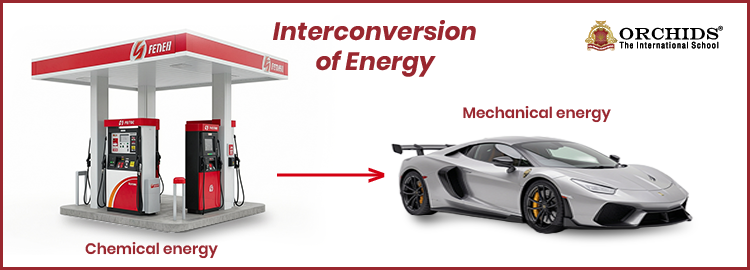
Interconversion of Energy is an important concept for class 5 that explains how energy can change from one form to another in our daily lives. From using electricity to cooking food, energy is constantly being transformed. We see many real-life examples where one type of energy is converted into another form, which helps us to perform different activities. In this article, we will understand what the interconversions of energies are with simple examples.
Table of Contents
- What is the Interconversion of Energy?
- Interconversion of the Forms of Energy in Daily Life
- Frequently Asked Questions on the Interconversion of Energy

What is the Interconversion of Energy?
Interconversion of energy means changing one form of energy into another form. This process happens all around us in everyday life.
Interconversion of energy is the process of transforming energy from one form to another (e.g., chemical to electrical), as stated in the law of conservation of energy.
Energy cannot be created or destroyed, only converted. Common examples include hydroelectric dams (potential to kinetic) and light bulbs (electrical to light).
Interconversion of the Forms of Energy in Daily Life
We saw that heat, light, wind, and solar energies can be used to produce electricity. This suggests that these energies are getting converted to electrical energy.
Similarly, electrical energy can be converted to heat, light, or sound energy.
- An electric bulb converts electrical energy to heat and light energy.
- A mic is used to convert sound energy to electrical energy, and speakers convert electrical energy back to sound energy.
- An electric cell converts chemical energy to electrical energy. Digestion is a process by which chemical energy stored in food is converted to mechanical energy and is stored in our muscles.
- Photosynthesis: Plants convert light energy from the sun into chemical energy.
- Engine: An internal combustion engine converts chemical energy (fuel) into a form of mechanical energy.
- Battery-operated device: Chemical energy in a battery is converted into light, sound, or motion.
- Appliances: A blender converts electrical energy into kinetic (mechanical) energy.
Till now, we have seen what interconversion of energy is and how energy changes from one form to another. We also studied different examples that show how energy is constantly being converted to help us perform various activities.
Frequently Asked Questions on the Interconversion of Energy
1. What is the interconversion of energy in simple terms?
Interconversion of energy is the process of changing one form of energy into another.
2. What are some examples of the interconversion of energy?
Examples include an electric bulb converting electrical energy to light and heat, and digestion converting chemical energy into mechanical energy.
3. How does an electric bulb show energy conversion?
An electric bulb converts electrical energy into light and heat energy.
4. How does sound energy convert into electrical energy?
A microphone converts sound energy into electrical energy.
Science isn't just a subject, it's the way of seeing the world. Curious how Orchids The International School teaches it that way? Talk to our admissions team.
Admissions Open for 2026-27
What type of concept pages would you prefer?
CBSE Schools In Popular Cities
- CBSE Schools in Bangalore
- CBSE Schools in Mumbai
- CBSE Schools in Pune
- CBSE Schools in Hyderabad
- CBSE Schools in Chennai
- CBSE Schools in Gurgaon
- CBSE Schools in Kolkata
- CBSE Schools in Indore
- CBSE Schools in Sonipat
- CBSE Schools in Delhi
- CBSE Schools in Rohtak
- CBSE Schools in Bhopal
- CBSE Schools in Aurangabad
- CBSE Schools in Jabalpur
- CBSE Schools in Jaipur
- CBSE Schools in Jodhpur
- CBSE Schools in Nagpur
- CBSE Schools in Ahmednagar
- CBSE School In Tumkur











Orchids The International School is one of India's leading chains of CBSE and ICSE schools, with 110+ schools across the country.