

Uses of Convex Lens
Uses of a convex lens can be seen in many everyday devices because this lens has a unique way of bending light. AConvex Lensis an optical device that converges light at one point.
Do you know that a convex lens is thicker in the middle? When light passes through a convex lens, the refracted light rays converge, or they are brought close together. We use convex lenses in microscopes, magnifying glasses, cameras, and to correct hypermetropia, and so on.
This article explains what convex lenses are and why they are used in so many everyday devices, all in simple language.
Table of Contents
- What is a Convex lens?
- Uses of a Convex Lens in Daily Life
- Frequently Asked Questions on Uses of a Convex Lens

What is a Convex Lens?
Have you ever seen a lens that makes things look bigger or clearer when you look through it?
That’s because of a convex lens! The term convex means curved outward, and this lens is thicker at the centre and thinner at the edges, which is the exact opposite of a concave lens.
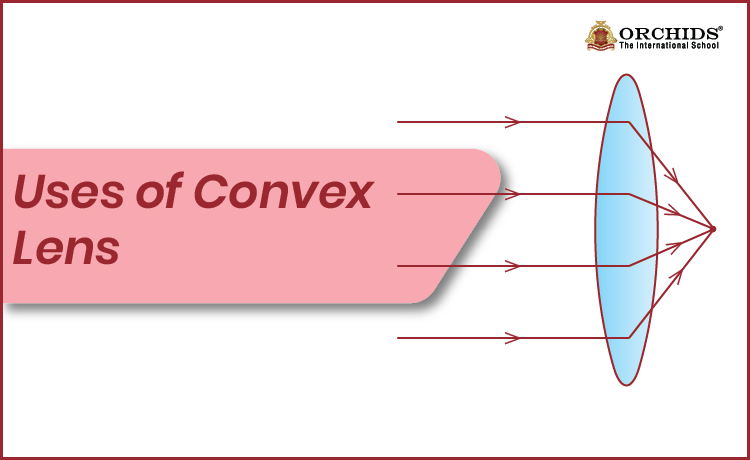
When light rays pass through a convex lens, they bend inward and meet at a single point, known as the principal focus. A convex lens brings the light rays together; it is also called a converging lens or a positive lens.
Convex lenses also come in different shapes based on how their surfaces are curved. There are 3 types, including:
- A Biconvex Lens has surfaces that are curved outward.
- A Plano-Convex Lens has one surface that is flat and the other curved outward.
- A Concavo-Convex Lens has one surface that curves inward and the other outward.
Read More: Convex Lenses
Uses of a Convex Lens in Daily Life
Have you ever wondered how some lenses make things look bigger or bring light rays together to a point?
That’s where a Convex Lens comes into the picture. It has a surface that curves outward, and when light passes through it, the rays bend inward and meet at a single point. Because of this, the image formed can be real and inverted or virtual and upright, depending on where the object is placed.
A simple example of its focusing power is the page-burning activity you might have tried in school. When sunlight passes through a magnifying glass, which is nothing but a convex lens, it converges at a single point.
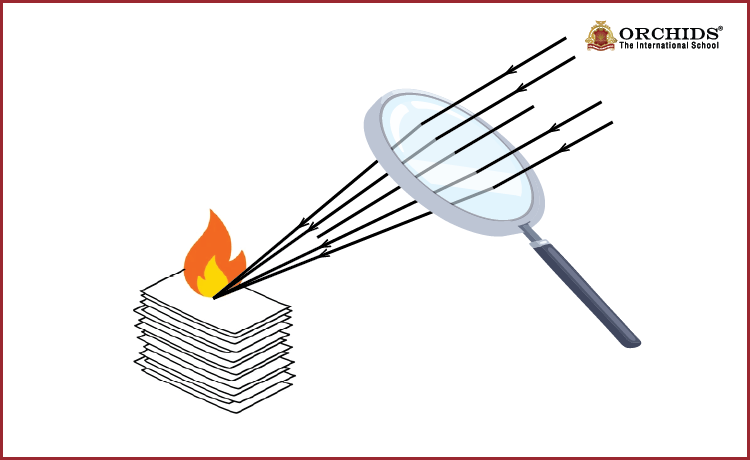
This convex lens bends the light rays inward so they meet at a single point called the principal focus. At this point, the light energy is concentrated enough to generate heat and ignite the paper.
Because of this important ability to bend and focus light at a single point, convex lenses have become an essential part of many everyday devices.
Now, let’s understand these uses of a convex lens one by one.
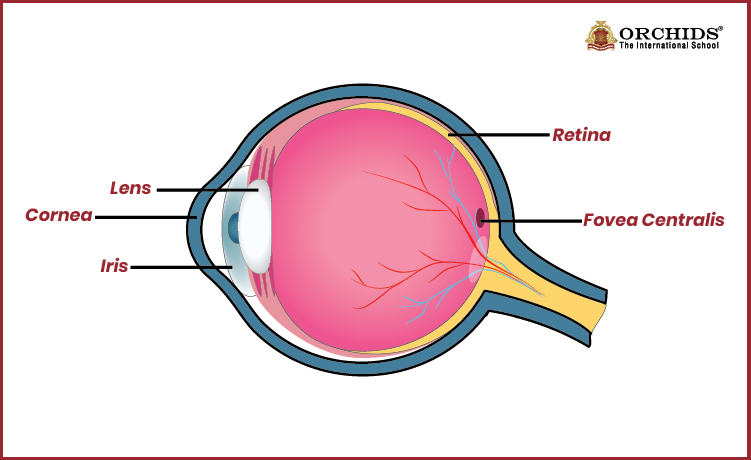
- The natural lens in Human Eyes is Biconvex in shape. It helps focus light on the retina so we can see clearly.
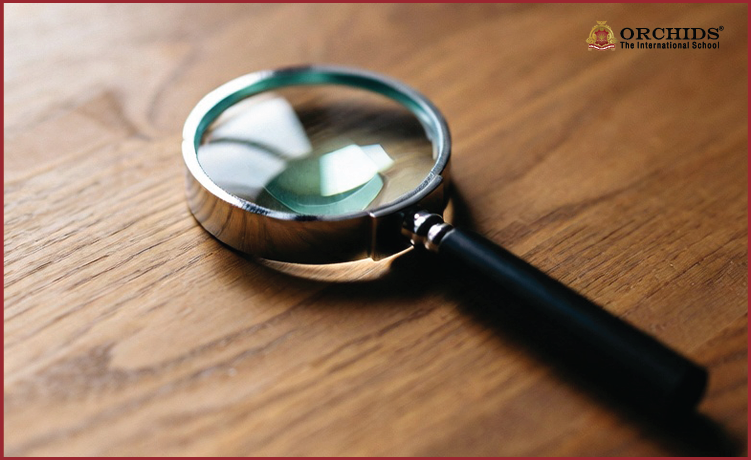
- In Magnifying Glasses, convex lenses are used to increase the size of the viewed object.
- To correct Hypermetropia (Long-Sightedness), people who cannot see nearby objects clearly use convex lenses in their spectacles to converge light correctly onto the retina.
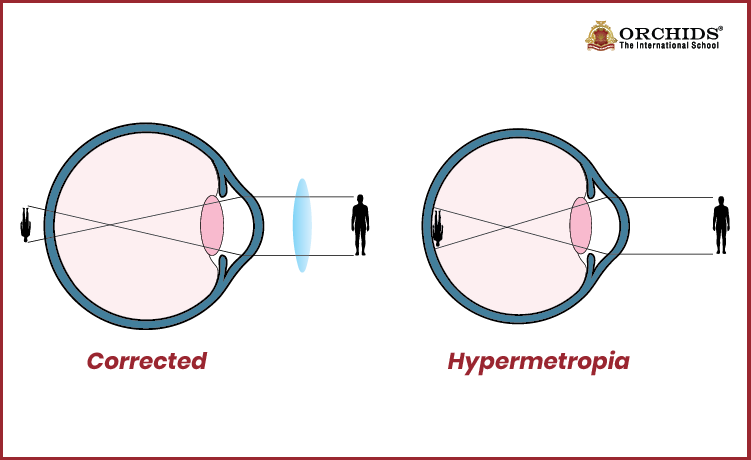
- Convex lenses in Cameras focus incoming light and produce sharp images on the sensor or film.
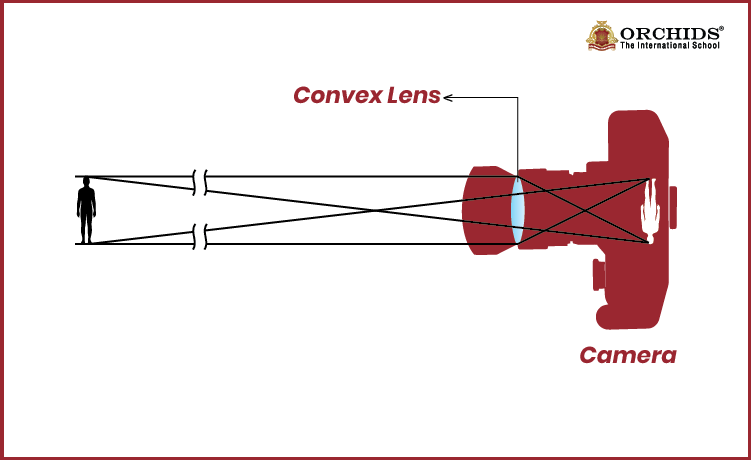
In Optical Instruments, like microscopes, telescopes, and projectors, convex lenses play an important role in enlarging or focusing images precisely. Let's discuss them one by one,
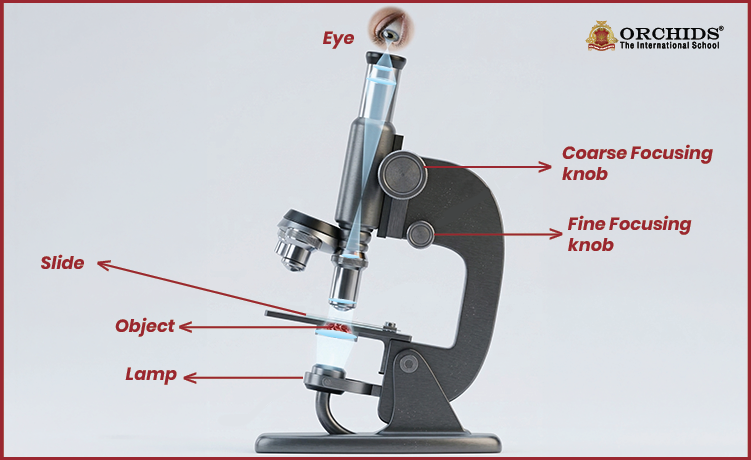
- A Microscope uses multiple convex lenses to magnify tiny objects that are invisible to the naked eye. The lenses bend light rays inward to create a large, clear, and detailed image of the specimen.
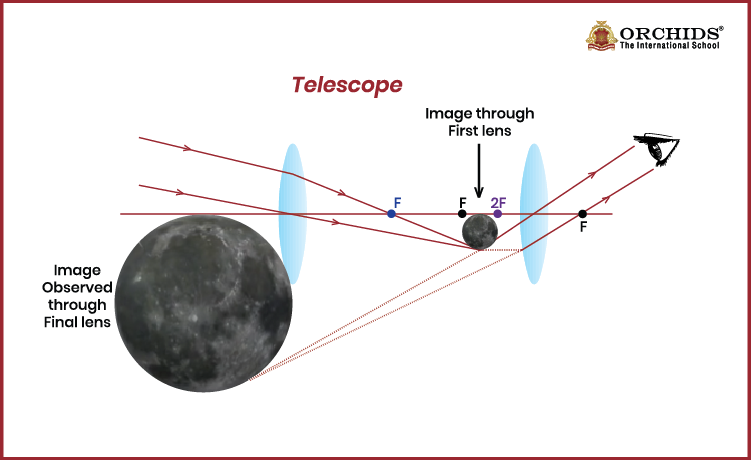
- A Telescope uses convex lenses to gather and focus light from distant objects, like stars and planets. The lenses help form a bright and enlarged image, making faraway celestial bodies easier to observe.
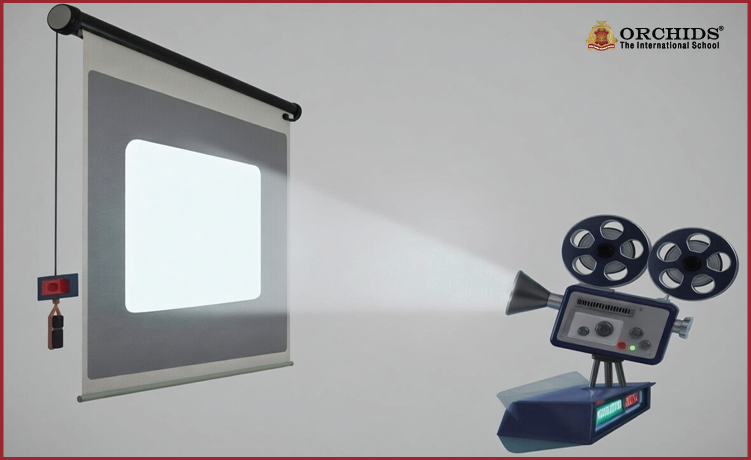
- In a Projector, a convex lens is used to focus and enlarge the image of a small film or digital display onto a large screen. It ensures that the image remains clear and sharp, even when projected over a distance.
- A convex lens is used in these cells as a light concentrator in Multi-junction solar cells are advanced devices used to generate electric power efficiently. The lens focuses incoming sunlight onto the solar cell, increasing the light intensity that falls on it.
This focused light helps the cell produce more power output compared to ordinary flat solar panels.
- Binoculars are designed for viewing distant objects on Earth. Each side of the binoculars contains a convex lens that helps gather and focus light, making faraway objects appear larger and clearer.
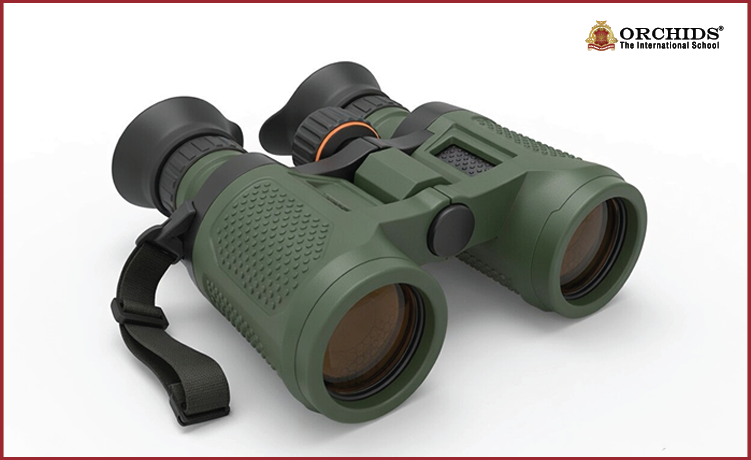
As binoculars help in adventures, they are commonly used for bird watching, viewing distant landscapes or people, and even for military and navigation purposes, where clear long-distance vision is essential.
Till now, we have learned how convex lenses play an important role in our everyday lives, from helping us see clearly through spectacles to capturing beautiful moments with cameras and exploring the universe through telescopes. Their ability to converge light makes them essential in many optical devices used for learning, science, and daily activities.
Frequently Asked Questions on Uses of a Convex Lens
1. What is a convex lens?
A convex lens is a transparent, curved lens that converges light rays to a single point. It is often used in magnifying glasses, cameras, and even our eyes!
2. What are 10 uses of convex lenses?
The 10 uses of a convex lens include its role in microscopes, magnifiers, cameras, telescopes, projectors, spectacles, flashlights, optical instruments, lasers, and human eyes. Each use helps focus or magnify light for clearer vision.
3. How does a Convex Lens work?
A convex lens bends light rays inward to a focal point. This helps form magnified or real images, depending on how far the object is placed.
4. Why is a Convex Lens called a converging lens?
A convex lens is called a converging lens because it brings parallel rays of light together at a point. This unique feature makes it ideal for focusing light in many optical devices.
5. Can both a Convex Lens and a Concave Lens be used in one device?
Yes, many optical instruments like cameras and telescopes use both convex and concave lenses together. This combination helps control how light travels to create sharp, clear images.
6. What are some daily life examples showing the uses of a Concave Lens?
You can see the uses of a concave lens in eyeglasses for short-sighted people, peepholes, and binoculars. They help make distant objects appear smaller and clearer.
7. Can water be used to make convex lenses?
A water drop has a dome-shaped surface and thus serves as a convex lens.
8. What is the use of a convex lens in spectacles?
The use of a convex lens in spectacles is to correct farsightedness. It helps focus light directly onto the retina so that distant objects appear clearer.
9. Are human eyes convex lenses?
Yes, human eyes have convex lenses that focus light on the retina. This natural lens helps us see objects clearly at different distances.
Science isn't just a subject, it's the way of seeing the world. Curious how Orchids The International School teaches it that way? Talk to our admissions team.
Admissions Open for 2026-27
What type of concept pages would you prefer?
CBSE Schools In Popular Cities
- CBSE Schools in Bangalore
- CBSE Schools in Mumbai
- CBSE Schools in Pune
- CBSE Schools in Hyderabad
- CBSE Schools in Chennai
- CBSE Schools in Gurgaon
- CBSE Schools in Kolkata
- CBSE Schools in Indore
- CBSE Schools in Sonipat
- CBSE Schools in Delhi
- CBSE Schools in Rohtak
- CBSE Schools in Bhopal
- CBSE Schools in Aurangabad
- CBSE Schools in Jabalpur
- CBSE Schools in Jaipur
- CBSE Schools in Jodhpur
- CBSE Schools in Nagpur
- CBSE Schools in Ahmednagar
- CBSE School In Tumkur











Orchids The International School is one of India's leading chains of CBSE and ICSE schools, with 110+ schools across the country.