

Origami for mindfulness: How folding paper can help kids stay calm and focussed
By Orchids Editorial Team |
Date 01-01-2026
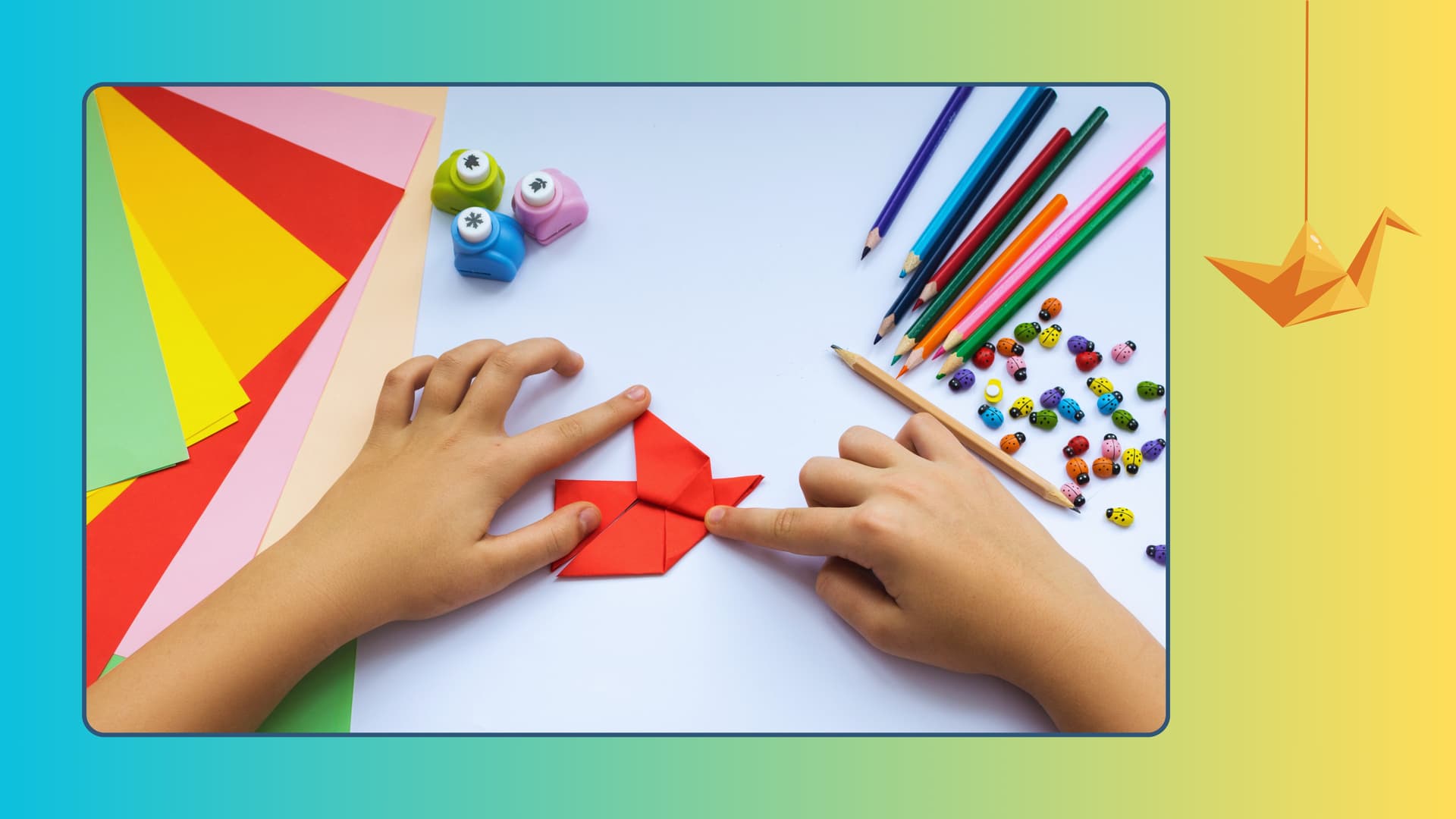
Associated with Zen-like calming qualities, Origami is known to promote resilience and emotional well-being in young people
Admissions Open for 2026-27
A few years ago when Origami – the traditional Japanese art of paper folding – saw a sudden spike in popularity, it was compared with the growing interest in adult colouring books which is believed to promote emotional well-being. Origami, on the other hand, is often associated with Zen-like calming qualities. Health experts around the world have attested to its various benefits - like improving hand-eye co-ordination, sequencing skills, maths reasoning as well as attention, mindfulness, creativity and patience.
Origami has its roots in Japan… or China?
A quick Google search will tell you that Origami traces its roots to 17th Century Japan. However, there also seems to be enough evidence to verify that the paper-folding tradition was long prevalent in China. Etymologically speaking, the term origami comes from the Japanese words ‘ori’ that translates as ‘fold’ and ‘kami’ meaning ‘paper’. Mind you, the ceremonial origami in Japan is referred to as ‘origata’ to distinguish it from origami, which is mostly considered a recreational art form. The craft involves deftly folding paper in various shapes and sizes - from geometric models to planes, birds, elephants, flowers, puppets, masks and more.

Also read: Is your kid ready for bite-sized lessons? The curious case of microlearning in schools
Mixing mathematics with elegant paper motifs
US physicist Robert Lang advocates a new scientific approach to origami that dovetails the principles of maths and engineering to fold ‘mind-blowingly intricate designs that are beautiful and, sometimes, very useful’.
Keys tactics of origami
Origami employs a mix of folds - including valley, mountain, reverse and squash - to reimagine and create a plethora of motifs. Its key tactics comprise wet-folding for soft curves, modular origami with multiple units and specialised folds for complex shapes. Here’s a closer look at the techniques:
-
Basic folds: Valley (v-shape), mountain (^^ shape), reverse (inside/outside), pleat (concertina), crimp (pleat on edge), squash (flattening a flap), petal (forming wings/petals) and sink (pushing a point inward).
-
Bases: Preliminary, bird, water bomb and square bases.
-
Wet folding: Dampening paper a bit to get soft, rounded and sculpted forms.
-
Modular: Putting together several identical folded units into a larger structure.
-
Diagramming: Making use of the universal Yoshizawa-Randlett system of symbols (lines/arrows) to display folds.
Also read: Critical thinking to phygital classrooms: Education trends shaping 2026 school year
How practicing origami can benefit your child
Who knew turning and folding colourful pieces of paper can boost your child’s emotional well-being and mindfulness! Origami can be therapeutic for young people who struggle with focus, anxiety and motor skills. Its key benefits include:
-
Reducing stress and anxiety: The rhythmic and repetitive practice of folding paper can help calm the mind, boost attention to encourage kids to be present at the moment.
-
Building patience and consistency: The step-by-step process motivates children to be imaginative, be patient, overcome mistakes and be consistent at the task.
-
Improving concentration and self-esteem: Following details and trusting the process can foster mental clarity as well as instill a sense of accomplishment, positivity and empowerment in children.
- Promoting creativity: Imagination takes centre stage in origami. Its many folds, shapes and motifs mean that the child is constantly motivated to imagine, create and master the craft.


Admissions Open for 2026-27
Recent Blogs



CBSE Schools In Popular Cities
- CBSE Schools in Bangalore
- CBSE Schools in Mumbai
- CBSE Schools in Pune
- CBSE Schools in Hyderabad
- CBSE Schools in Chennai
- CBSE Schools in Gurgaon
- CBSE Schools in Kolkata
- CBSE Schools in Indore
- CBSE Schools in Sonipat
- CBSE Schools in Delhi
- CBSE Schools in Rohtak
- CBSE Schools in Bhopal
- CBSE Schools in Aurangabad
- CBSE Schools in Jabalpur
- CBSE Schools in Jaipur
- CBSE Schools in Jodhpur
- CBSE Schools in Nagpur
- CBSE Schools in Ahmednagar
- CBSE School In Tumkur
Call Us to know more about Orchids











Orchids The International School is one of India's leading chains of CBSE and ICSE schools, with 110+ schools across the country.