

Sonic boom: Decoding the science behind the meteor explosion heard across US
By Bharati Wakchuare |
Date 01-06-2026
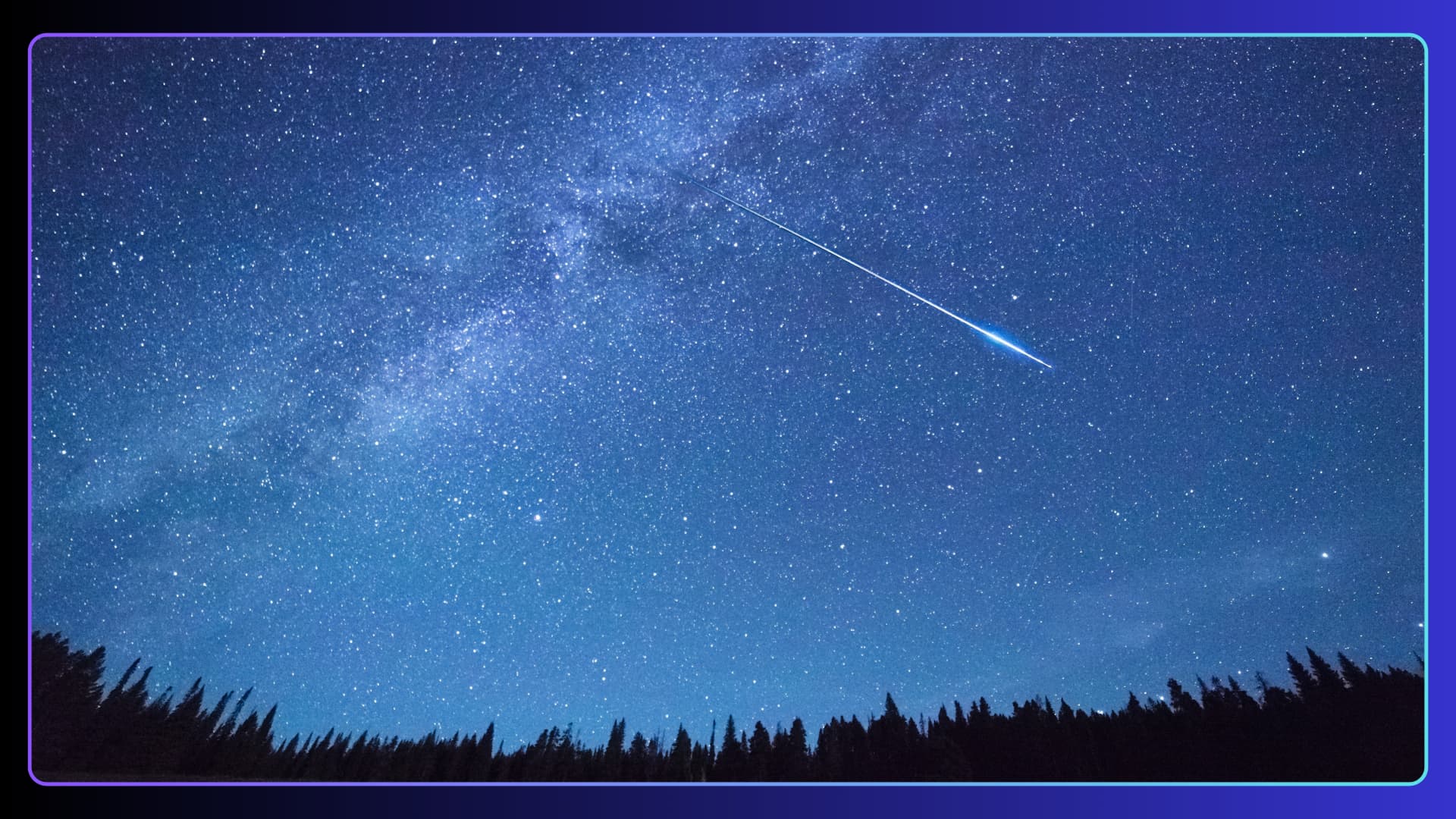
A representational image of a meteor falling through the sky
Admissions Open for 2026-27
A mysterious loud boom, shaking houses, and a bright fireball in the sky. These were the reports coming from parts of the northeastern United States on May 30, 2026. Thousands of people across Massachusetts, New Hampshire and neighbouring regions witnessed an unusual event that quickly became a trending topic on social media.
Scientists later confirmed that the loud noise was caused by a meteor exploding high in Earth’s atmosphere. According to NASA’s preliminary analysis, the meteor released energy equivalent to approximately 230 tonnes of TNT, creating a powerful sonic boom heard across a wide area.
But how did a meteor create such a loud sound? And what exactly is a sonic boom? Here is the science behind this remarkable event.
Meteor explosion over the northeastern US in May 2026
On the afternoon of May 30, residents across New England reported seeing a bright flash streak across the sky. Moments later, many heard loud explosive sounds that rattled windows and shook buildings.
Just imagine seeing a bright fireball racing across the sky, and within seconds, a thunderous boom follows. It is the kind of moment that stops you mid-sentence and sends you searching for answers.

Researchers at NASA estimated that the object was a meteor approximately 1.6 metres wide, entering Earth’s atmosphere at around 67,000 kilometres per hour. This raises an interesting question: if meteors enter Earth's atmosphere every day, why did this particular event receive so much attention?
The answer lies in the sheer amount of energy it releases. Scientists estimated that the meteor exploded with a force roughly equal to 230 tonnes of TNT. That enormous release of energy generated shock waves that spread through the atmosphere and eventually reached the ground.
The meteor fragmented at an altitude of around 50 kilometres, which helped prevent major damage on the surface. Fortunately, no injuries or significant destruction were reported.
Also read: How NASA is making space science fun and engaging through colouring books

Sonic boom in Bengaluru: What caused the loud sound in 2020
A similar sonic boom event was also reported in India. On May 20, 2020, people in many parts of Bengaluru heard a very loud sound. As windows rattled, some thought it was an earthquake, while others guessed it could be a thunder blast or even an accident. The sound was heard in areas like Whitefield, Marathahalli, Koramangala, HSR Layout, CV Raman Nagar and Ulsoor.
The Karnataka State Natural Disaster Monitoring Centre was quick to confirm that there were no seismic activities recorded in the city. Following which, the attention was turned to the Indian Air Force. It was later found out that a fighter aircraft was flying in the area for a test flight. The aircraft was flying faster than the speed of sound.
When an aircraft goes faster than sound, it creates a strong shock wave in the air. This shock wave makes a loud noise, called a sonic boom. According to the Ministry of Defence, the sound was caused by a routine test flight done in a safe area on the fringes of the Bengaluru. This event showed that even normal testing of fighter jets can sometimes create loud sounds that people in nearby areas can hear clearly.
What is a sonic boom
A sonic boom is a loud sound produced when an object travels at or faster than the speed of sound. The speed of sound in air is approximately 343 metres per second, or 1,235 kilometres per hour, under normal conditions. When an object moves slower than the speed of sound, the sound waves it creates spread out in all directions. But when the object moves faster, something different happens entirely.
The object begins to outrun its own sound waves. These waves become compressed together, forming powerful shock waves in the air. When those shock waves reach people on the ground, they are heard as a sudden, explosive sound: a sonic boom.
Why did the meteor create a sonic boom
Some meteors burn up quietly in the sky. Others create sounds loud enough to be mistaken for explosions. The difference lies in their speed and size. As this meteor travelled through the atmosphere, it compressed the air in front of it, creating strong pressure waves. When it broke apart, the sudden release of energy intensified those waves, producing a sonic boom powerful enough to shake homes across multiple states.
Scientists often compare the sound of a sonic boom to a clap of thunder, a cannon blast or a sharp crack in the sky. In this case, many people initially assumed an earthquake or industrial explosion had occurred.
What happens when a meteor enters Earth’s atmosphere
Meteors appear as bright streaks of light because of the intense interaction between the object and Earth’s atmosphere.
Here is what typically happens when a larger meteor enters:
- It travels at extremely high speed
- Air in front of the meteor becomes highly compressed
- Temperatures rise rapidly
- The meteor begins to glow, forming a bright fireball
- Internal stresses increase inside the object
- The meteor may break apart or explode
- Shock waves spread through the atmosphere
- A sonic boom may be produced
The bright fireball and the loud boom are both products of the same thing: the tremendous speed of the meteor and the energy released during its journey through the atmosphere. The May 2026 event followed this exact sequence, making it one of the most widely reported meteor incidents of the year.
Also read: Earthrise to Earthset: How our view of the planet has changed with time
Can sonic booms be dangerous?
Sonic booms are generally not dangerous to human health, but they can cause property damage and public alarm. The effects of a strong sonic boom can include shaking buildings, rattling windows, startling people and animals and creating temporary vibrations. In rare situations, extremely powerful shock waves can crack glass. However, since this meteor exploded high in the atmosphere, no significant damage was reported on the ground.
It is precisely this kind of real-world event that brings classroom physics to life. At Orchids The International School, phenomena like sonic booms are not just textbook topics. They are starting points for curiosity, discussion and a deeper understanding of how the physical world actually works.
Not just meteors: Other causes of sonic booms
Meteors are not the only source of sonic booms. Several other phenomena can produce them:
- Supersonic aircraft: Military fighter jets frequently fly faster than the speed of sound, producing sonic booms during flight.
- Space rockets: Rockets can create sonic booms during both launch and atmospheric re-entry.
- Experimental aircraft: Modern aerospace companies are developing aircraft capable of supersonic speeds while producing significantly quieter sonic booms.
- Volcanic eruptions: Powerful eruptions can generate atmospheric shock waves that produce loud booming sounds. Although these resemble sonic booms, they are caused by explosive pressure waves rather than objects exceeding the speed of sound.
- Earthquakes: Large earthquakes can sometimes produce booming or rumbling sounds through seismic vibrations and acoustic waves near the Earth's surface, though these are generally not classified as true sonic booms.
Fun facts about sonic booms
- A sonic boom is caused by shock waves, not by the engine of an aircraft
- The sound can be heard several kilometres away
- Meteors often travel more than 100 times faster than commercial aeroplanes
- The May 2026 US meteor was moving at approximately 120,000 kilometres per hour
- Sonic booms can sometimes be heard as a double boom due to multiple overlapping shock waves
When textbooks meet the real world
The May 2026 meteor event was more than a dramatic headline. It was a live demonstration of the physics that shapes our world every day: the speed of sound, the behaviour of shock waves, atmospheric pressure and the mechanics of energy release. Events like these are a reminder that science is never confined to a classroom. It is happening above us, around us and sometimes loudly enough to rattle the windows.
The next time you hear a loud, unexplained boom in the sky, you will know exactly what might be behind it.
Curious about how we bring real-world science to life in the classroom? Reach out to our admissions team to learn more about the learning environment at Orchids The International School.


Admissions Open for 2026-27
Recent Blogs






CBSE Schools In Popular Cities
- CBSE Schools in Bangalore
- CBSE Schools in Mumbai
- CBSE Schools in Pune
- CBSE Schools in Hyderabad
- CBSE Schools in Chennai
- CBSE Schools in Gurgaon
- CBSE Schools in Kolkata
- CBSE Schools in Indore
- CBSE Schools in Sonipat
- CBSE Schools in Delhi
- CBSE Schools in Rohtak
- CBSE Schools in Bhopal
- CBSE Schools in Aurangabad
- CBSE Schools in Jabalpur
- CBSE Schools in Jaipur
- CBSE Schools in Jodhpur
- CBSE Schools in Nagpur
- CBSE Schools in Ahmednagar
- CBSE School In Tumkur

Call Us to know more about Orchids











Orchids The International School is one of India's leading chains of CBSE and ICSE schools, with 110+ schools across the country.