

Diagram of Digestive System: Labeled Diagram, Organs and Their Roles in Human Body
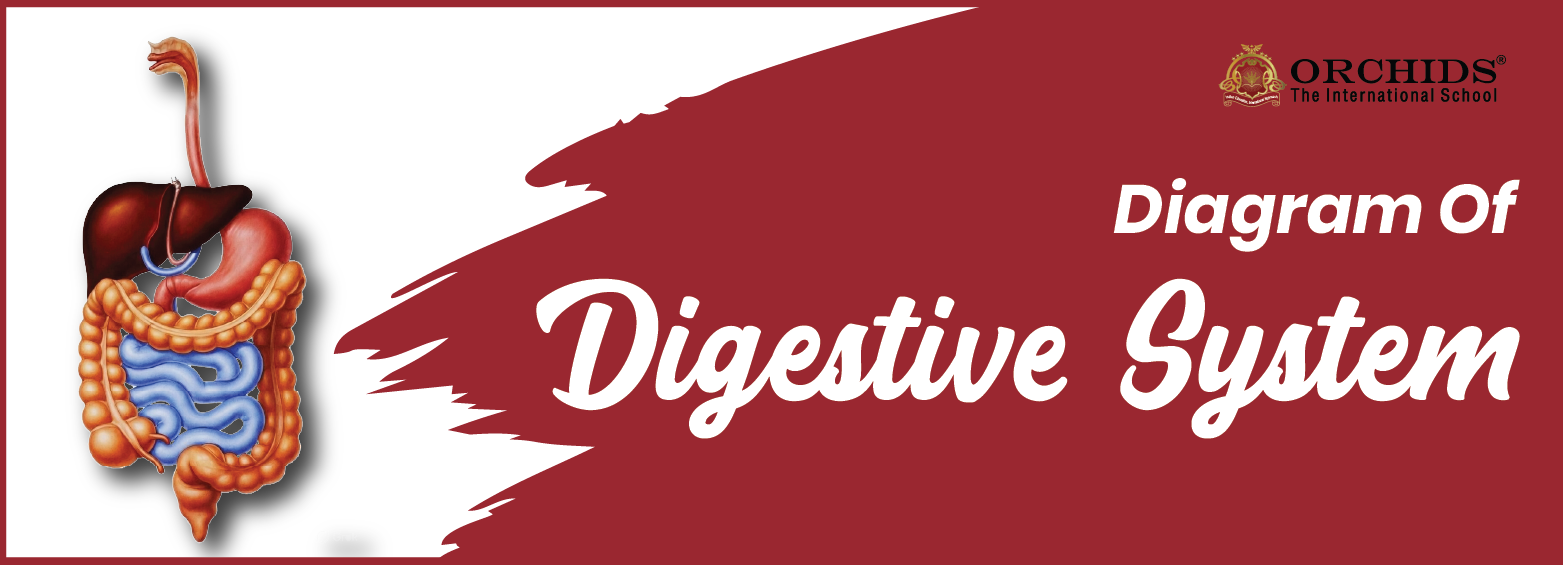
A diagram of digestive system shows all the important organs involved in digestion in one clear picture and helps us understand how food changes inside the body. We cannot see digestion happening inside us, but a labelled digestive system diagram makes the entire process easy to visualise. It clearly shows the path food follows and how each organ helps turn it into energy.
This article explains the main parts of the digestive system and how they work together and shows how a well-labelled diagram of the digestive system makes digestion easier to understand and remember.
Table of Contents
- What Do We Mean by the Structure of the Digestive System
- How to Draw a Well-Labelled Diagram of Digestive System
- Major Functions of Human Digestive System
- Frequently Asked Questions on Diagram of Digestive System
Before we start drawing the easy diagram of the digestive system, it is important to understand what digestion really is and what organs are involved.

What Do We Mean by the Structure of the Digestive System?
In simple words, the digestive system is a long, muscular tube supported by glands that work together to break food into simpler substances that the body can use.
So, how does digestion actually work?
When we eat food, it does not enter the blood directly. First, it is broken into smaller parts, changed into liquid form, absorbed into the body, and finally the waste is removed.
If we write digestion in one simple flow:
Food enters → Gets broken down → Nutrients absorbed → Waste removed
The main tube through which food travels is called the alimentary canal. Along with it, organs like the liver and salivary glands help in digestion.
The alimentary canal begins at the mouth and ends at the anus. Between these two points, food passes through several organs, and each one performs a different job.
The digestive system is designed in such a way that no step of digestion is skipped. From chewing to absorption, everything follows a fixed order.
With this basic idea clear, let us now see how to draw and understand the diagram of the digestive system.
How to Draw a Well-Labelled Diagram of Digestive System
When a question asks how to draw a well-labelled diagram of the digestive system, the easiest method is to think of digestion as a straight pathway from the mouth to the anus, with organs placed one after another.
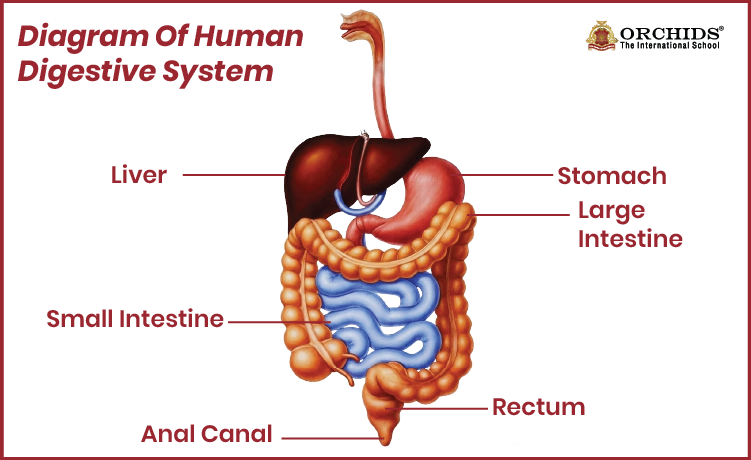
The digestive system can be divided into two main parts:
- The alimentary canal, where food travels
- The digestive glands that help in breaking down food
To understand this better, take a look at this easy diagram of digestive system, which shows all parts clearly connected.
Now, let us go through the organs in the same order in which food moves.
First, the beginning of digestion:
- The mouth is where digestion starts. Teeth grind the food into small pieces, and saliva mixes with it. This begins chemical digestion, making food easier to swallow.
- Next comes the throat region; the pharynx connects the mouth to the oesophagus and guides food safely into the digestive tract.
- Then comes the food pipe, the oesophagus is a long, muscular tube that pushes food downward using slow squeezing movements called peristalsis.
- Now digestion becomes stronger; the stomach is a muscular bag that stores food and mixes it with acids and enzymes. Here, food changes into a thick liquid so it can move easily into the intestine.
- Then comes the most important part of digestion: the small intestine is a long, coiled tube where most digestion and absorption happen. Nutrients slowly pass into the bloodstream from here.
- Finally comes waste management; the large intestine absorbs water and salts and turns waste into a solid form. The unused food is stored briefly and then removed from the body.
- Alongside the canal, one important gland supports digestion; the liver produces bile that helps in digesting fats. It also stores nutrients and removes harmful substances from the blood.
By adding all these parts carefully and labelling them neatly, you get a complete diagram of the digestive system of the human body.
Major Functions of Human Digestive System
The digestive system is not just a biology chapter. It plays a role in our health every single day.
Let us understand what it really does.
- When you eat, the digestive system breaks food into simpler substances so the body can absorb them easily.
- It supplies energy for daily activities such as walking, thinking, and growing.
- It supports tissue repair by providing nutrients needed to heal and rebuild cells.
- It regulates water balance through the large intestine.
- It removes waste materials that the body no longer needs.
Every organ does its job silently and continuously, and even a small problem in digestion can disturb the entire body.
This is why learning to draw the easy diagram of the digestive system is not just for marks. It explains how our body stays nourished and active.
Practice Time:
Try drawing the diagram neatly and label the following parts:
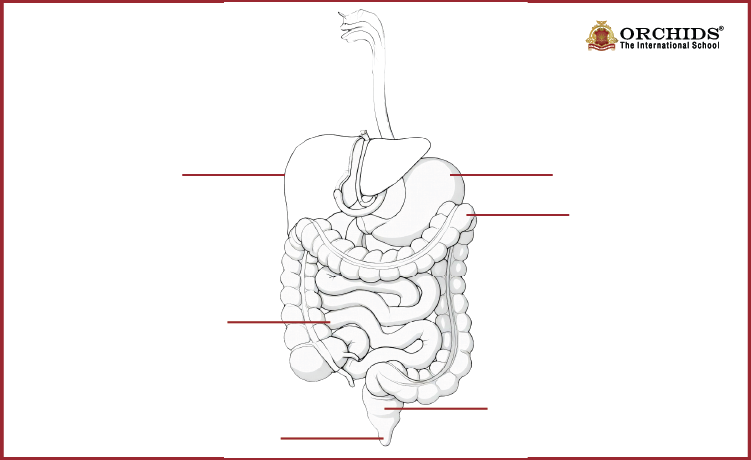
And it’s better to focus on clean labelling and the correct order of organs.
In this article, we learnt that the diagram of the human digestive system is more than just a drawing. It is a complete picture of how food becomes energy inside the body. A good diagram shows the full journey of food and makes digestion easy to understand.
Frequently Asked Questions on Diagram of Digestive System
1. What is a diagram of the human digestive system?
It is a well-labelled picture that shows all the organs involved in digestion and absorption, helping us understand how food moves through the body.
2. What is the function of the alimentary canal?
It carries food from the mouth to the anus and allows digestion, absorption, and removal of waste to take place.
3. Where does most digestion happen?
Most digestion occurs in the small intestine, where enzymes and digestive juices break food into simple nutrients.
4. What does the stomach do?
The stomach stores food temporarily and breaks it down using acids and enzymes into a semi-liquid form.
5. What is the role of the liver?
The liver produces bile, which helps in digesting fats, and also removes harmful substances from the blood.
6. Why are diagrams important for learning digestion?
Diagrams help us clearly see organ positions and understand how food passes through each part of the system.
7. What happens to undigested food?
Undigested food moves to the large intestine, where water is absorbed, and the remaining waste is pushed out of the body.
Science isn't just a subject, it's the way of seeing the world. Curious how Orchids The International School teaches it that way? Talk to our admissions team.
Admissions Open for 2026-27
What type of concept pages would you prefer?
CBSE Schools In Popular Cities
- CBSE Schools in Bangalore
- CBSE Schools in Mumbai
- CBSE Schools in Pune
- CBSE Schools in Hyderabad
- CBSE Schools in Chennai
- CBSE Schools in Gurgaon
- CBSE Schools in Kolkata
- CBSE Schools in Indore
- CBSE Schools in Sonipat
- CBSE Schools in Delhi
- CBSE Schools in Rohtak
- CBSE Schools in Bhopal
- CBSE Schools in Aurangabad
- CBSE Schools in Jabalpur
- CBSE Schools in Jaipur
- CBSE Schools in Jodhpur
- CBSE Schools in Nagpur
- CBSE Schools in Ahmednagar
- CBSE School In Tumkur











Orchids The International School is one of India's leading chains of CBSE and ICSE schools, with 110+ schools across the country.