

Nutrition in Amoeba: How This Tiny Organism Feeds and Survives
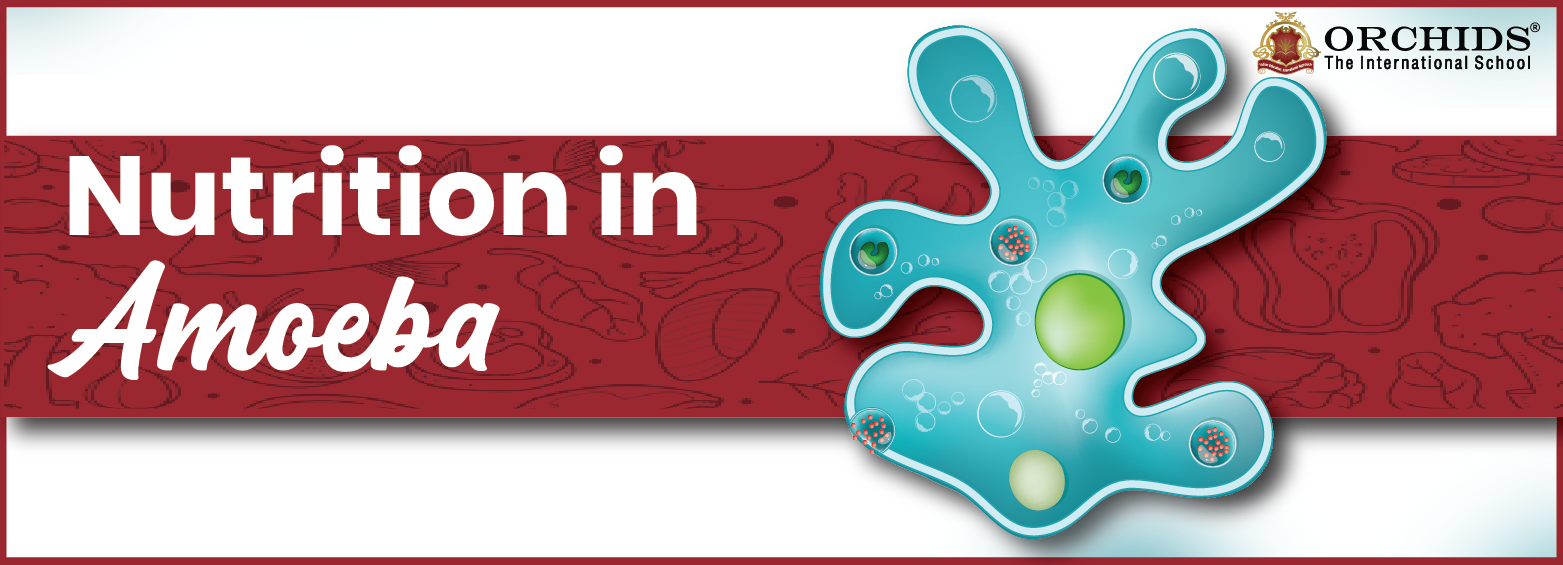
Nutrition in amoeba is an exciting topic in biology. Unlike plants that make their own food using sunlight, an amoeba cannot produce its own nourishment. It survives by taking tiny food particles from the water or soil around it.
Amoeba feeds through holozoic nutrition. It stretches out its body using pseudopodia to trap and engulf food, then digests it inside a special compartment called the food vacuole.
Even though it seems simple, this feeding method is essential for the survival of the amoeba. In this article, we will explore how an amoeba feeds, understand the steps involved, and see why its way of getting food is so unique.
Table of Contents
- What is the Structure of an Amoeba and How Does It Work?
- How Holozoic Nutrition Happens in 5 Steps
- Frequently Asked Questions on Nutrition in Amoeba

What Is the Structure of an Amoeba and How Does It Work?
Amoeba is a microscopic unicellular organism that feeds on bacteria, algae and other unicellular organisms. It is commonly found in ponds and freshwater streams.
Amoeba has a cell membrane, a round nucleus and small bubble-like structures called vacuoles in its cytoplasm. Amoeba has an irregular shape, it is capable of changing its shape and position. It gives out one or more finger-like projections called false feet or pseudopodia (singular pseudopodium).
.webp "Amoeba")
How Amoeba Gets Its Food: A Simple Step-by-Step Guide
Even though an amoeba is just a single cell, it has a clever way of feeding itself. It doesn’t have a mouth or digestive system like bigger animals, yet it can capture, digest, and absorb food all on its own.
In the following steps, we’ll explore exactly how nutrition happens in an amoeba and see the amazing process that keeps this tiny organism alive and active.
1. Ingestion
On sensing food, Amoeba gives out pseudopodia (false feet) that surround the food particle and ultimately take the food particle inside the body. The food particle inside the Amoeba forms a food vacuole.
2. Digestion
Digestive juices are secreted into the food vacuole thta help in the breaking down of food into simpler substances. then the digested food is absorbed.
3. Absorption and Assimilation
The digested food from the vacuole is absorbed. The absorbed food is assimilated and used by Amoeba to carry out functions such as growth and multiplication.
4. Egestion
The vacuole with the undigested food then moves towards the edge of the body. The vacuole burst open and the waste is thrown out through a temporary opening of th cell membrane.
.webp "Nutrition in Amoeba")
Till now, we have seen how an amoeba, despite being a single-celled organism, has a smart and efficient way of feeding itself. Through holozoic nutrition, it can capture food using pseudopodia, digest it inside a food vacuole, absorb the nutrients it needs, and remove the waste. This process provides the energy required for the amoeba to grow, move, and reproduce.
Frequently Asked Questions on Nutrition in Amoeba
1. What is the mode of nutrition in an amoeba?
Amoeba follows holozoic nutrition, where it engulfs food particles and digests them inside its cell.
2. How does an amoeba capture food without a mouth?
It uses its pseudopodia (false feet) to surround and engulf food particles through a process called phagocytosis.
3. What are the main steps involved in nutrition in amoeba?
The steps are ingestion, digestion, absorption, assimilation, and egestion.
4. Where does digestion take place in an amoeba?
Digestion occurs inside the food vacuole, where enzymes break down food into simpler substances.
5. Why is phagocytosis important for nutrition in amoeba?
Phagocytosis allows amoeba to actively take in food from its surroundings since it has no specialized digestive organs.
Science isn't just a subject, it's the way of seeing the world. Curious how Orchids The International School teaches it that way? Talk to our admissions team.
Admissions Open for 2026-27
What type of concept pages would you prefer?
CBSE Schools In Popular Cities
- CBSE Schools in Bangalore
- CBSE Schools in Mumbai
- CBSE Schools in Pune
- CBSE Schools in Hyderabad
- CBSE Schools in Chennai
- CBSE Schools in Gurgaon
- CBSE Schools in Kolkata
- CBSE Schools in Indore
- CBSE Schools in Sonipat
- CBSE Schools in Delhi
- CBSE Schools in Rohtak
- CBSE Schools in Bhopal
- CBSE Schools in Aurangabad
- CBSE Schools in Jabalpur
- CBSE Schools in Jaipur
- CBSE Schools in Jodhpur
- CBSE Schools in Nagpur
- CBSE Schools in Ahmednagar
- CBSE School In Tumkur











Orchids The International School is one of India's leading chains of CBSE and ICSE schools, with 110+ schools across the country.