

Bat Scientific Name
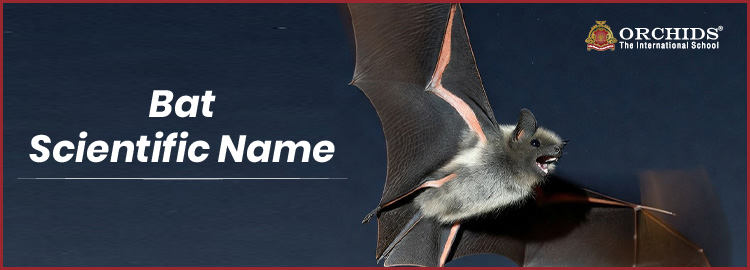
Bat scientific name refers to the formal biological name used to identify bats in scientific classification. Bats belong to the order Chiroptera, a term derived from Greek words meaning “hand wing,” which describes the unique structure of their wings. These flying mammals are found across the world and are known for their ability to fly and use echolocation. Although they may look similar, bats include many different species grouped under this scientific order.
This article explains bat scientific name in simple words, along with easy details about their classification, key characteristics, and importance in the ecosystem.
Table of Contents
- What Is the Scientific Name of Bat
- Do Different Bats Have Different Scientific Names?
- Why Is the Scientific Name for Bat Important?
- Frequently Asked Questions on Bat Scientific Name

What Is the Scientific Name of Bat?
The scientific name of bat is Chiroptera. However, this is not the name of just one bat species. It is the biological order under which all bats are grouped.
The word Chiroptera comes from Greek words.
- Cheir means hand.
- Pteron means wing.
So, Chiroptera literally means hand wing. This name perfectly describes how a bat’s wings are formed. A bat’s wing is actually a modified hand with skin stretched between its long fingers.
To see where bats fit in the animal kingdom, here is their scientific classification.
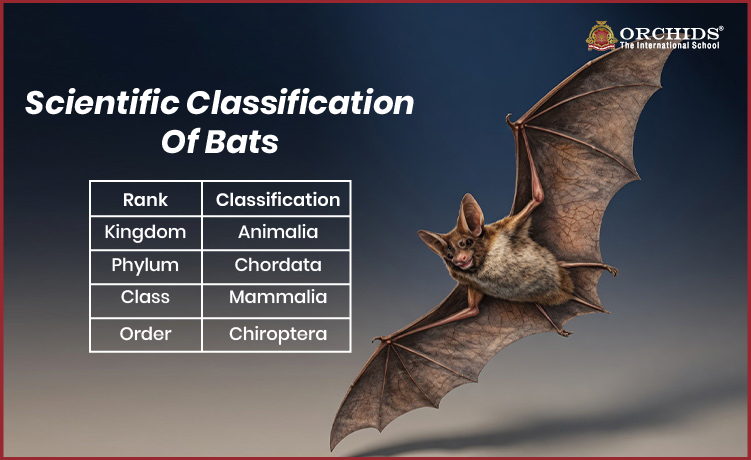
Bats are classified as:
|
Rank |
Classification |
|
Kingdom |
Animalia |
|
Phylum |
Chordata |
|
Class |
Mammalia |
|
Order |
Chiroptera |
Bats are mammals, not birds. They give birth to live babies and feed them milk. This makes them different from birds and unique among animals that can fly.
Do Different Bats Have Different Scientific Names?
Yes, they do. All bats belong to the order Chiroptera, but each species has its own unique scientific name. This helps scientists identify and study them correctly.
For example, the Indian flying fox is called Pteropus giganteus, the common vampire bat is known as Desmodus rotundus, and the little brown bat is called Myotis lucifugus. There are more than 1,400 species of bats in the world, and each one has its own scientific name.
Based on their features and eating habits, bats are mainly divided into two main types.
- The first group is Megabats, also called fruit bats. They mostly eat fruits and nectar. An example is Pteropus giganteus.
- The second group is Microbats. These bats mainly eat insects and use echolocation to move and hunt in the dark. An example is Myotis lucifugus.
This classification helps us understand how different bats live and survive in nature.
Why Is the Scientific Name for Bat Important?
Scientific names are important because they help everyone identify the same animal clearly. Common names can change from place to place, but a scientific name is the same all over the world. This removes confusion and makes communication easier.
Scientific names also help scientists study animals properly. They make research, learning, and conservation work more accurate. When the correct species is identified, it becomes easier to protect it.
For example, a bat may be called by different names in different regions, but its scientific name remains the same everywhere.
Now that we understand their scientific name, let us look at some unique features that make bats special.
Bats have some very special features that make them different from other animals.
- First, they are the only mammals that can truly fly. Unlike animals that only glide, bats can flap their wings and fly like birds.
- Second, most bats use echolocation to find food. They make sounds that bounce back to them, helping them locate insects in the dark.
- Bats are mostly active at night and rest during the day.
- They also help nature in many ways. Some bats help in pollination, while others control insects by eating them. Because of this, bats play an important role in keeping the environment balanced.
Till now, we have studied that the scientific name of bats, Chiroptera, represents the entire order of these unique flying mammals. Understanding their scientific names helps scientists accurately identify, study, and conserve these fascinating creatures worldwide. Ultimately, the use of scientific classification ensures clarity, consistency, and a deeper appreciation of the diversity within the bat family.
Frequently Asked Questions on Bat Scientific Name
1. What is the scientific name used for bats?
Bats are scientifically placed under the order Chiroptera, though each species has its own specific scientific name.
2. What does the word Chiroptera literally mean?
The term Chiroptera means “hand wing,” describing the unique structure of a bat’s wings.
3. Why are bats classified under Chiroptera?
Bats are grouped under Chiroptera because of their wing structure and their ability to perform true flight as mammals.
4. What is the scientific name of the Indian flying fox bat?
The Indian flying fox is scientifically known as Pteropus giganteus.
5. How are bats scientifically different from other flying animals?
Unlike birds and insects, bats are mammals and belong to the class Mammalia.
6. How many types of bats have scientific names?
There are more than 1,400 bat species, and each one has its own scientific name.
7. What family do fruit bats belong to in scientific classification?
Fruit bats belong to the family Pteropodidae under the order Chiroptera.
8. Why do scientists rely on scientific names when studying bats?
Scientific names provide a universal identification system that avoids confusion across regions and languages.
Science isn't just a subject, it's the way of seeing the world. Curious how Orchids The International School teaches it that way? Talk to our admissions team.
Admissions Open for 2026-27
What type of concept pages would you prefer?
CBSE Schools In Popular Cities
- CBSE Schools in Bangalore
- CBSE Schools in Mumbai
- CBSE Schools in Pune
- CBSE Schools in Hyderabad
- CBSE Schools in Chennai
- CBSE Schools in Gurgaon
- CBSE Schools in Kolkata
- CBSE Schools in Indore
- CBSE Schools in Sonipat
- CBSE Schools in Delhi
- CBSE Schools in Rohtak
- CBSE Schools in Bhopal
- CBSE Schools in Aurangabad
- CBSE Schools in Jabalpur
- CBSE Schools in Jaipur
- CBSE Schools in Jodhpur
- CBSE Schools in Nagpur
- CBSE Schools in Ahmednagar
- CBSE School In Tumkur











Orchids The International School is one of India's leading chains of CBSE and ICSE schools, with 130+ schools across the country.