

Ball and Socket Joint: Structure, Types and Importance Explained
The ball and socket joint helps us understand how our body achieves smooth and flexible movement every day. Although we rarely think about it, this joint plays a powerful role behind the scenes by allowing our arms and legs to move freely in many directions. Interestingly, this is why the ball and socket joint is considered one of the most important and versatile joints in the human body.
This article focuses on what is ball and socket joint is, how it works, ball and socket joint examples and why it is essential for movement, balance, and overall body function.
Table of Contents
- What is a Ball and Socket Joint
- Structure of Ball and Socket Joint
- Functions and Importance of Ball and Socket Joints
- Frequently Asked Questions on Ball and Socket Joint

What is a Ball and Socket Joint?
In simple words, a joint is the place where two or more bones meet, helping the body move while also giving it strength and support.
Have you ever wondered how your arms rotate so easily or how your legs move freely while walking or running?
This smooth movement is possible because of joints. And the scientific study of joints is known as arthrology.
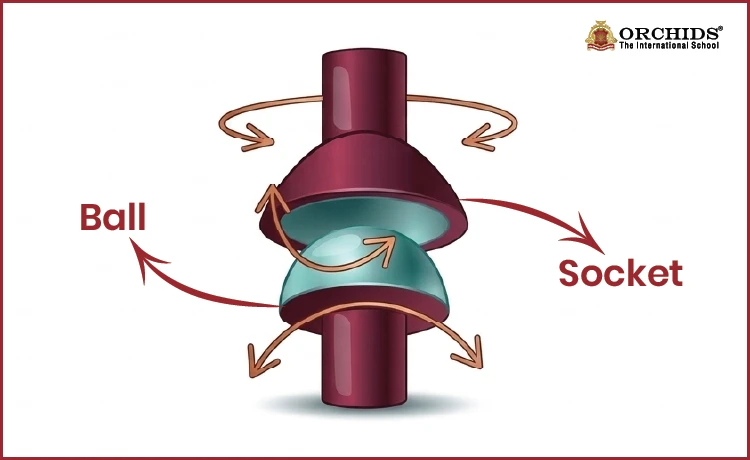
Based on their structure and movement, joints are grouped into:
-
Movable joints
-
Slightly movable joints
-
Immovable joints
-
Fibrous joints
-
Cartilaginous joints
-
Synovial joints
Among these, the ball-and-socket joint is one of the most flexible and important types.
So, what makes this joint special?
Let’s discuss.
A ball and socket joint is a kind of synovial joint where the rounded end of one bone fits neatly into the cup-shaped socket of another. This design allows movement in many directions.
That is why your arm can rotate in a circle, and your leg can move forward, backwards, and sideways with ease.
-
To support this wide range of motion, the joint is protected by a capsule and filled with synovial fluid, which reduces friction between bones.
-
Strong ligaments and muscles also surround the joint, holding the bones firmly in place while still allowing free movement.
Because of this smart structure, the ball and socket joint lets the body bend, stretch, rotate, and move smoothly.
The most common ball and socket joint examples can be found in the shoulder and hip.
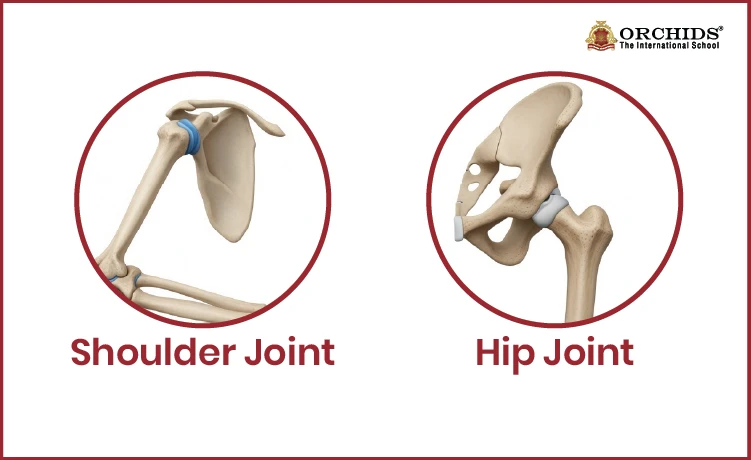
The shoulder allows you to lift, twist, and swing your arms, while the hip helps you stand, walk, and run. These joints quietly work every day to keep your body active and balanced.
So, what allows a ball and socket joint to move so freely without falling apart?
Structure of Ball and Socket Joint
The answer lies in its carefully designed structure, where each part plays a key role in movement, protection, and stability:
1. It includes a rounded bone end that fits into a deep, curved socket, forming the basic shape of the joint.
2. Surrounding this is a tough yet flexible joint capsule that seals the joint and holds everything in place.
3. Lining the inside of this capsule is the synovial membrane, which produces synovial fluid.
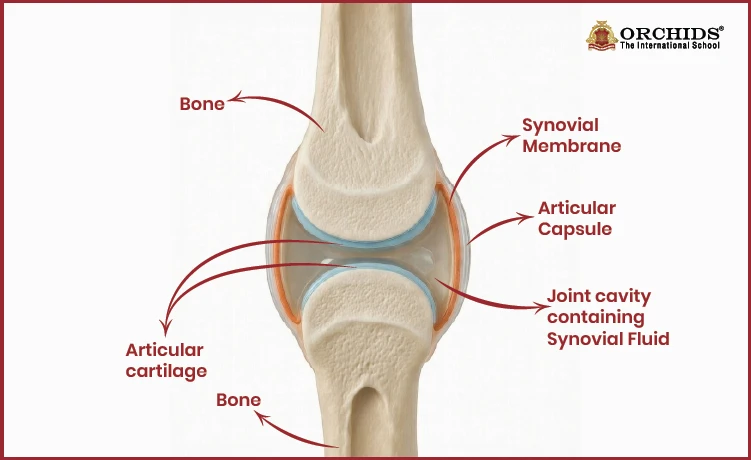
4. This fluid works like oil in a machine, allowing smooth movement and preventing wear and tear between bones.
5. Strong ligaments connect bone to bone, while tendons link muscles to bones, giving the joint strength and control.
It is interesting to note that they prevent excessive movement and reduce the risk of dislocation.
Each structure has a clear role, and when they work together, they make the ball and socket joint one of the strongest and most flexible joints in the human body.
Functions and Importance of Ball and Socket Joints
Ball and socket joints perform important movement functions such as:
1. They allow the arms and legs to rotate, twist, and move in multiple directions, making actions like swinging, reaching, and turning possible.
2. At the same time, they enable lifting and lowering movements, such as raising your arms overhead or stepping up onto a platform.
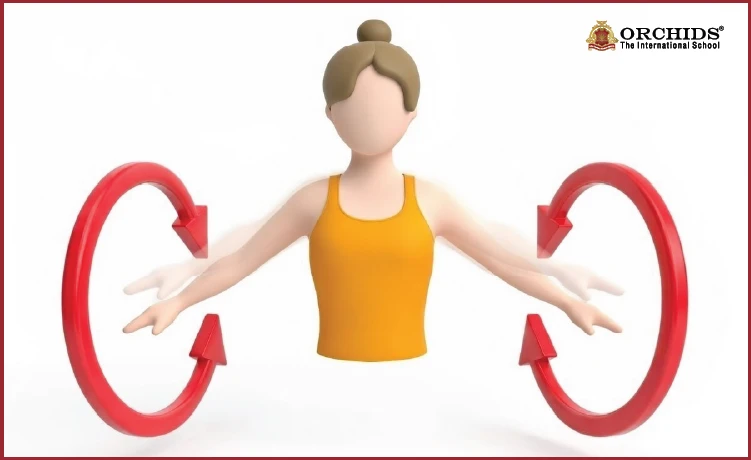
3. These joints also support circular motions and permit bending and straightening of limbs, which are crucial for activities like walking, running, and stretching.
Beyond movement, they provide the strength and coordination needed for daily life, helping you perform simple tasks like sitting, standing, or picking up objects, as well as more complex actions like throwing, dancing, or playing sports.
From simple actions like reaching for an object to active movements like jumping or running, ball and socket joints play a silent but powerful role in your everyday life.
The hip joint supports body weight, while the shoulder joint provides flexibility. Together, they allow full physical mobility.
Till now, we have studied what is ball and socket joints are one of the most flexible and functional joints in the human body. Their special design enables wide movement, rotation, and balance. Understanding this joint helps students learn how the skeletal system supports motion and coordination.
Frequently Asked Questions on Ball and Socket Joint
1. What is a ball and socket joint in simple terms?
A ball and socket joint is a movable joint where a rounded bone end fits into a hollow socket, allowing movement in all directions, including rotation.
2. Where are ball and socket joint examples found in the human body?
These joints are mainly found in the shoulder and hip, where wide movement and support are required.
3. What types of movements do ball and socket joints allow?
They allow lifting, lowering, rotating, and circular movements of the arms and legs.
4. Why is a ball and socket joint classified as a synovial joint?
It is called a synovial joint because it has a fluid-filled cavity that reduces friction and helps the bones move smoothly.
5. How does a ball and socket joint differ from a hinge joint?
A hinge joint moves only in one direction, like a door, while a ball and socket joint moves in many directions and also allows rotation.
6. Which is more flexible, the shoulder joint or the hip joint?
The shoulder joint is more flexible because it allows greater movement, while the hip joint is stronger to support body weight.
7. What provides strength and stability to a ball and socket joint?
Ligaments, muscles, and the joint capsule hold the bones tightly and prevent slipping or dislocation.
8. Why are ball and socket joints important in our daily lives?
They allow us to perform activities like walking, running, lifting objects, throwing, and bending easily.
Science isn't just a subject, it's the way of seeing the world. Curious how Orchids The International School teaches it that way? Talk to our admissions team.
Admissions Open for 2026-27
What type of concept pages would you prefer?
CBSE Schools In Popular Cities
- CBSE Schools in Bangalore
- CBSE Schools in Mumbai
- CBSE Schools in Pune
- CBSE Schools in Hyderabad
- CBSE Schools in Chennai
- CBSE Schools in Gurgaon
- CBSE Schools in Kolkata
- CBSE Schools in Indore
- CBSE Schools in Sonipat
- CBSE Schools in Delhi
- CBSE Schools in Rohtak
- CBSE Schools in Bhopal
- CBSE Schools in Aurangabad
- CBSE Schools in Jabalpur
- CBSE Schools in Jaipur
- CBSE Schools in Jodhpur
- CBSE Schools in Nagpur
- CBSE Schools in Ahmednagar
- CBSE School In Tumkur











Orchids The International School is one of India's leading chains of CBSE and ICSE schools, with 130+ schools across the country.