

Anxiety Symptoms
Anxiety symptoms are the physical and psychological signs that appear when the body’s stress response becomes too strong or persistent. They may include constant worry, restlessness, rapid heartbeat, dizziness, muscle tension and trouble concentrating. When these anxiety symptoms continue for a long time, they may indicate an anxiety disorder.
This article explains anxiety symptoms, what causes them, the different types of anxiety, available treatments and key prevention methods, while keeping all essential details from the provided content.
Table of Contents

What Is Anxiety?
Anxiety is the body’s natural reaction to stress or perceived danger. Almost everyone feels anxious at some point, before an exam, a job interview, or while waiting for important results.
This short-term anxiousness is normal. However, when the feeling continues for months and interferes with daily activities, it becomes an anxiety disorder.
But when does it become an anxiety disorder symptom?
It happens when the worry lasts for months, disrupts daily life and begins affecting thoughts, emotions and behaviour. People may feel constant tension, fear or restlessness, and this can take many different forms.
So what types of anxiety do people commonly experience?
Let’s discuss.
-
Generalised Anxiety Disorder (GAD) involves persistent, excessive worry about everyday situations, even when there is no obvious cause.
-
Panic Disorder is marked by sudden, intense panic attacks that bring symptoms like chest tightness, sweating, shaking and a racing heartbeat.
-
Social Anxiety Disorder causes overwhelming fear of social interactions due to concerns about embarrassment, criticism or being judged.
-
Medication- or Substance-Induced Anxiety triggered by certain medications, drugs or withdrawal, leading to heightened anxiety or emotional instability.
-
Selective Mutism is mostly seen in children, where they speak normally at home but are unable to speak in public or school due to severe social fear.
-
Separation Anxiety creates intense distress when away from a loved one, often accompanied by fear that something bad may happen to them.
-
Specific Phobias involve a strong, irrational fear of particular objects or situations, such as heights, flying, needles or animals.
- Agoraphobia results in fear of places or situations that seem difficult to escape from, including crowded areas, public transport or enclosed spaces.
Also Read: Depression Symptoms
Major Signs and Symptoms of Anxiety
Anxiety starts in the mind, and that’s why emotional and cognitive symptoms show up first. But why do they feel so overwhelming?
Because the brain stays in a constant alert mode, making even simple situations feel threatening.
The below image shows the major signs and symptoms of anxiety:
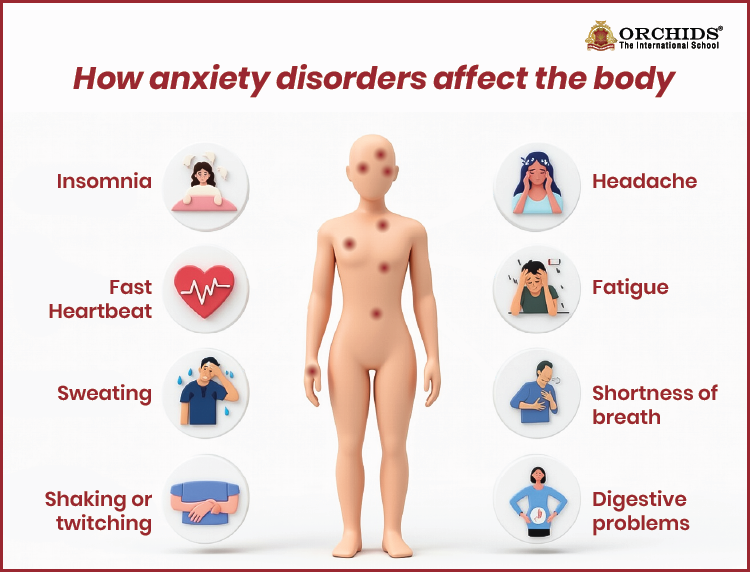
Now, let’s walk through the major psychological symptoms of anxiety attack step by step.
-
To begin with, persistent worry or fear is usually the first and strongest signal. It keeps returning throughout the day, even when there’s nothing specific to fear.
-
Along with worry, a sense of restlessness or being “on edge” becomes common. You may feel unable to settle, sit still or relax.
-
Irritability follows because the nervous system is overstimulated, making small triggers feel bigger than they are.
-
As anxiety builds, concentrating on tasks becomes harder. The mind jumps quickly, making it difficult to stay focused.
- Moving ahead, rumination, the habit of overthinking the same thoughts repeatedly, becomes a major drain on mental energy.
Once the mind becomes anxious, the body reacts as if it’s facing danger. This “fight-or-flight” response can create a wide range of physical symptoms of anxiety.
So how do symptoms of anxiety show up?
Let’s go through the major physical anxiety disorder symptoms one by one.
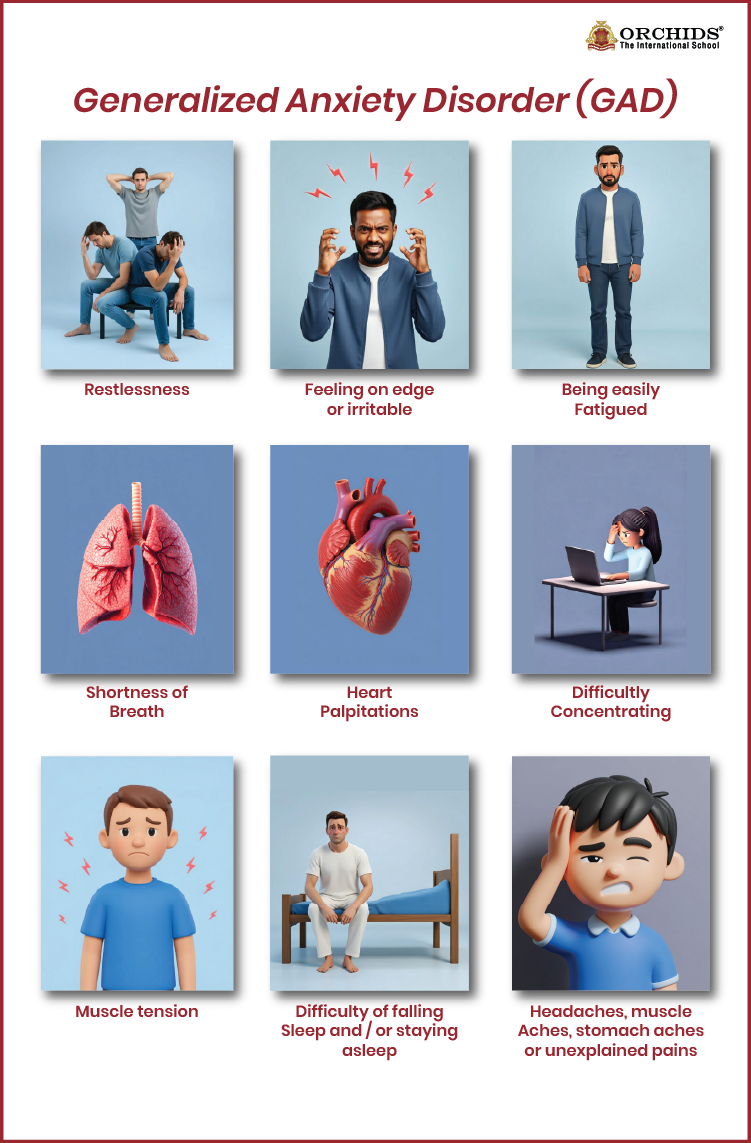
-
To start, rapid breathing or hyperventilation is very common. It can suddenly make you feel out of breath.
-
Right with it, shortness of breath appears as breathing becomes shallow and the chest starts to tighten.
-
The heart reacts too, leading to a racing or pounding heartbeat that many people mistake for a heart problem.
-
In some moments, palpitations occur when the heart feels like it is fluttering or skipping beats.
-
Moving further, hands and feet may turn cold, sweaty or numb as blood flow shifts during stress.
-
Tingling sensations can spread across the body when the nerves become highly sensitive.
-
The digestive system reacts quickly, causing nausea, stomach discomfort or a nervous feeling in the stomach.
-
Many people also experience dizziness or a faint sensation because of rapid breathing or muscle tension.
-
A dry mouth becomes noticeable when the body reduces saliva production during stress.
-
Some people feel brief “electric shock” sensations that happen due to heightened nerve activity.
-
As anxiety continues, fatigue sets in because the body struggles to cope with constant tension.
-
Headaches can develop due to tight muscles and prolonged stress.
-
Muscle tension increases, especially in the shoulders, neck and jaw.
-
Shooting pains may appear in the face when nerves tighten or overreact.
-
Finally, trouble staying still or relaxing becomes more obvious as the body feels unsettled even when the mind wants to rest.
These symptoms may occur occasionally or frequently and often worsen during periods of stress.
You may wonder what actually causes anxiety disorders.
Let’s find out.
1. For many people, it begins with genetic tendencies or overactive brain circuits involved in fear and emotion.
2. Stressful events, ongoing pressure at work or school, or past trauma can also push the mind toward anxiety. This naturally leads to another question: can physical health contribute to?
3. Yes, conditions like thyroid problems, heart or lung issues, and even substance misuse or withdrawal can raise the risk. Anxiety is also more common when someone already has another mental health concern.
Once the causes are clearer, the next question is usually how anxiety can be treated.
Let’s discuss.
Most people benefit from a mix of counselling, therapy and medication.

1. Counselling helps identify triggers, while therapies like CBT, psychotherapy and behaviour therapy work on shifting unhelpful thought patterns.
2. When symptoms are stronger, doctors may prescribe antidepressants, anti-anxiety medicines or buspirone.
And the follow-up question is common: do lifestyle habits matter?
The fact is that they do. Exercise, breathing practices, consistent sleep and a balanced diet all support recovery.
This brings up one final question: can anxiety be prevented?
Not always, but healthy routines can lower the risk. Eating well, sleeping regularly, avoiding alcohol, smoking, cannabis and recreational drugs, limiting caffeine and practising relaxation methods like yoga or mindfulness help keep anxiety in check and build emotional resilience.
Till now, we have discussed that anxiety itself is not a serious medical emergency, but long-term, untreated anxiety disorder symptoms can worsen physical and mental health. Early therapy, such as CBT, hypnosis or psychotherapy, can significantly improve well-being.
Frequently Asked Questions on Anxiety Symptoms
1. What are the physical and psychological symptoms of anxiety?
Anxiety can cause worry, fear, irritability, poor focus and physical symptoms like a racing heart, rapid breathing, sweating, trembling, dizziness and nausea.
2. How is general anxiety different from an anxiety attack?
General anxiety builds gradually and stays for longer periods, while an anxiety attack appears suddenly with intense fear and strong physical symptoms.
3. What biological factors can cause anxiety disorder symptoms?
Anxiety can stem from neurotransmitter imbalances, overactive fear circuits in the brain, genetics, hormonal changes or underlying medical issues.
4. How do you differentiate anxiety from depression?
Anxiety is marked by fear, worry and physical tension, whereas depression is defined by persistent sadness, hopelessness and a loss of interest in daily activities.
5. Why does anxiety cause symptoms like rapid breathing or a racing heart?
These symptoms occur because anxiety triggers the fight-or-flight response, preparing the body to react to a perceived threat.
6. Are there any unusual symptoms of anxiety?
Yes, some people experience electric shock-like sensations, ear pulsing, facial zaps, tingling, numbness or sudden warmth.
7. Do different anxiety disorders show different symptoms?
Yes. Panic disorder causes abrupt panic episodes, social anxiety affects social situations and GAD leads to persistent, everyday worry.
Science isn't just a subject, it's the way of seeing the world. Curious how Orchids The International School teaches it that way? Talk to our admissions team.
Admissions Open for 2026-27
What type of concept pages would you prefer?
CBSE Schools In Popular Cities
- CBSE Schools in Bangalore
- CBSE Schools in Mumbai
- CBSE Schools in Pune
- CBSE Schools in Hyderabad
- CBSE Schools in Chennai
- CBSE Schools in Gurgaon
- CBSE Schools in Kolkata
- CBSE Schools in Indore
- CBSE Schools in Sonipat
- CBSE Schools in Delhi
- CBSE Schools in Rohtak
- CBSE Schools in Bhopal
- CBSE Schools in Aurangabad
- CBSE Schools in Jabalpur
- CBSE Schools in Jaipur
- CBSE Schools in Jodhpur
- CBSE Schools in Nagpur
- CBSE Schools in Ahmednagar
- CBSE School In Tumkur











Orchids The International School is one of India's leading chains of CBSE and ICSE schools, with 110+ schools across the country.