

Difference Between Nucleotide and Nucleoside
The difference between nucleotide and nucleoside tells us how every cell in your body carries genetic material, such as DNA and RNA, made of smaller units called nucleotides and nucleosides. At first glance, they may sound similar, but there’s a key difference that defines how your genetic information is formed and stored.
This article covers what is the difference between nucleotide and nucleoside, how they are structured, and the main difference between them with examples to make it easy to remember.
Table of Content
- What is a Nucleoside?
- What is a Nucleotide?
- Difference Between Nucleotide and Nucleoside
- Examples of Nucleotides and Nucleosides

What is a Nucleoside?
Have you ever thought what really builds your DNA and RNA, the molecules that carry all your genetic information? It all begins with something smaller yet powerful: nucleosides.
So, what exactly is a nucleoside?
It’s a simple compound made of just two parts , a nitrogenous base and a sugar (either ribose or deoxyribose). When the base links to the sugar through a glycosidic bond, a nucleoside is formed.
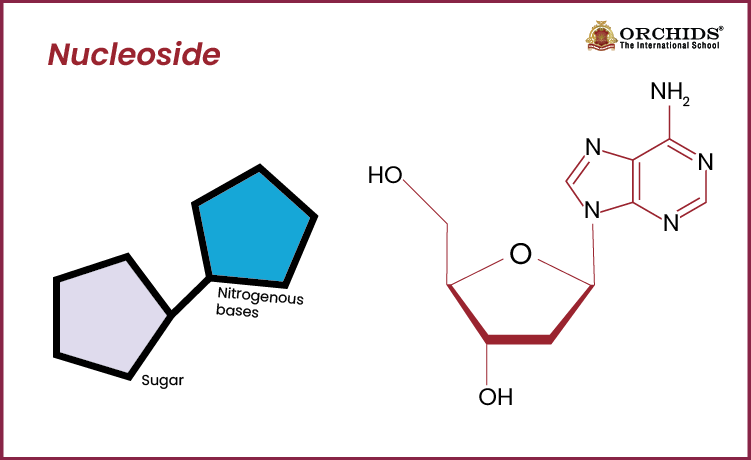
If the sugar is ribose, it becomes part of RNA, and if it’s deoxyribose, it belongs to DNA.
Curious about examples? Here are a few:
-
Adenosine = Adenine + Ribose
-
Thymidine = Thymine + Deoxyribose
-
Uridine = Uracil + Ribose
Now, what happens when we add one more component: a phosphate group to this structure?
That’s when a nucleotide is formed.
What is a Nucleotide?
A nucleotide has three parts: a base, a sugar, and a phosphate group. These phosphates connect one nucleotide to another, forming the sugar-phosphate chain that gives DNA and RNA their structure.
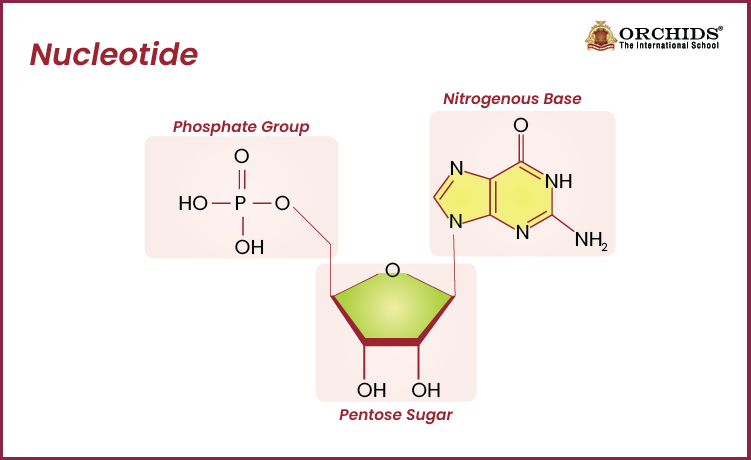
And did you know nucleotides do more than just build your genes? They also provide energy!
For example, ATP (Adenosine Triphosphate) acts as your body’s energy currency powering everything from muscle movement to brain function.
So, while nucleotides build the structure of DNA and RNA, they also power nearly everything your body does, every single moment which helps us to understand the major aspect of nucleotide vs nucleoside.
Difference Between Nucleotide and Nucleoside
Here’s a clear comparison to help you understand what is the difference between nucleotide and nucleoside easily:
|
Feature |
Nucleoside |
Nucleotide |
|
Components |
Nitrogen base + Sugar |
Nitrogen base + Sugar + Phosphate group |
|
Phosphate Group |
Absent |
Present |
|
Function |
Precursor for nucleotides |
Forms DNA/RNA and stores energy (ATP) |
|
Bond Type |
Glycosidic bond (between base and sugar) |
Phosphodiester bond (between nucleotides) |
|
Example |
Adenosine, Guanosine, Cytidine |
AMP, ATP, GTP, dAMP |
|
Occurrence |
Found freely in cells |
Found in DNA, RNA, and energy molecules |
To know in detail about nucleotide vs nucleoside structure, you can have a look at the below visual:
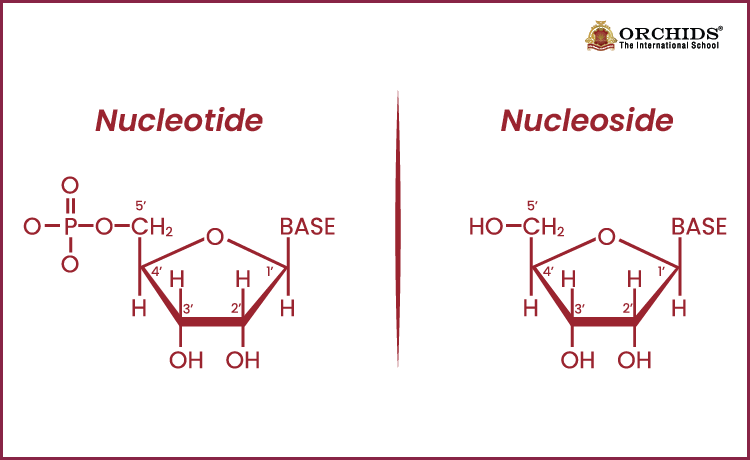
Now that you got the key insights of the nucleotide vs nucleoside difference, it’s easy to see how nucleosides and nucleotides work together to form the very core of life.
If we look at it closely, nucleosides act as the foundation, while nucleotides complete the structure by adding the phosphate group that connects everything.
This simple addition turns a basic molecule into something that can store energy and carry genetic information, the essence of life itself.
In simple words:
-
Nucleoside = Sugar + Base
-
Nucleotide = Sugar + Base + Phosphate
Now that you know nucleotide vs nucleoside difference, let’s see how they actually appear in real life.
Examples of Nucleotides and Nucleosides
Each nucleotide is built from its matching nucleoside, just with one extra phosphate group added. This small change makes a big difference, turning a simple structure into one capable of storing energy and carrying genetic code.
Here’s how they’re related:
|
Nitrogen Base |
Nucleoside (Base + Sugar) |
Nucleotide (Base + Sugar + Phosphate) |
|
Adenine |
Adenosine |
Adenosine monophosphate (AMP) |
|
Guanine |
Guanosine |
Guanosine monophosphate (GMP) |
|
Cytosine |
Cytidine |
Cytidine monophosphate (CMP) |
|
Thymine |
Thymidine |
Thymidine monophosphate (TMP) |
|
Uracil |
Uridine |
Uridine monophosphate (UMP) |
So far, in this article, you have learnt what is difference between nucleotide and nucleoside and how both are essential to life.
While nucleosides act as the starting units, nucleotides take the lead in forming DNA and RNA, the molecules that carry the code of life in every living organism. It’s important tounderstand their role and functions.
Frequently Asked Questions on Difference Between Nucleotide and Nucleoside
1. What is the difference between nucleotide and nucleoside?
A nucleoside has only a sugar and base, while a nucleotide has an additional phosphate group.
2. How are nucleosides and nucleotides related?
When one or more phosphate groups attach to a nucleoside, it becomes a nucleotide.
3. Are both found in DNA and RNA?
Only nucleotides form the structure of DNA and RNA, but nucleosides serve as their building blocks.
4. What is the role of nucleotides in the cell?
Nucleotides store genetic information and provide energy for cell functions through molecules like ATP.
5. Do nucleosides have any biological importance?
Yes, nucleosides are used in medicine and play a key role in the synthesis of DNA and RNA.
6. Which is larger: nucleotide vs nucleoside?
A nucleotide is larger because it contains an extra phosphate group.
7. Can nucleotides exist without nucleosides?
No, every nucleotide is formed by adding a phosphate group to a nucleoside.
Science isn't just a subject, it's the way of seeing the world. Curious how Orchids The International School teaches it that way? Talk to our admissions team.
Admissions Open for 2026-27
What type of concept pages would you prefer?
CBSE Schools In Popular Cities
- CBSE Schools in Bangalore
- CBSE Schools in Mumbai
- CBSE Schools in Pune
- CBSE Schools in Hyderabad
- CBSE Schools in Chennai
- CBSE Schools in Gurgaon
- CBSE Schools in Kolkata
- CBSE Schools in Indore
- CBSE Schools in Sonipat
- CBSE Schools in Delhi
- CBSE Schools in Rohtak
- CBSE Schools in Bhopal
- CBSE Schools in Aurangabad
- CBSE Schools in Jabalpur
- CBSE Schools in Jaipur
- CBSE Schools in Jodhpur
- CBSE Schools in Nagpur
- CBSE Schools in Ahmednagar
- CBSE School In Tumkur











Orchids The International School is one of India's leading chains of CBSE and ICSE schools, with 110+ schools across the country.