

Salivary Glands: The First Step of Digestion You Didn’t Notice
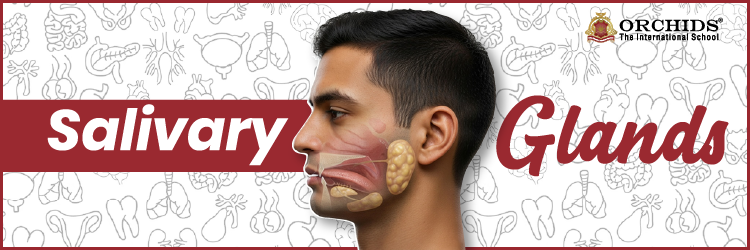
Salivary glands play an important role in our daily life by helping in digestion and keeping the mouth healthy. Unlike other organs that work later in the digestive system, salivary glands start the process right in the mouth by producing saliva.
This saliva helps break down food, especially carbohydrates, and makes it soft and easy to swallow. It also keeps the mouth moist and protects the teeth and gums from harmful bacteria.
By constantly producing saliva, these glands support smooth eating and overall oral hygiene. In this article, we will learn how salivary glands work, understand their types, and explore why they are essential for our body.
Table of Contents

What are Salivary Glands?
Salivary glands are special organs in the mouth that produce saliva, a fluid essential for digestion and oral health. These glands work continuously to keep the mouth moist and comfortable.
Humans have three major pairs of salivary glands and hundreds of small glands which are found lining the oral cavity. They secrete saliva which breaks down complex carbohydrates into sugar. It also helps in moistening of food so that it can be swallowed easily.
Saliva plays an important role in breaking down food, especially carbohydrates, into simpler forms. It also helps in softening food, making it easier to chew and swallow. In addition, saliva protects the teeth and gums by washing away food particles and harmful bacteria.
Overall, salivary glands are essential for proper digestion, smooth swallowing, and maintaining a healthy mouth.
Types of Salivary Glands
Now that we understand the importance of salivary glands, let’s look at their different types. The human body has three major pairs of salivary glands, each located in a specific part of the mouth and performing similar functions.
- Parotid glands: These are the largest salivary glands, located near the ears. They produce a watery type of saliva that helps in digestion.
- Submandibular glands: Found beneath the lower jaw, these glands produce a mixture of watery and thicker saliva.
- Sublingual glands: Located under the tongue, these are the smallest of the three and mainly produce a thicker saliva that helps in lubrication.
All these glands work together to produce saliva, which helps in digestion, moistens food, and keeps the mouth clean and healthy.
Till now, we have learned that salivary glands help in digestion, make swallowing easier, and keep the mouth clean. Proper care and good oral hygiene help them function effectively and maintain overall oral health.
Frequently Asked Questions on Salivary Glands
1. What role do salivary glands play in the body?
Salivary glands produce saliva, which helps moisten food, begin digestion, and keep the mouth clean by washing away bacteria.
2. How many salivary glands do humans have?
Humans have three major pairs of salivary glands like parotid, submandibular, and sublingual, along with several smaller glands in the mouth.
3. Why is saliva important for digestion?
Saliva contains enzymes that start breaking down food, making it easier to chew, swallow, and digest.
4. Can salivary glands get infected or blocked?
Yes, salivary glands can become infected or blocked due to stones, bacteria, or viruses, leading to pain and swelling.
5. What are common signs of salivary gland problems?
Common signs include dry mouth, swelling near the jaw or ears, pain while eating, and difficulty swallowing.
Science isn't just a subject, it's the way of seeing the world. Curious how Orchids The International School teaches it that way? Talk to our admissions team.
Admissions Open for 2026-27
What type of concept pages would you prefer?
CBSE Schools In Popular Cities
- CBSE Schools in Bangalore
- CBSE Schools in Mumbai
- CBSE Schools in Pune
- CBSE Schools in Hyderabad
- CBSE Schools in Chennai
- CBSE Schools in Gurgaon
- CBSE Schools in Kolkata
- CBSE Schools in Indore
- CBSE Schools in Sonipat
- CBSE Schools in Delhi
- CBSE Schools in Rohtak
- CBSE Schools in Bhopal
- CBSE Schools in Aurangabad
- CBSE Schools in Jabalpur
- CBSE Schools in Jaipur
- CBSE Schools in Jodhpur
- CBSE Schools in Nagpur
- CBSE Schools in Ahmednagar
- CBSE School In Tumkur











Orchids The International School is one of India's leading chains of CBSE and ICSE schools, with 110+ schools across the country.