

Zoology: Animal Kingdom, Classification and Importance Explained
Zoology brings together everything about the animal world in one clear subject and helps us understand the lives of animals we see every day as well as those found only in forests, oceans, and documentaries. We may not always notice how animals grow, survive, and interact with their surroundings, but zoology makes these processes easy to understand by explaining their structure, behaviour, and evolution.
This article aims to explain what zoology is, how it developed over time, and its major branches, making it easier to understand and remember the importance of animal science.
Table of Contents

What Is Zoology?
Zoology is the branch of biology that studies animals, which is why it is also called animal biology.
But it is not just about naming animals. Zoology looks at how animals are built, how their organs work, and how they behave, reproduce, and survive in different environments.
It also helps us understand where animals live, how they evolved, and even species that no longer exist.
And have you ever wondered how this study began?
Let’s find out.
It started in ancient Greece with Aristotle, known as the Father of Zoology.
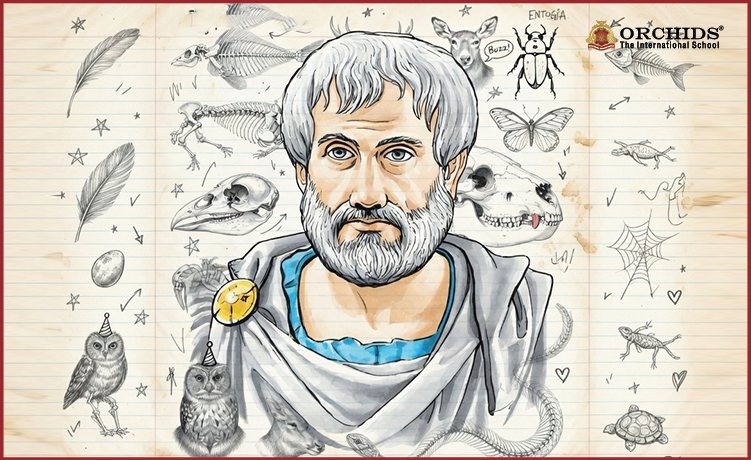
He was the first to classify living beings into plants and animals and group animals by their movement, habitat, and reproduction. His work shaped scientific thinking for centuries.
So how did zoology become a modern science?
With time, scientists like Carolus Linnaeus introduced scientific naming using genus and species, and later Charles Darwin explained how animals change over time through evolution by natural selection.
Today, zoology goes far beyond simple observation. It now includes genetics, environmental science, and research using modern tools.
Animals are classified into phylum, class, order, family, genus, and species, helping us understand life in an organised way. In simple terms, zoology helps us understand animal life and how nature is connected.
Branches of Zoology
Zoology covers so much that it can feel overwhelming at first. After all, how can one subject include every animal and every system in one go?
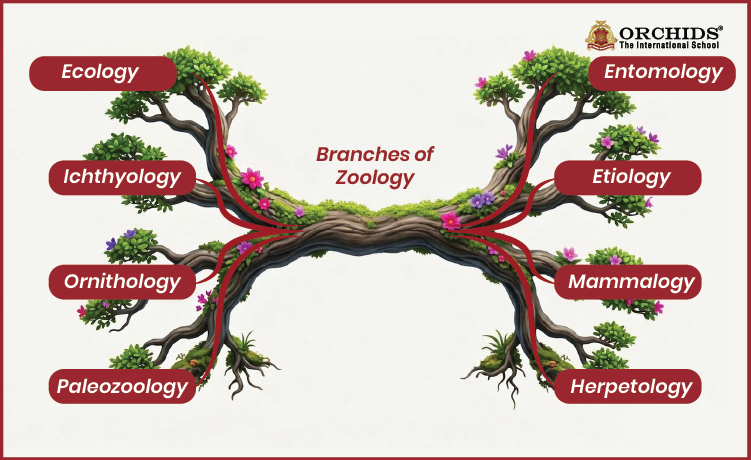
That’s why zoology is divided into different branches. Each branch focuses on a particular group of animals or a specific topic, making the subject easier to understand and more interesting to study.
The table below shows the major branches of zoology and what each one studies in simple terms.
|
Branch of Zoology |
What It Studies |
|
Entomology |
Study of insects, including their structure, life cycle, and role in ecosystems. |
|
Herpetology |
Study of reptiles and amphibians, focusing on behavior, habitats, and survival. |
|
Ichthyology |
Study of fish, including anatomy, classification, and aquatic adaptations. |
|
Mammalogy |
Study of mammals and their growth, reproduction, and environmental influence. |
|
Ornithology |
Study of birds, including flight, migration, and nesting behaviour. |
|
Primatology |
Study of primates such as monkeys, apes, and humans to understand evolution. |
|
Malacology |
Study of molluscs like snails and octopus, including shell formation and movement. |
|
Invertebrate Zoology |
Study of animals without backbones, such as insects, worms, and jellyfish. |
|
Comparative Anatomy |
Comparison of body structures to identify similarities and differences. |
|
Zoography |
Description and classification of animals based on appearance and traits. |
|
Animal Physiology |
Study of how organs and body systems function in animals. |
|
Ecology |
Study of how animals interact with each other and with the environment. |
|
Embryology |
Study of animal development from fertilisation to birth. |
|
Ethology |
Study of animal behaviour in natural conditions. |
|
Palaeontology |
Study of fossils to trace the evolution of animals. |
|
Socio-biology |
Study of social behaviour and group living in animals. |
|
Soil Zoology |
Study of organisms living in soil and their role in soil health. |
After knowing the different branches of zoology. Now, you might wonder, why study zoology?
The answer lies in both understanding nature and applying that knowledge to real-world problems.
Why Study Zoology?
Scientists study animals to learn how they live and interact with their environment, discover hidden facts about species and ecosystems, and understand evolution and the history of life on Earth.
But zoology is not just theoretical. The knowledge gained from studying animals is applied in medicine, veterinary science, agriculture, wildlife conservation, and environmental protection.
It also plays a crucial role in medical research, genetic studies, climate change research, protecting endangered species, and improving food production.
Many people assume zoology is only about zoos, but that is a common misconception. Zoologists work in forests, oceans, laboratories, universities, wildlife reserves, and research institutes.
It is a serious scientific field that goes far beyond observing animals; it is about studying life, solving problems, and protecting our planet.
Studying zoology opens up a wide range of career paths, such as:
You can become a wildlife biologist, zoo curator, environmentalist, conservation officer, research scientist, veterinary assistant, teacher or lecturer, geneticist, or marine biologist.
From research and education to conservation and medical science, zoology offers meaningful and impactful opportunities for anyone passionate about animals and nature.
So far, we have learnt that, from evolution to conservation, humans depend on understanding animals to survive. Zoology helps protect ecosystems, discover medical cures, and preserve biodiversity. If you are curious about nature, zoology is your gateway to discovering life itself.
Frequently Asked Questions on Zoology
1. What does zoology study?
Zoology is the scientific study of animals, including their anatomy, physiology, behaviour, classification, evolution, and interaction with the environment.
2. Who is considered the father of zoology?
Aristotle is regarded as the Father of Zoology for his early work in systematically observing and classifying animals.
3. What are the different branches of zoology?
Major branches include taxonomy, anatomy, physiology, ecology, genetics, ethology, and embryology, each focusing on a specific aspect of animal life.
4. How is zoology different from general biology?
While biology covers all living organisms, zoology focuses specifically on animals, their structures, life processes, and ecosystems.
5. Why is the study of zoology important?
Zoology is crucial for wildlife conservation, disease control, environmental protection, and understanding animal behaviour.
6. What career options are available in zoology?
Careers include zoologist, wildlife biologist, conservationist, researcher, ecologist, teacher, and environmental consultant.
7. Which subjects are needed to pursue zoology?
Students should have a strong background in biology, along with chemistry and environmental science, especially for advanced studies.
8. What is applied zoology and its uses?
Applied zoology uses animal science in practical fields such as fisheries, animal breeding, pest control, and biotechnology.
9. Is zoology a good career option?
Yes, with growing opportunities in research, conservation, environmental management, and biotechnology, zoology is a promising field.
10. What is the future scope of zoology?
Zoology offers a wide scope in conservation biology, ecological research, genetics, wildlife management, and environmental consultancy.
Science isn't just a subject, it's the way of seeing the world. Curious how Orchids The International School teaches it that way? Talk to our admissions team.
Admissions Open for 2026-27
What type of concept pages would you prefer?
CBSE Schools In Popular Cities
- CBSE Schools in Bangalore
- CBSE Schools in Mumbai
- CBSE Schools in Pune
- CBSE Schools in Hyderabad
- CBSE Schools in Chennai
- CBSE Schools in Gurgaon
- CBSE Schools in Kolkata
- CBSE Schools in Indore
- CBSE Schools in Sonipat
- CBSE Schools in Delhi
- CBSE Schools in Rohtak
- CBSE Schools in Bhopal
- CBSE Schools in Aurangabad
- CBSE Schools in Jabalpur
- CBSE Schools in Jaipur
- CBSE Schools in Jodhpur
- CBSE Schools in Nagpur
- CBSE Schools in Ahmednagar
- CBSE School In Tumkur











Orchids The International School is one of India's leading chains of CBSE and ICSE schools, with 110+ schools across the country.