

Difference Between Endotoxins and Exotoxins
The difference between endotoxins and exotoxins is an important concept in microbiology, especially when learning how bacterial toxins affect the body. While both are harmful, they differ significantly in how they are produced, released, and act on cells.
This article helps you clearly understand the difference between endotoxins and exotoxins with simple explanations, examples, and the diseases they can cause.
Table of Contents
- All About Endotoxins and Exotoxins
- Difference Between Endotoxins and Exotoxins
- How Endotoxins and Exotoxins Affect the Body
- Frequently Asked Questions on Difference Between Endotoxins and Exotoxins

All About Endotoxins and Exotoxins
Have you ever wondered why some bacterial infections cause fever and inflammation even after the bacteria die?
The answer lies in bacterial toxins, mainly classified into endotoxins and exotoxins. While both can harm the body, they differ in how they are produced, released, and act.
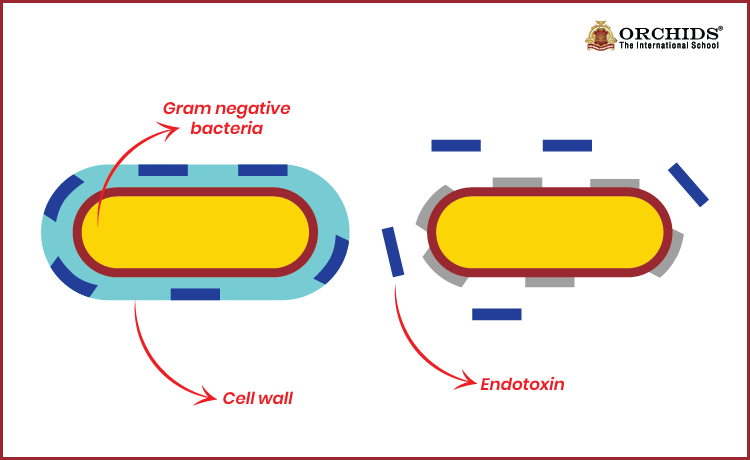
Endotoxins are part of a bacterium’s cell wall and aren’t released while the bacteria are alive. They are released only when the bacteria die and break apart like “leftover trouble.
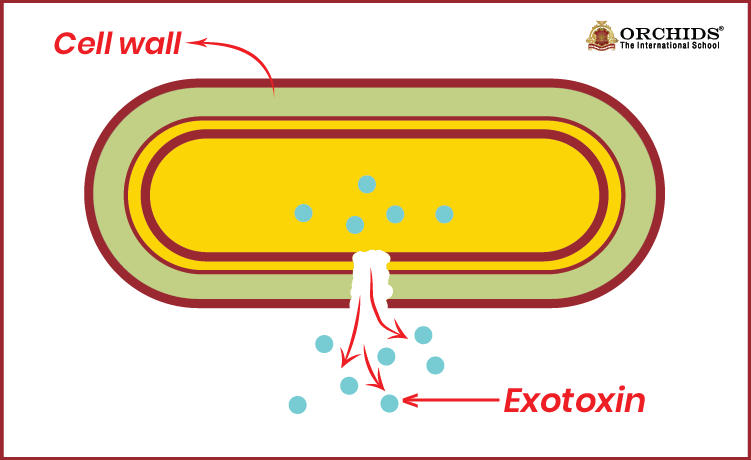
Exotoxins, in contrast, are actively secreted by living bacteria as part of their metabolism. They are mostly proteins (polypeptides), extremely potent, and some are among the deadliest substances known.
So what’s the main difference?
Endotoxins primarily trigger immune responses after bacterial death, while exotoxins attack the body while bacteria are alive.
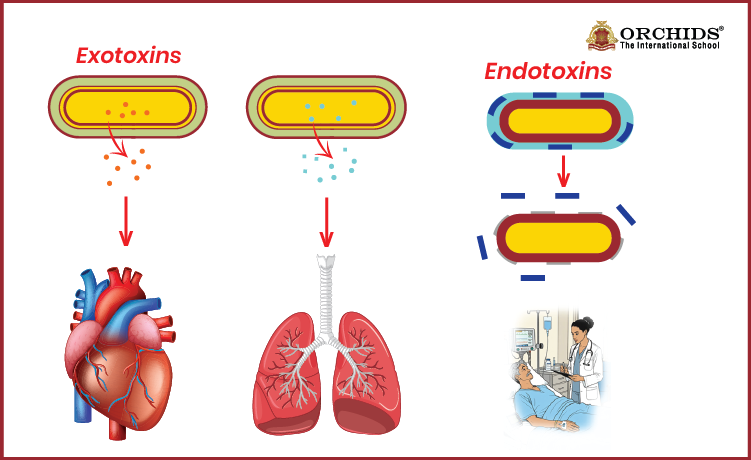
Knowing this difference helps us see how bacterial infections work and why some diseases can be much more dangerous than others.
Difference Between Endotoxins and Exotoxins
Here’s a simple table to clearly understand the difference between examples of endotoxins and exotoxins:
|
Feature |
Endotoxins |
Exotoxins |
|
Nature |
Part of the bacterial cell wall |
Secreted by bacteria |
|
Released |
After bacterial death |
During bacterial life |
|
Composition |
Lipoglycan complex |
Proteins (polypeptides) |
|
Toxicity |
Moderate |
Extremely high |
|
Heat Sensitivity |
Heat-stable |
Heat-labile |
|
Enzymatic Activity |
Absent |
Present |
|
Toxoid Formation |
Not possible |
Possible |
|
Fatality |
Rarely fatal |
Often fatal |
|
Immune Response |
Weak |
Strong |
|
Denaturation |
Not denatured |
Denatured on boiling |
Made mostly of a lipoglycan complex, endotoxins are heat-resistant, hard to destroy, and cannot be turned into toxoids.
Although less toxic than exotoxins, they can still cause fever, inflammation, and even sepsis.
Examples of endotoxin-producing bacteria include:
|
Bacteria |
Disease/Effect |
|
Salmonella typhi |
Typhoid |
|
Vibrio cholerae |
Cholera |
|
Escherichia coli |
Food poisoning |
|
Shigella |
Dysentery |
|
Pseudomonas |
Various infections |
Exotoxins are heat-sensitive, enzymatic, and highly specific and can often be converted into toxoids for vaccines.
Examples of exotoxin-producing bacteria include:
|
Bacteria |
Disease/Effect |
|
Clostridium botulinum |
Botulism |
|
Clostridium tetani |
Tetanus |
|
Corynebacterium diphtheriae |
Diphtheria |
After looking at the examples of endotoxins and exotoxins, let’s now look into how they affect the human body.
How Endotoxins and Exotoxins Affect the Body?
Endotoxins usually cause problems after bacteria die. When they are released, the body reacts strongly, sometimes too strongly. This can lead to fever, swelling, and serious conditions like urinary infections, meningitis, heart problems, or even life-threatening sepsis.
And exotoxins, on the other hand, start causing damage while the bacteria are still alive. They go straight after the body’s cells and disturb how organs work. That’s why diseases like botulism, tetanus, diphtheria, and scarlet fever can become dangerous very quickly.
So if you think about it simply, endotoxins upset the immune system, while exotoxins directly injure cells. This is why exotoxins usually spread faster and cause more severe illness.
Think of endotoxins and exotoxins this way:
- Endotoxins = released when bacteria die
- Exotoxins = released while bacteria live
In this article, we learnt about the difference between endotoxins and exotoxins, how they are produced, released, and affect the body. Endotoxins trigger immune responses after bacterial death, while exotoxins are actively secreted by living bacteria and directly harm cells. Understanding these differences helps us comprehend bacterial infections, their severity, and the importance of timely treatment.
Frequently Asked Questions on Difference Between Endotoxins and Exotoxins
1. Which bacteria produce endotoxins?
Endotoxins are produced by Gram-negative bacteria such as E. coli, Salmonella, Shigella, Neisseria, and Pseudomonas because endotoxins form part of their outer cell membrane.
2. Which bacteria produce exotoxins?
Exotoxins are mainly produced by Gram-positive bacteria like Clostridium and Corynebacterium, though some Gram-negative bacteria can also release exotoxins.
3. When are endotoxins and exotoxins released?
Endotoxins are released only when bacterial cells break open after death, while exotoxins are actively released by living bacteria during infection.
4. How do endotoxins cause disease?
Endotoxins overstimulate the immune system, leading to fever, inflammation, low blood pressure, and in severe cases, septic shock and organ failure.
5. How do exotoxins affect the body?
Exotoxins directly attack specific cells and organs, interfering with nerve function, protein production, or tissue structure, which can cause paralysis or severe illness.
6. What are examples of exotoxins?
Examples include botulinum toxin, tetanus toxin, diphtheria toxin, cholera toxin, and Shiga toxin, each responsible for serious bacterial diseases.
7. Which is more dangerous: Endotoxins or Exotoxins?
Exotoxins are more dangerous because they are extremely powerful, act faster, and even tiny amounts can cause life-threatening effects, unlike endotoxins which act indirectly through immune reactions
Science isn't just a subject, it's the way of seeing the world. Curious how Orchids The International School teaches it that way? Talk to our admissions team.
Admissions Open for 2026-27
What type of concept pages would you prefer?
CBSE Schools In Popular Cities
- CBSE Schools in Bangalore
- CBSE Schools in Mumbai
- CBSE Schools in Pune
- CBSE Schools in Hyderabad
- CBSE Schools in Chennai
- CBSE Schools in Gurgaon
- CBSE Schools in Kolkata
- CBSE Schools in Indore
- CBSE Schools in Sonipat
- CBSE Schools in Delhi
- CBSE Schools in Rohtak
- CBSE Schools in Bhopal
- CBSE Schools in Aurangabad
- CBSE Schools in Jabalpur
- CBSE Schools in Jaipur
- CBSE Schools in Jodhpur
- CBSE Schools in Nagpur
- CBSE Schools in Ahmednagar
- CBSE School In Tumkur











Orchids The International School is one of India's leading chains of CBSE and ICSE schools, with 110+ schools across the country.