

Acromegaly: What Causes the Condition, Symptoms, and Key Facts
Acromegaly is a rare hormonal disorder that develops when the body produces too much growth hormone (GH) during adulthood. It does not appear overnight. The changes are slow and easy to overlook. A person may notice larger hands, tighter shoes, or subtle changes in facial features over time. What seems like normal aging can actually be the result of excess growth hormone in adulthood.
This article explains acromegaly in clear and simple words. It covers what the condition is, why it occurs, common acromegaly symptoms, possible complications, and available treatment options, all in a short and easy-to-understand format.
Table of Contents
- What Is Acromegaly and What Are Its Causes
- How Acromegaly Usually Begins: Symptoms and Treatment
- Acromegaly vs Gigantism: Key Differences
- Is Complete Recovery From Acromegaly Possible
- Frequently Asked Questions on Acromegaly

What Is Acromegaly and What Are Its Causes?
Acromegaly is a rare hormonal disorder that develops slowly over time. It occurs when the body produces too much growth hormone in adulthood, leading to gradual changes in physical appearance and internal organs.
Instead of increasing height, the excess hormone causes bones to thicken and soft tissues to expand.
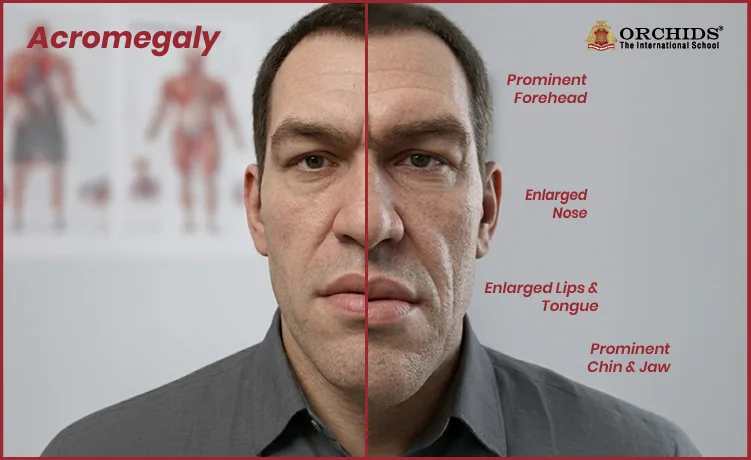
This is why people with acromegaly may notice enlarged hands and feet, changes in facial features, joint discomfort, or unexplained swelling. These changes usually happen gradually, which makes the condition difficult to recognize in its early stages.
The most common reason behind acromegaly is a benign tumor in the pituitary gland. This tumor disrupts the normal hormonal balance and continuously signals the body to produce excess growth hormone. In uncommon cases, hormone-secreting tumors elsewhere in the body may also trigger the condition.
Because the acromegaly symptoms develop slowly, acromegaly is often diagnosed years after it begins. Early detection and treatment are important to prevent long-term complications.
Also Read: Acclimatization
How Acromegaly Usually Begins: Symptoms and Treatment
Acromegaly develops slowly, so many people do not realise something is wrong at first.
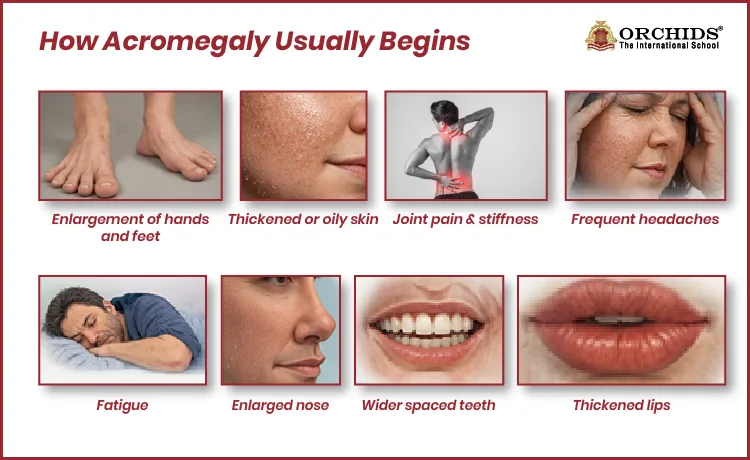
The early signs are subtle and easy to overlook.
- Enlargement of hands and feet
- Increase in shoe or ring size
- Thickened or oily skin
- Joint pain and stiffness
- Excessive sweating
- Frequent headaches
- Fatigue
Changes in facial features may also occur slowly, such as:
- Enlarged nose
- Protruding lower jaw
- Wider spacing between teeth
- Thickened lips
These physical changes typically become more obvious over several years.
Because these changes develop over several years, they are often noticed only when comparing old photographs.
But what happens if acromegaly is not treated in time?
Without treatment, acromegaly can lead to serious health complications.
These may include:
- High blood pressure
- Type 2 diabetes
- Enlarged heart (cardiomyopathy)
- Sleep apnea
- Arthritis
- Vision problems due to tumor pressure on the optic nerves
Over time, these complications can reduce life expectancy. This is why early medical attention is essential.
So how do doctors confirm whether someone has acromegaly?
To diagnose acromegaly, doctors use a combination of blood tests and imaging scans.
1. Blood tests measure growth hormone and insulin-like growth factor 1 levels. An oral glucose tolerance test is often performed. Normally, glucose lowers growth hormone levels, but in acromegaly, this does not happen.
2. An MRI scan of the brain helps detect and measure a pituitary tumor, which is the most common cause of the condition. Early detection greatly improves treatment success.
Once diagnosed, what treatment options are available?
The main aim of treatment is to normalise growth hormone levels, remove or shrink the tumor, and prevent complications.
1. Surgery to remove the pituitary tumor is usually the first option and can quickly reduce hormone levels in many cases.
2. If surgery does not fully control the condition, medications may be prescribed to reduce hormone production, block its effects, or lower IGF-1 levels.
3. Radiation therapy may be recommended when surgery and medications are not sufficient.
With proper treatment and regular monitoring, many individuals with acromegaly can effectively manage the condition and maintain a good quality of life.
Also Read: Amoebiasis
Now, let’s understand the difference between acromegaly and gigantism
Acromegaly vs Gigantism: Key Differences
Both acromegaly and gigantism are caused by excess growth hormone. However, the key difference lies in when the hormone imbalance occurs. Age plays a major role in how the condition affects the body.
Here’s a simple comparison of acromegaly vs gigantism:
|
Basis of Difference |
Acromegaly |
Gigantism |
|
Age of Onset |
Occurs in adults |
Occurs in children |
|
Growth Plates |
Growth plates are already closed |
Growth plates are still open |
|
Main Effect |
Thickening of bones and soft tissues |
Excessive increase in height |
|
Height Change |
Height usually does not increase |
Significant increase in height |
And we can say that the hormonal problem is similar in both conditions. The difference in physical appearance happens because children’s bones are still growing, while adults’ bones have already matured.
So, can acromegaly be completely cured? Let’s discuss.
Is Complete Recovery From Acromegaly Possible?
In many cases, acromegaly can be controlled and sometimes even cured, especially when it is diagnosed early and treated with surgery. Removing the tumor that produces excess growth hormone often helps bring hormone levels back to normal.
However, treatment does not always stop after surgery. Regular follow-ups, blood tests, and scans are necessary to ensure hormone levels remain stable and the condition does not return.
With proper medical care and monitoring, most people with acromegaly can live a healthy and active life.
Now, what does living with acromegaly actually look like?
Even after treatment, living with acromegaly involves ongoing care and attention. Some individuals may need long-term monitoring or medications to keep growth hormone levels under control.
Managing overall health becomes especially important. This includes monitoring blood pressure, blood sugar, and heart health, along with maintaining a balanced diet and regular exercise routine.
The reassuring part is that with early diagnosis, timely treatment, and consistent follow-up care, most complications can be prevented or effectively managed, helping individuals maintain a good quality of life.
With proper medical care and regular monitoring, individuals with acromegaly can control hormone levels, prevent complications, and maintain a good quality of life.
Frequently Asked Questions on Acromegaly
1. How does acromegaly develop in adults?
Acromegaly develops when the pituitary gland produces excess growth hormone after a person has reached adulthood, usually due to a benign tumor. This leads to gradual enlargement of bones and soft tissues.
2. What are the most noticeable signs of acromegaly?
Common visible signs include enlarged hands and feet, a protruding jaw, widened facial features, thicker skin, and spacing between teeth.
3. Why is acromegaly often diagnosed late?
Acromegaly progresses slowly over several years, so physical changes may go unnoticed until symptoms become more pronounced.
4. What complications can acromegaly cause if untreated?
Untreated acromegaly may lead to serious health issues such as heart enlargement, type 2 diabetes, sleep apnea, high blood pressure, and joint problems.
5. Which tests confirm acromegaly?
Diagnosis typically involves measuring IGF-1 levels in the blood, performing a growth hormone suppression test, and conducting an MRI scan of the pituitary gland.
6. Is acromegaly a genetic condition?
Most cases are not inherited. However, in rare situations, it may be linked to genetic syndromes affecting hormone regulation.
7. What treatment options are available for acromegaly?
Treatment may include surgery to remove the pituitary tumor, medications to control hormone levels, and sometimes radiation therapy.
8. Can people with acromegaly live a normal life?
With early diagnosis and proper treatment, many people with acromegaly can manage symptoms effectively and maintain a good quality of life.
Science isn't just a subject, it's the way of seeing the world. Curious how Orchids The International School teaches it that way? Talk to our admissions team.
Admissions Open for 2026-27
What type of concept pages would you prefer?
CBSE Schools In Popular Cities
- CBSE Schools in Bangalore
- CBSE Schools in Mumbai
- CBSE Schools in Pune
- CBSE Schools in Hyderabad
- CBSE Schools in Chennai
- CBSE Schools in Gurgaon
- CBSE Schools in Kolkata
- CBSE Schools in Indore
- CBSE Schools in Sonipat
- CBSE Schools in Delhi
- CBSE Schools in Rohtak
- CBSE Schools in Bhopal
- CBSE Schools in Aurangabad
- CBSE Schools in Jabalpur
- CBSE Schools in Jaipur
- CBSE Schools in Jodhpur
- CBSE Schools in Nagpur
- CBSE Schools in Ahmednagar
- CBSE School In Tumkur











Orchids The International School is one of India's leading chains of CBSE and ICSE schools, with 130+ schools across the country.