

Difference Between Dengue Mosquito and Normal Mosquito
The difference between dengue mosquito and normal mosquito is something we often overlook, even though it plays a huge role in staying safe from mosquito-borne diseases. And sometimes mosquito bites feel harmless, while others can lead to dengue fever because not all mosquitoes are the same; some carry dangerous viruses, while others are simply nuisance biters.
In this article, we break down the difference between normal mosquitoes and dengue mosquitoes, how to identify them easily, and why understanding these differences can help protect you and your family.
Table of Contents
- Understanding Dengue Mosquito and Normal Mosquito
- Difference between Dengue mosquito and Normal Mosquito
- How Dengue Mosquitoes Spread Diseases
- Frequently Asked Questions on Difference Between Dengue Mosquito and Normal Mosquito

Understanding Dengue Mosquito and Normal Mosquito
Have you ever noticed a mosquito with white stripes and wondered if it’s dangerous?
Let’s discuss.
That’s because dengue mosquitoes look and behave differently from the regular ones we see around us.
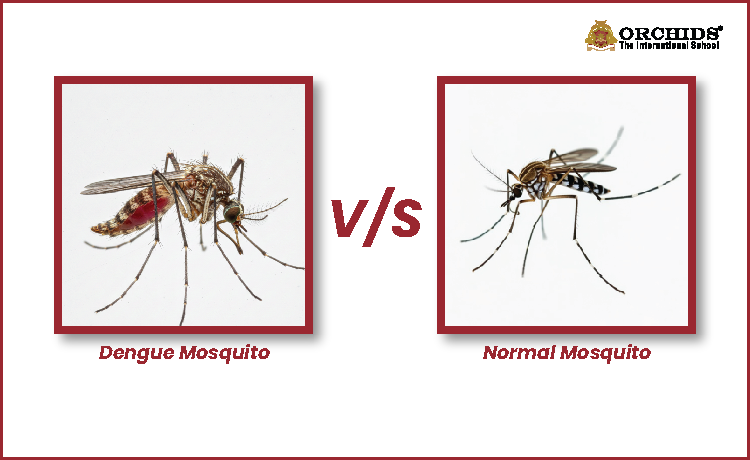
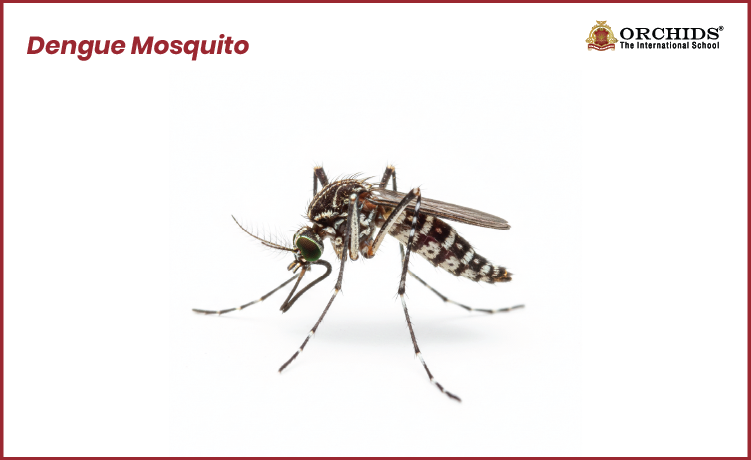
Dengue mosquitoes belong to the Aedes family, mainly Aedes aegypti and Aedes albopictus.
They are known for their black-and-white striped legs, fast movement, and habit of biting during the daytime.
And in contrast, normal mosquitoes, on the other hand, include common species like Culex and Anopheles. They mostly bite at night, breed in dirty water, and do not transmit dengue.
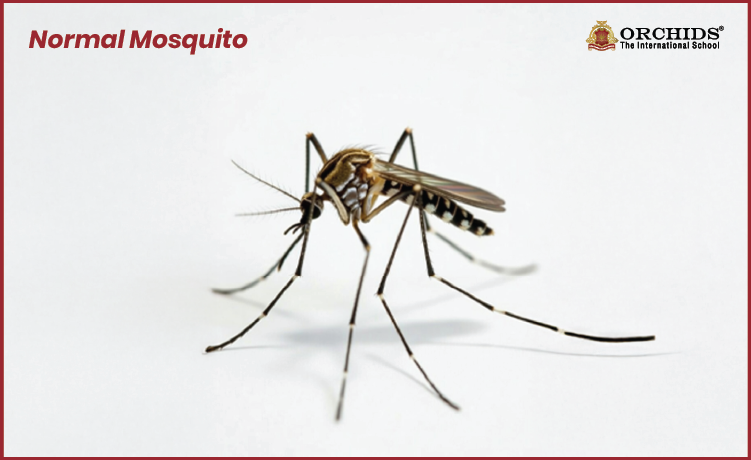
However, some may transmit other diseases like malaria or filariasis, depending on the species.
So, in simple words:
The difference between normal mosquito and dengue mosquito is as follows, dengue mosquitoes are the disease carriers, while normal mosquitoes are general biters that cause itching but usually not dengue.
Difference Between Dengue Mosquito and Normal Mosquito
Here’s a simple and clear comparison that shows what is the difference between the dengue mosquito and the normal mosquito:
|
Aspect |
Dengue Mosquito (Aedes) |
Normal Mosquito (Culex / Anopheles) |
|
Appearance |
Black body with white stripes on legs and thorax |
Brown or grey, no special markings |
|
Biting Time |
Daytime (morning & late afternoon) |
Night-time |
|
Bite Sensation |
Almost painless |
Noticeable and itchy |
|
Breeding Water |
Clean, stagnant water |
Dirty or polluted water |
|
Diseases Spread |
Dengue, chikungunya, Zika |
Malaria, filariasis, or none |
|
Body Size |
Slightly smaller, moves fast |
Varies, usually dull coloured |
|
Resting Habit |
Indoors, dark corners |
Indoors & outdoors |
|
Test Type (Detection) |
Identified through dengue antigen tests |
Not specific unless disease-related |
This table of differences between normal mosquitoes and dengue mosquito helps you quickly identify which mosquito you’re dealing with and whether it poses a dengue risk.
Also Read: difference between pathogen and parasite
How Dengue Mosquitoes Spread Diseases
The fact is that when a dengue mosquito bites an infected person, it picks up the virus and stores it in its saliva.
The next time it bites someone, it injects the virus into their bloodstream.
So, what happens next?
Let’s discuss.
- The virus multiplies inside the body
- Fever, joint pain, headache, and rashes start appearing
- Platelet levels may drop in severe cases
This chain reaction is what makes early identification of dengue mosquitoes so important.
Normal mosquitoes bite too, but unless they belong to a disease-carrying species, their bites do not spread dengue.
Till now, we have understood what the difference is between the dengue mosquito and the normal mosquito and how it makes it easier to spot risks and prevent dengue. Simple habits like removing stagnant water, keeping surroundings clean, and using protection during the day can greatly reduce mosquito bites and keep your family safe.
Frequently Asked Questions on Difference Between Dengue Mosquito and Normal Mosquito
1. What is the difference between a dengue mosquito and normal mosquito?
Dengue mosquitoes have black-and-white stripes, bite during the day, and spread dengue. Normal mosquitoes are brown or grey, bite mostly at night, and usually do not transmit dengue.
2. At what time does the dengue mosquito bite?
Dengue mosquitoes bite mostly in the early morning and late afternoon because that’s when they are most active.
3. Can one mosquito bite cause dengue?
Yes, if the mosquito carries the dengue virus, one bite is enough to infect a person.
4. Where do dengue mosquitoes breed?
They breed in clean, unmoving water found in open buckets, pots, coolers, tyres, and uncovered water tanks.
5. Are all striped mosquitoes dengue carriers?
No, only the Aedes mosquito with clear black-and-white stripes carries and spreads dengue.
6. Is the dengue mosquito smaller than a normal mosquito?
Yes, dengue mosquitoes are usually smaller and move more quickly than regular house mosquitoes.
7. How can I prevent dengue mosquito bites?
Keep water containers covered, remove stagnant water, use repellents, and wear protective clothing during the daytime.
Science isn't just a subject, it's the way of seeing the world. Curious how Orchids The International School teaches it that way? Talk to our admissions team.
Admissions Open for 2026-27
What type of concept pages would you prefer?
CBSE Schools In Popular Cities
- CBSE Schools in Bangalore
- CBSE Schools in Mumbai
- CBSE Schools in Pune
- CBSE Schools in Hyderabad
- CBSE Schools in Chennai
- CBSE Schools in Gurgaon
- CBSE Schools in Kolkata
- CBSE Schools in Indore
- CBSE Schools in Sonipat
- CBSE Schools in Delhi
- CBSE Schools in Rohtak
- CBSE Schools in Bhopal
- CBSE Schools in Aurangabad
- CBSE Schools in Jabalpur
- CBSE Schools in Jaipur
- CBSE Schools in Jodhpur
- CBSE Schools in Nagpur
- CBSE Schools in Ahmednagar
- CBSE School In Tumkur











Orchids The International School is one of India's leading chains of CBSE and ICSE schools, with 110+ schools across the country.