

Effects of Air Pollution on Plants
The effects of air pollution on plants are a growing environmental concern that affects not only humans and animals but also plants. While vegetation is essential for life on Earth, providing oxygen, food, and habitat, pollutants in the air can severely damage plant growth, development, and productivity. From leaf damage to stunted growth, the effects of air pollution on plants are wide-ranging and long-lasting.
This article covers the major air pollutants effects on plants, how they impact growth and physiology, and why it is crucial to understand these effects to protect ecosystems and agriculture.
Table of Contents
- Major Pollutants Affecting Plant Health
- How Does Air Pollution Damage Plant Structures
- Frequently Asked Questions on Effects of Air Pollution on Plants

Major Effects of Air Pollution on Plants
Air pollution occurs when harmful gases, particles, or chemicals enter the atmosphere, mainly from human activities like burning fossil fuels, industrial emissions, and vehicle exhaust.
Plants are particularly vulnerable, as these pollutants can enter tissues, damage cellular structures, interfere with photosynthesis, and reduce nutrient absorption from the soil. The result is stunted growth, poor yield, and weakened resilience.
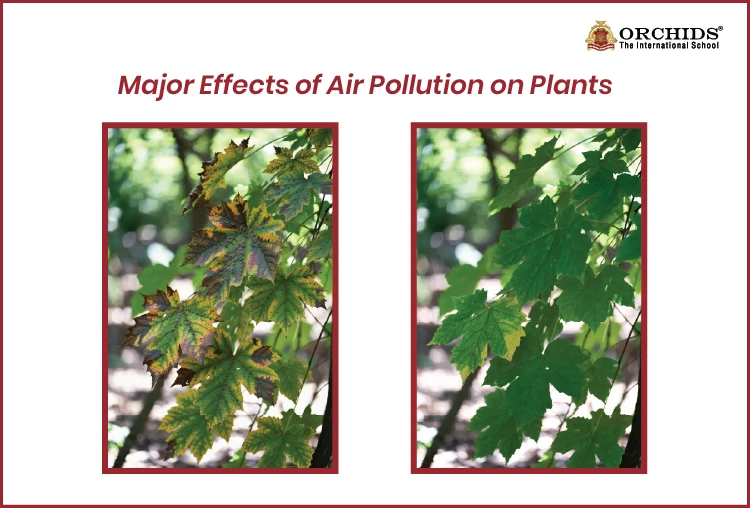
The impact of air pollution on plants largely depends on the type of pollutant.
Let’s understand the effects of air pollution on plants and how they affect it:
1. Ozone (O₃) in the stratosphere is essential for life on Earth, as it protects from harmful ultraviolet rays. However, ground-level ozone (tropospheric ozone) can severely damage plants.
It causes oxidative stress in plant cells, damaging cell membranes and reducing their functionality. This leads to impaired photosynthesis, chlorosis (yellowing of leaves), and, in severe cases, leaf death.
Also Read: Effects of air pollution on human health
2. Sulphur Dioxide (SO₂) is a major contributor to acid rain. Plants exposed to SO₂ often show discoloured leaves and stunted growth.
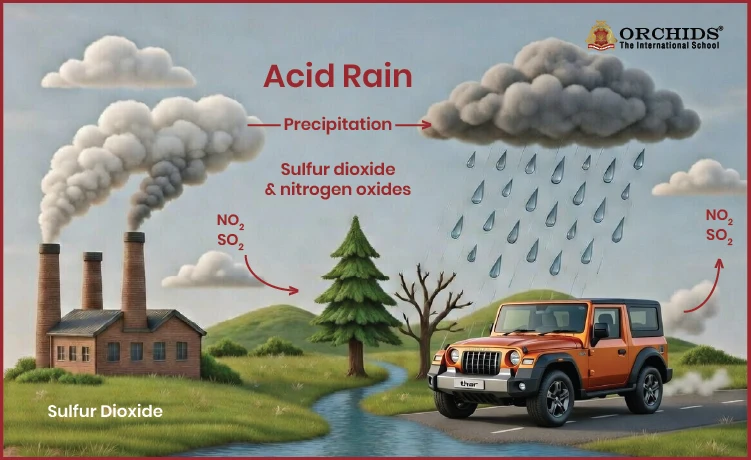
The gas interferes with the photosynthesis process and affects stomatal function, causing excessive water loss. The severity of its effects varies depending on plant species and the level of exposure.
3. Nitrogen Dioxide (NO₂) Formed mainly from fossil fuel combustion and industrial emissions, nitrogen dioxide is highly toxic to plants. Prolonged exposure can stunt growth, reduce photosynthetic efficiency, and disrupt normal development.
Along with SO₂ and ozone, NO₂ contributes to long-term stress in vegetation and crop damage.
4. Air pollutants do not only affect plant surfaces; they also alter soil composition. Heavy metals and acidic compounds from pollutants deposit in the soil, disrupting nutrient availability.
Reduced nutrient absorption hampers growth and lowers crop yields, which can have cascading effects on food security and ecosystem health.
Also Read: Effects of air pollution on environment
Now, let’s move on to understanding the damages and effects of air pollution on plants.
How Does Air Pollution Damage Plant Structures?
The impact of air pollution on vegetation directly harms leaves, stems, and roots. Some of the primary mechanisms are shown in the below visual:
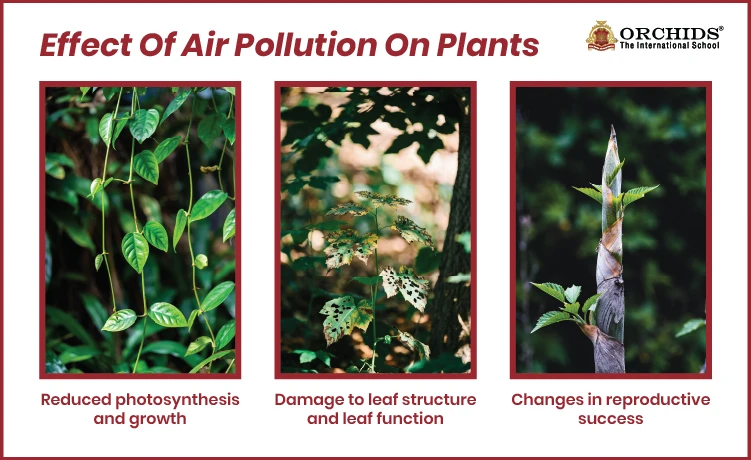
Let’s find out each in detail:
-
Air pollutants directly harm plant structures, affecting growth, development, and overall health.
-
Leaves are damaged by ozone and nitrogen oxides, causing chlorosis (yellowing), necrosis (tissue death), and premature leaf fall.
-
Chlorophyll degradation reduces photosynthesis, limiting energy production and plant growth.
-
Contaminants like heavy metals in the soil hinder nutrient absorption and water uptake, compromising root function.
-
Sulphur dioxide (SO₂) and nitrogen dioxide (NO₂) affect stomatal openings, causing water stress and reduced gas exchange.
-
Chronic exposure slows reproductive cycles, reducing seed and fruit production and lowering crop yield.
Interestingly, some plants can help mitigate air pollution.
Species like peace lilies, English ivy, cornstalk dracaena, and broadleaf lady palm can filter harmful gases in homes and urban areas, contributing to cleaner air and reducing the air pollutants effects on plants.
In this article, we studied that understanding these effects of air pollution on plants can guide us, communities, and policymakers to adopt cleaner practices, support reforestation, and promote pollution-reducing technologies. Healthy plants mean healthier ecosystems and, ultimately, a healthier planet.
Frequently Asked Questions on Effects of Air Pollution on Plants
1. What is the effect of tropospheric ozone on plants?
Tropospheric ozone causes oxidative damage to cell membranes, reduces chlorophyll content, and impairs photosynthesis, leading to yellowing and necrosis of leaves.
2. How is nitrogen dioxide released into the atmosphere?
Nitrogen dioxide is mainly formed from fossil fuel combustion, vehicle emissions, and petroleum refining processes and is the major reason for impact of air pollution on vegetation.
3. What are the major air pollutants affecting plants?
Ozone, sulphur dioxide, nitrogen dioxide, and particulate matter are some of the primary pollutants that negatively impact plant growth and development.
4. How does sulphur dioxide affect plant water balance?
SO₂ can disrupt stomatal function, causing excessive water loss and dehydration in plants.
5. Can plants help reduce air pollution?
Yes, certain plants like peace lilies and English ivy can absorb and filter harmful gases, helping to improve air quality.
6. How do air pollutants affect soil nutrients?
Pollutants such as heavy metals and acidic compounds can alter soil chemistry, reduce nutrient availability, and hinder plant nutrient absorption.
7. What impact do air pollutants have on flowering and fruiting?
Chronic exposure to pollutants can delay flowering, reduce seed production, and lower fruit yield in many plant species.
8. Are all plants equally sensitive to air pollution?
No, the impact of air pollutants effects on plants varies depending on plant species, pollutant type, and exposure levels. Some plants are more resilient, while others are highly susceptible.
Science isn't just a subject, it's the way of seeing the world. Curious how Orchids The International School teaches it that way? Talk to our admissions team.
Admissions Open for 2026-27
What type of concept pages would you prefer?
CBSE Schools In Popular Cities
- CBSE Schools in Bangalore
- CBSE Schools in Mumbai
- CBSE Schools in Pune
- CBSE Schools in Hyderabad
- CBSE Schools in Chennai
- CBSE Schools in Gurgaon
- CBSE Schools in Kolkata
- CBSE Schools in Indore
- CBSE Schools in Sonipat
- CBSE Schools in Delhi
- CBSE Schools in Rohtak
- CBSE Schools in Bhopal
- CBSE Schools in Aurangabad
- CBSE Schools in Jabalpur
- CBSE Schools in Jaipur
- CBSE Schools in Jodhpur
- CBSE Schools in Nagpur
- CBSE Schools in Ahmednagar
- CBSE School In Tumkur











Orchids The International School is one of India's leading chains of CBSE and ICSE schools, with 110+ schools across the country.