

Diagram of Heart: Labeled Parts, Structure and Function Explained
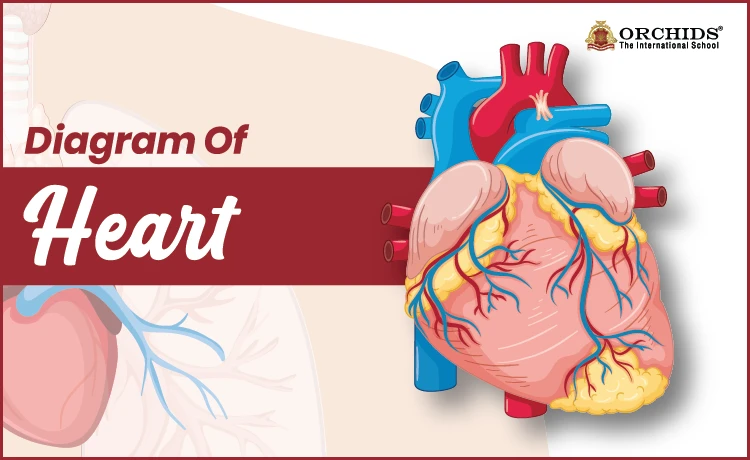
The diagram of heart helps us understand why this small yet powerful organ is crucial for life. Just like a pump keeps water flowing through pipes, the heart continuously moves blood throughout the body, supplying oxygen and nutrients while removing waste.
This article explains the structure of the human heart, how its parts work together, and how drawing a labelled diagram can make it easier to learn and remember these processes.
Table of Contents
- What Do We Mean By the Structure of the Heart Diagram
- Importance and Function of the Human Heart
- How to Draw a Well Labelled Diagram of Heart
- Frequently Asked Questions on Diagram of Heart

What Do We Mean By the Structure of the Heart Diagram
Simply put, the heart is a muscular organ that pumps blood and keeps the body alive. It works tirelessly from before birth until the last moment of life.
Blood carries oxygen, nutrients, hormones, and waste, and the heart ensures oxygen-rich blood reaches organs while impure blood returns to the lungs for purification.
This continuous process of circulation is what keeps every part of the body functioning.
Importance and Function of the Human Heart
The main function of the human heart is not only vital for pumping blood but also for maintaining life itself.
It is important to note that it ensures proper blood flow to every organ, regulates blood pressure, and supports overall body functions.
And observing the heart through a labelled diagram allows students to trace the path of blood, understand how the chambers and valves function, and appreciate how the heart works in coordination with the lungs and the rest of the body.
How to Draw a Well-Labelled Diagram of Heart
Drawing a well-labelled diagram of heart is easier when you see it as a layered structure. Think of the heart as a coordinated pump made up of chambers, valves, arteries, veins, and three layers of the heart wall.
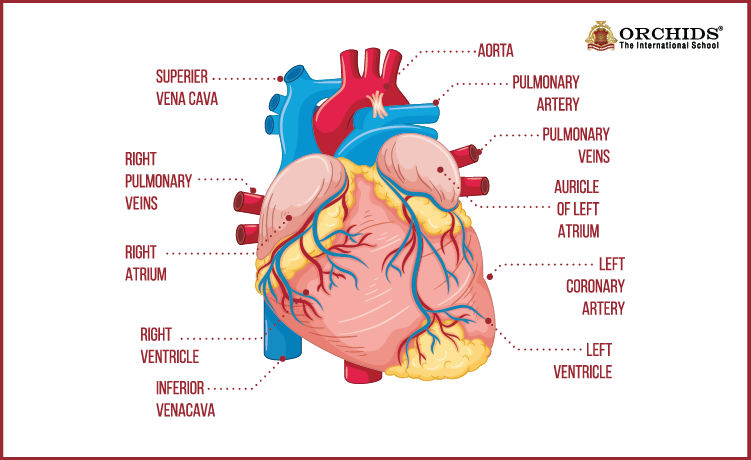
A heart diagram helps you follow the journey of blood, understand each component’s role, and see how the heart functions as a whole.
Let’s start by looking at how blood enters and exits the heart.
- Oxygen-rich blood → reaches organs
- Impure blood → returns to lungs for purification
Now, let’s start with the chambers, the core of the heart’s pumping system.
1. Chambers of the heart, the heart has four chambers that work in pairs. The upper chambers, called auricles or atria, receive blood entering the heart.
From here, blood moves to the lower chambers, called ventricles, which pump it out to the lungs or the rest of the body.
This flow from atria to ventricles ensures continuous circulation. Understanding this path is the first step before moving on to the heart wall and valves.
2. Layers of the heart wall, the heart wall has three layers that support its function. The epicardium forms the protective outer layer, while the myocardium, the thick muscular middle layer, contracts to pump blood.
The endocardium lines the inner chambers, creating a smooth surface for blood to flow easily.
Knowing these layers helps make sense of why the heart can pump blood so efficiently, which naturally leads us to the valves that regulate this flow.
Blood enters → Auricles → Ventricles → Pumped out
3. Valves of the heart act like one-way doors, keeping blood moving in the right direction. The aortic valve stops blood from flowing back into the left ventricle, and the mitral valve ensures smooth flow
from the left atrium to the left ventricle.
On the right side, the pulmonary valve prevents backflow from the pulmonary artery, while the tricuspid valve manages flow from the right atrium to the right ventricle.
With these valves working together, blood is pumped efficiently, connecting the chambers to the arteries and veins.
4. Arteries and Veins, once blood leaves the heart through arteries, it travels to the lungs or body before returning via veins. Most arteries carry oxygen-rich blood, except the pulmonary artery, which
carries deoxygenated blood to the lungs.
Similarly, veins generally bring deoxygenated blood back to the heart, while the pulmonary vein carries oxygenated blood from the lungs.
Seeing this system on a well-labelled diagram of heart makes it easy to connect the movement of blood through chambers, valves, and vessels.
Here’s an easy flow to understand the structure of the heart diagram:
Aorta → oxygen-rich blood to body → Vena Cava → deoxygenated blood to heart → Pulmonary Artery → deoxygenated blood to lungs → Pulmonary Vein → oxygen-rich blood to heart
Now it’s practice time. Try to label the heart diagram below:

Till now, we have learnt in this article that by following the step-by-step approach through chambers, layers, valves, arteries, and veins, you can draw a well-labelled diagram of the heart clearly. More importantly, it helps you understand how this vital organ works continuously to keep us alive.
Frequently Asked Questions on Diagram of Heart
1. What are the chambers of the heart?
The heart has four chambers: two auricles (atria) that receive blood and two ventricles that pump blood out to the lungs and the rest of the body.
2. What is the function of heart valves?
Valves act as one-way doors, preventing blood from flowing backward and ensuring smooth, efficient circulation.
3. Which blood vessel carries oxygenated blood to the heart?
The pulmonary vein carries oxygen-rich blood from the lungs to the left atrium of the heart.
4. Why is the heart called a muscular organ?
It is made of cardiac muscle that contracts and relaxes continuously to pump blood throughout the body.
5. Why is understanding a heart diagram important for students?
It helps visualise blood flow, understand the structure and function of chambers, valves, and vessels, and is a commonly asked exam topic.
6. How does blood flow through the heart?
Blood flows from the right atrium to the right ventricle, then to the lungs, returns to the left atrium, moves to the left ventricle, and is pumped to the body.
7. What are the main arteries and veins connected to the heart?
The aorta carries oxygen-rich blood to the body, the pulmonary artery sends deoxygenated blood to the lungs, and the pulmonary vein and vena cavae return blood to the heart.
8. What happens if heart valves fail to function properly?
If valves leak or become blocked, blood may flow backward, leading to inefficient circulation, increased heart workload, and, in severe cases, heart failure.
Science isn't just a subject, it's the way of seeing the world. Curious how Orchids The International School teaches it that way? Talk to our admissions team.
Admissions Open for 2026-27
What type of concept pages would you prefer?
CBSE Schools In Popular Cities
- CBSE Schools in Bangalore
- CBSE Schools in Mumbai
- CBSE Schools in Pune
- CBSE Schools in Hyderabad
- CBSE Schools in Chennai
- CBSE Schools in Gurgaon
- CBSE Schools in Kolkata
- CBSE Schools in Indore
- CBSE Schools in Sonipat
- CBSE Schools in Delhi
- CBSE Schools in Rohtak
- CBSE Schools in Bhopal
- CBSE Schools in Aurangabad
- CBSE Schools in Jabalpur
- CBSE Schools in Jaipur
- CBSE Schools in Jodhpur
- CBSE Schools in Nagpur
- CBSE Schools in Ahmednagar
- CBSE School In Tumkur











Orchids The International School is one of India's leading chains of CBSE and ICSE schools, with 130+ schools across the country.