

Difference Between Euchromatin and Heterochromatin
The difference between euchromatin and heterochromatin is one of the simplest ways to understand how our cells decide which genes stay active and which remain silent. However, a cell must constantly decide which genes to turn on and which ones to keep inactive. This control comes from euchromatin and heterochromatin, two chromatin states that differ in how openly or tightly the DNA is packed for gene activity.
This article focuses on what is the difference between euchromatin and heterochromatin, how they function, and why this difference is essential for cell survival and gene regulation.
Table of Contents
- Understanding Euchromatin and Heterochromatin
- Difference Between Euchromatin and Heterochromatin
- Frequently Asked Questions On Difference Between Euchromatin and Heterochromatin

Understanding euchromatin and heterochromatin
Did it ever cross your mind that not all genes in your DNA are active at the same time?
Let’s discuss.
It might seem complicated, but it actually comes down to how your DNA is packed inside the nucleus. Some parts stay open and easy to access, while others are folded tightly, and this changes everything.
Take a look at the visual below to understand euchromatin vs heterochromatin more clearly:
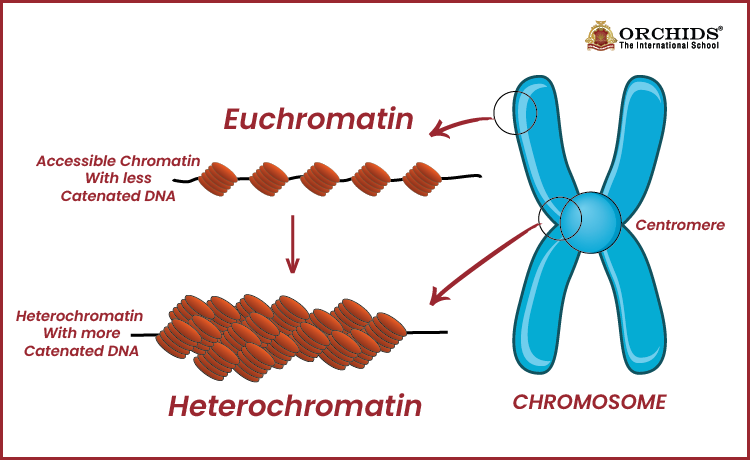
When the DNA is loosely packed, we call it euchromatin. You can think of it like a notebook left open on a table. The cell can read it anytime it needs to.
That’s why these regions usually contain active genes that help your body carry out everyday activities.
But when the DNA is packed tightly, it shifts into heterochromatin. This is more like a notebook that’s shut and tied with a string.
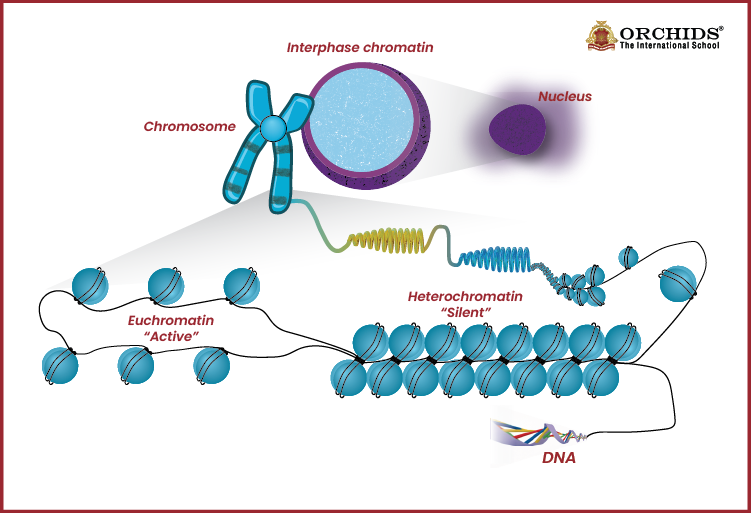
Interestingly!! The cell can’t easily reach those genes, so they mostly remain switched off. Some of these areas stay closed all the time, while others open only when needed.
These tightly packed sections help protect the DNA and keep everything organised.
So, when you put it all together, both forms work hand in hand: euchromatin keeps essential genes active, while heterochromatin guards the parts that shouldn’t be used all the time. This balance helps each cell stay efficient, organised, and healthy.
Also Read: Difference Between DNA and RNA
Difference Between Euchromatin and Heterochromatin
And here is the clearest comparison to understand the difference between euchromatin and heterochromatin:
|
Aspect |
Euchromatin |
Heterochromatin |
|
Definition |
Loosely packed chromatin is involved in active transcription |
Tightly packed chromatin that is mostly transcriptionally inactive |
|
Appearance |
Lightly stained |
Darkly stained |
|
DNA Density |
Low |
High |
|
Gene Activity |
Highly active genes |
Low, silent or suppressed genes |
|
Replication Time |
Early S-phase |
Late S-phase |
|
Presence |
Found in prokaryotes & eukaryotes |
Only in eukaryotes |
|
Sticky/Non-sticky |
Non-sticky |
Sticky regions |
|
Examples |
Housekeeping genes |
Centromeres, telomeres |
|
Transcription Level |
High |
Minimal or none |
Also Read: difference between polyp and medusa
Till now, we have learnt what the difference is between euchromatin and heterochromatin, which shows how cells balance gene activity and protection. Euchromatin keeps important genes accessible, while heterochromatin locks others away for stability. Together, they ensure each cell stays organised, controlled, and healthy.
Frequently Asked Questions On Difference Between Euchromatin and Heterochromatin
1. What is the difference between euchromatin and heterochromatin?
Euchromatin is loosely packed and transcriptionally active, while heterochromatin is tightly packed and mostly inactive.
2. Why does euchromatin appear lightly stained?
Euchromatin is loosely packed and open, so dyes bind only lightly, giving it a pale appearance under the microscope.
3. What is facultative heterochromatin?
It is heterochromatin that can become active again when needed, switching to euchromatin based on developmental stage or cell signals (e.g., the inactive X chromosome in females).
4. Why is heterochromatin important?
It protects chromosome structure, silences repetitive DNA, and prevents unnecessary or harmful gene expression from being activated.
5. Euchromatin vs Heterochromatin: Who replicates earlier?
Yes. Euchromatin replicates early in S-phase because active genes must be copied first, while heterochromatin, being tightly packed, replicates later.
6. Do prokaryotes have heterochromatin?
No. Heterochromatin is a feature of eukaryotic chromosomes; prokaryotes lack histones and organised chromatin states.
7. Euchromatin vs Heterochromatin: Can they convert to each other?
Yes. Chemical modifications like DNA methylation or histone deacetylation can compact euchromatin and turn it into heterochromatin.
8. Why is euchromatin rich in housekeeping genes?
Because these genes must remain constantly active, they stay in euchromatin, where the DNA is open and easily accessible for transcription.
Science isn't just a subject, it's the way of seeing the world. Curious how Orchids The International School teaches it that way? Talk to our admissions team.
Admissions Open for 2026-27
What type of concept pages would you prefer?
CBSE Schools In Popular Cities
- CBSE Schools in Bangalore
- CBSE Schools in Mumbai
- CBSE Schools in Pune
- CBSE Schools in Hyderabad
- CBSE Schools in Chennai
- CBSE Schools in Gurgaon
- CBSE Schools in Kolkata
- CBSE Schools in Indore
- CBSE Schools in Sonipat
- CBSE Schools in Delhi
- CBSE Schools in Rohtak
- CBSE Schools in Bhopal
- CBSE Schools in Aurangabad
- CBSE Schools in Jabalpur
- CBSE Schools in Jaipur
- CBSE Schools in Jodhpur
- CBSE Schools in Nagpur
- CBSE Schools in Ahmednagar
- CBSE School In Tumkur











Orchids The International School is one of India's leading chains of CBSE and ICSE schools, with 110+ schools across the country.