

Chromatin: Structure and Function in the Nucleus
Chromatin is the special structure inside every living cell that neatly packs DNA and controls growth, repair, and reproduction. DNA does not float freely inside the nucleus. Instead, it is organised and stored in this complex structure called chromatin, and we can say that chromatin is important because it explains how DNA is stored, protected, and used by the cell.
This article will help you understand what chromatin is, its structure, how scientists study it, and how it is different from chromosomes, all explained in simple terms.
Table of Contents
- What Is Chromatin
- Structure of Chromatin
- 5 Methods Used to Analyse Chromatin
- Difference Between Chromatin and Chromosomes
- Frequently Asked Questions on Chromatin

What Is Chromatin?
You might notice that all the DNA in a cell fits neatly inside the tiny nucleus.
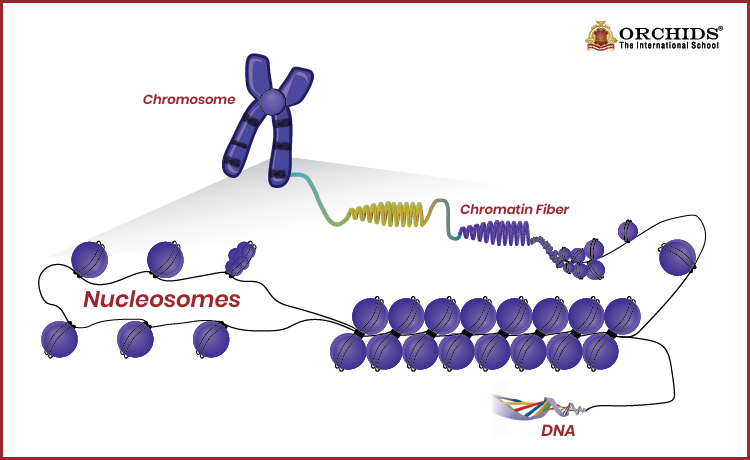
That’s where chromatin comes in. Found in eukaryotic cells, chromatin is made of DNA, RNA, and proteins (mainly histones), forming chromosomes. Simply put, it packages DNA safely and helps it function properly.
And why does chromatin matter?
It protects DNA, keeps it organised, regulates gene activity, controls replication, and allows cell division. Without it, DNA would tangle and get damaged, making life at the cellular level impossible.
Under a microscope, chromatin looks like a string of beads called nucleosomes, where DNA wraps around histones. These coil into 30 nm solenoids, which fold further into visible chromosomes during cell division.
So, how does the cell read or regulate specific genes within this packed structure?
Scientists use chromatin analysis techniques to explore how DNA and proteins interact and control gene activity.
Have you ever wondered what makes DNA fit inside the tiny nucleus of a cell?
Let’s find out.
Structure of Chromatin
When we look at chromatin under a microscope, it looks like a string of beads. But those beads are actually nucleosomes, the basic repeating units of chromatin.
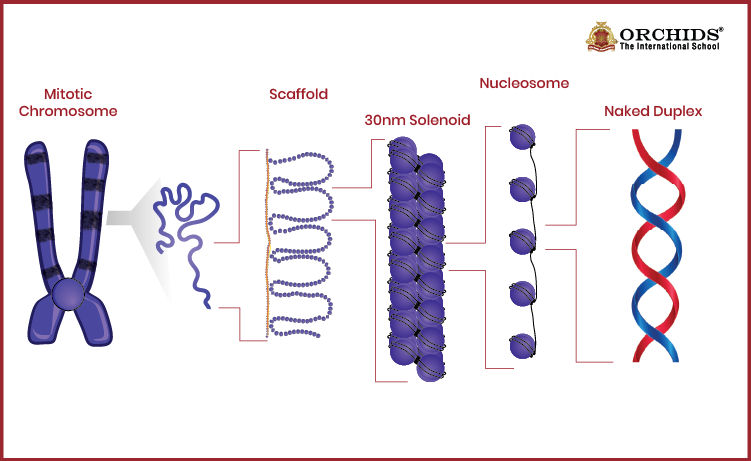
Each nucleosome is made of DNA wrapped around eight histone proteins. These nucleosomes then coil further into a 30 nm fibre called a solenoid, keeping the DNA compact, organised, and ready for the cell’s use.
So, how is chromatin organised beyond these nucleosomes?
Well, it happens in stages. First, DNA wraps around histones to form nucleosomes.
Next, the nucleosomes coil into thicker 30 nm fibres, and finally, during cell division, they fold even more to form the visible metaphase chromosomes.
But here’s something interesting: chromatin isn’t fixed.
And do you know how it changes throughout the cell cycle?
Let’s discuss.
During interphase, it’s loosely packed so the cell can access genes easily. When it’s time for division, chromatin condenses into tightly packed chromosomes during metaphase, making them clearly visible under a microscope.
Now, this raises a question: if chromatin is so dynamic and tightly packed, how do scientists actually study which proteins are interacting with it or which genes are being regulated?
That’s where chromatin analysis techniques come in, helping us peek into the cell’s library and see how its DNA is being managed.
5 Methods Used to Analyse Chromatin
Understanding how DNA and proteins interact in chromatin is crucial for figuring out how genes are regulated. Scientists use several advanced techniques to understand these interactions and identify which parts of DNA are active or bound by proteins.
Let’s go through some of the key methods.
1. Chromatin Immunoprecipitation Sequencing (ChIP-Seq) is one of the most widely used approaches. And you might have wondered how scientists know which proteins attach to DNA and how genes are turned on or off.
It happens because ChIP-Seq combines chromatin immunoprecipitation with DNA sequencing to answer exactly that; it shows which proteins bind to DNA and how genes are regulated.
2. Another method, FAIRE-Seq (Formaldehyde-Assisted Isolation of Regulatory Elements), helps pinpoint the DNA regions responsible for controlling gene activity.
It’s a clever way to locate the “control switches” of genes without needing to look at the entire genome.
3. DNase I Hypersensitive Sites Sequencing works slightly differently. Some DNA regions are more sensitive to the DNase I enzyme because they are actively controlling gene expression.
By detecting these hypersensitive sites, scientists can figure out which areas of the genome are open for transcription and regulation.
4. Then we have ATAC-Seq (Assay for Transposase Accessible Chromatin Sequencing). This method reveals how open or closed chromatin structures are, essentially mapping the access points where gene regulation can occur. It uses an enzyme called Tn5 transposase to make this mapping possible.
5. Micrococcal Nuclease Sequencing (MNase-Seq) takes a different approach. It focuses on locating nucleosomes, the units around which DNA is wrapped, using the micrococcal nuclease enzyme.
This helps researchers understand the overall structure of chromatin and how tightly or loosely DNA is packed.
6. Finally, DNA footprinting or DNA fingerprinting is a technique that zooms in on exactly where proteins bind to DNA. It’s like leaving a “footprint” on the DNA to mark regulatory protein positions.
This method is especially useful for studying transcription factors and understanding how genes are switched on and off.
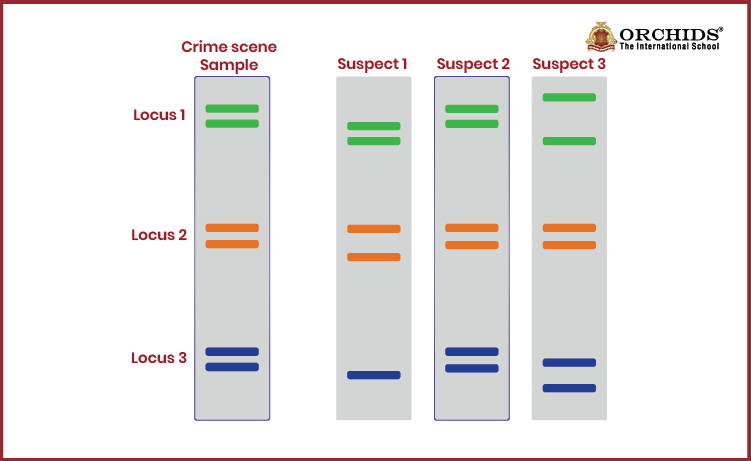
Together, these methods give scientists a detailed map of chromatin structure and function, helping them spot the complex choreography of gene regulation.
Difference Between Chromatin and Chromosomes
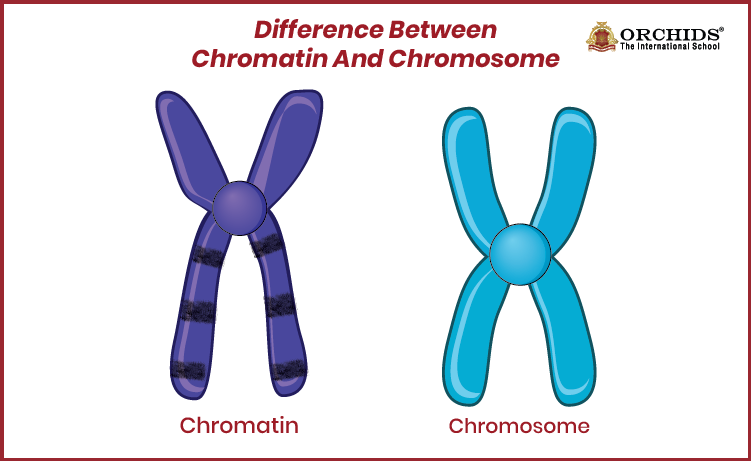
Here’s a simple comparison that clearly shows the difference between chromatin and chromosomes:
|
Feature |
Chromatin |
Chromosomes |
|
Structure |
Thin and long |
Thick and compact |
|
Found |
Throughout the cell cycle |
Visible during cell division |
|
Composition |
DNA + histone proteins |
Condensed chromatin |
|
Form |
Uncoiled |
Tightly packed |
|
Function |
Involved in gene activity and storage |
Ensures DNA is accurately separated during division |
As we have learnt, chromatin is the relaxed form of genetic material that allows genes to be active and accessible, while chromosomes are the tightly packed form that ensures DNA is safely divided between cells during division.
Frequently Asked Questions on Chromatin
1. What is chromatin made of?
Chromatin consists of DNA, RNA, and histone proteins, which together package and protect genetic material.
2. Where is chromatin found?
It is located inside the nucleus of eukaryotic cells, where it organises and regulates DNA activity.
3. Why is chromatin not always visible?
Chromatin remains loosely coiled to allow gene expression and cellular processes, becoming visible only during cell division.
4. When does chromatin become chromosomes?
Chromatin condenses into chromosomes during mitosis and meiosis to ensure accurate DNA separation.
5. Why are histones important?
Histones act as spools around which DNA wraps, aiding in the organisation, protection, and regulation of genes.
6. What is the difference between euchromatin and heterochromatin?
Euchromatin is loosely packed and active in transcription, while heterochromatin is tightly packed and largely inactive.
7. How does chromatin affect gene expression?
The structure and modification of chromatin control which genes are accessible and actively expressed in a cell.
8. Can chromatin structure change?
Yes, chromatin can be remodelled in response to signals, allowing DNA to be more or less accessible for transcription.
Science isn't just a subject, it's the way of seeing the world. Curious how Orchids The International School teaches it that way? Talk to our admissions team.
Admissions Open for 2026-27
What type of concept pages would you prefer?
CBSE Schools In Popular Cities
- CBSE Schools in Bangalore
- CBSE Schools in Mumbai
- CBSE Schools in Pune
- CBSE Schools in Hyderabad
- CBSE Schools in Chennai
- CBSE Schools in Gurgaon
- CBSE Schools in Kolkata
- CBSE Schools in Indore
- CBSE Schools in Sonipat
- CBSE Schools in Delhi
- CBSE Schools in Rohtak
- CBSE Schools in Bhopal
- CBSE Schools in Aurangabad
- CBSE Schools in Jabalpur
- CBSE Schools in Jaipur
- CBSE Schools in Jodhpur
- CBSE Schools in Nagpur
- CBSE Schools in Ahmednagar
- CBSE School In Tumkur











Orchids The International School is one of India's leading chains of CBSE and ICSE schools, with 110+ schools across the country.