

Nutrition in Hydra: A Simple Yet Amazing Feeding Process
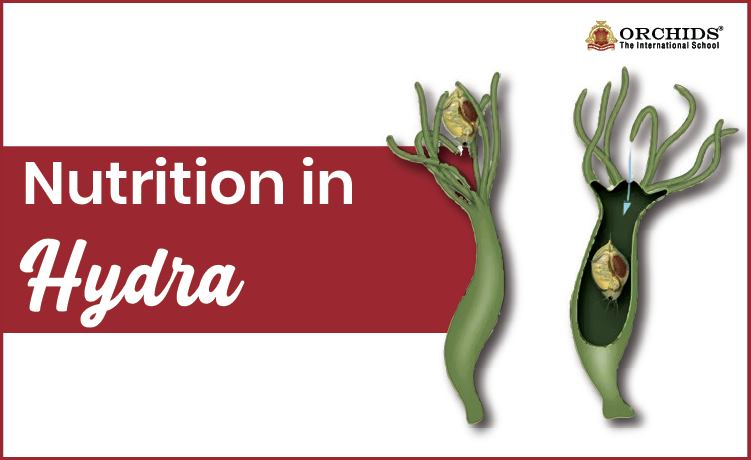
Nutrition in Hydra is an amazing process that shows how even tiny creatures survive in the aquatic world. Hydra doesn’t make its own food like plants; instead, it captures small prey such as microscopic animals and plankton to get the energy it needs. This method of feeding is not only essential for its survival but also fascinating to observe.
In this article, you’ll learn all about nutrition in Hydra, including how Hydra catches and digests its food, the steps of its feeding process, and real-life examples of this tiny predator in action.
Table of Contents
- What is Hydra and How It Survives in Water
- How Nutrition in Hydra Works
- Frequently Asked Questions on Nutrition in Hydra

What is Hydra and How It Survives in Water?
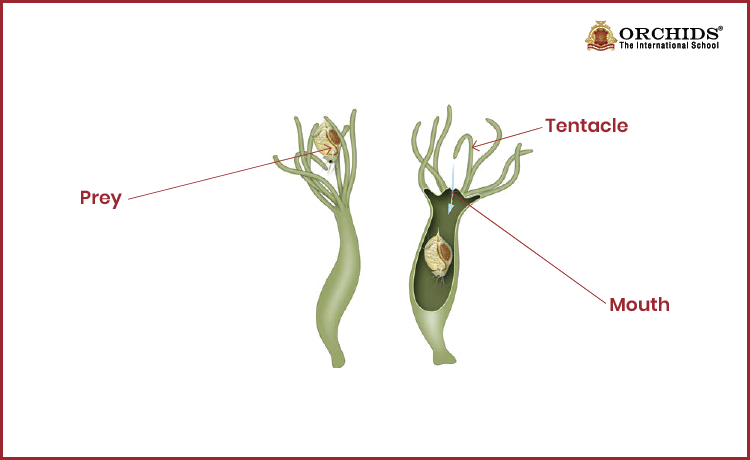
Hydra is a multicellular organism that feeds on insect larvae, small worms and other invertebrates. It has long flexible tentacles present around its mouth. These tentacles have special cells called stinging cells.
It is commonly found attached to aquatic vegetation, submerged wood, or stones with its tentacles spread out to capture its prey.
How Nutrition in Hydra Works?
Hydra’s nutrition is all about catching, paralyzing, and digesting tiny prey. Its stinging cells immobilize the prey, while the tentacles guide it into the mouth.
Once inside, the prey is broken down by digestive enzymes, supplying Hydra with energy and nutrients to grow and reproduce.
1. Ingestion
Hydra captures its food by paralysing and killing its prey through cnidocytes (stinging cells). Cnidocytes contain specialized structures called nematocysts which inject toxins into the body of the prey. Then, the prey is brought to the mouth through tentacles.
2. Digestion
The prey is pushed inside into the body cavity through tentacles, where it is digested by digestive juices.
3. Absorption and Assimilation
Simpler substances produced after digestion is absorbed into the cells that surround the central body cavity. The absorbed food is assimilated and used for the growth and development of the hydra.
4. Egestion
The undigested food is removed through the mouth itself. And on a special note, Nematocyst is a specialised cell organelle found in the stinging cells in the tentacles of jellyfish, hydra, etc. It consists of a coiled poisonous thread that is fired to capture prey or in self-defence.
In summary, Nutrition in Hydra demonstrates how even tiny organisms survive efficiently. By capturing prey with its stinging cells, digesting it in the body cavity, and absorbing nutrients, Hydra gains the energy needed for growth, movement, and reproduction. This simple yet effective process highlights the remarkable adaptations of microscopic life.
Frequently Asked Questions on Nutrition in Hydra
1. What is the mode of nutrition in Hydra?
Hydra shows heterotrophic nutrition, where it captures and digests food externally and internally.
2. How does Hydra capture its food for nutrition?
Hydra uses tentacles with stinging cells (nematocysts) to stun and trap small prey like insects or tiny aquatic organisms.
3. Where does digestion occur in Hydra?
Digestion in Hydra begins in the gastrovascular cavity, where enzymes break down the food before nutrients are absorbed.
4. Why is Nutrition in Hydra important for its survival?
Nutrition in Hydra provides essential energy and nutrients needed for growth, movement, reproduction, and all life processes.
Science isn't just a subject, it's the way of seeing the world. Curious how Orchids The International School teaches it that way? Talk to our admissions team.
Admissions Open for 2026-27
What type of concept pages would you prefer?
CBSE Schools In Popular Cities
- CBSE Schools in Bangalore
- CBSE Schools in Mumbai
- CBSE Schools in Pune
- CBSE Schools in Hyderabad
- CBSE Schools in Chennai
- CBSE Schools in Gurgaon
- CBSE Schools in Kolkata
- CBSE Schools in Indore
- CBSE Schools in Sonipat
- CBSE Schools in Delhi
- CBSE Schools in Rohtak
- CBSE Schools in Bhopal
- CBSE Schools in Aurangabad
- CBSE Schools in Jabalpur
- CBSE Schools in Jaipur
- CBSE Schools in Jodhpur
- CBSE Schools in Nagpur
- CBSE Schools in Ahmednagar
- CBSE School In Tumkur











Orchids The International School is one of India's leading chains of CBSE and ICSE schools, with 130+ schools across the country.