

Difference Between Endocrine and Exocrine Glands
The difference between endocrine and exocrine glands helps you see how amazingly coordinated the human body really is.
Every second, countless chemical reactions take place inside us, and glands are the silent workers behind many of them.
They release different substances that help regulate growth, digestion, mood, and even how fast your heart beats. But here’s something interesting: not all glands release their secretions in the same way. This is where we find two major types like endocrine glands and exocrine glands.
This article covers the differences between endocrine and exocrine glands, how they function, and the key difference between endocrine and exocrine glands with simple examples.
Table of Contents
- What are Glands?
- Difference Between Endocrine and Exocrine Glands
- Frequently Asked Questions On Difference Between Endocrine and Exocrine Glands

What are Glands?
Do you know what helps your body digest food, stay cool, and even manage your mood?
The answer lies in glands, these special organs that release important substances like hormones, enzymes, and sweat to keep everything in balance.
Depending on how and where they release these substances, glands are divided into two main types: endocrine glands and exocrine glands.
So, what makes them different?
Let’s start with endocrine glands. These glands don’t have ducts. Instead, they release hormones straight into the bloodstream.
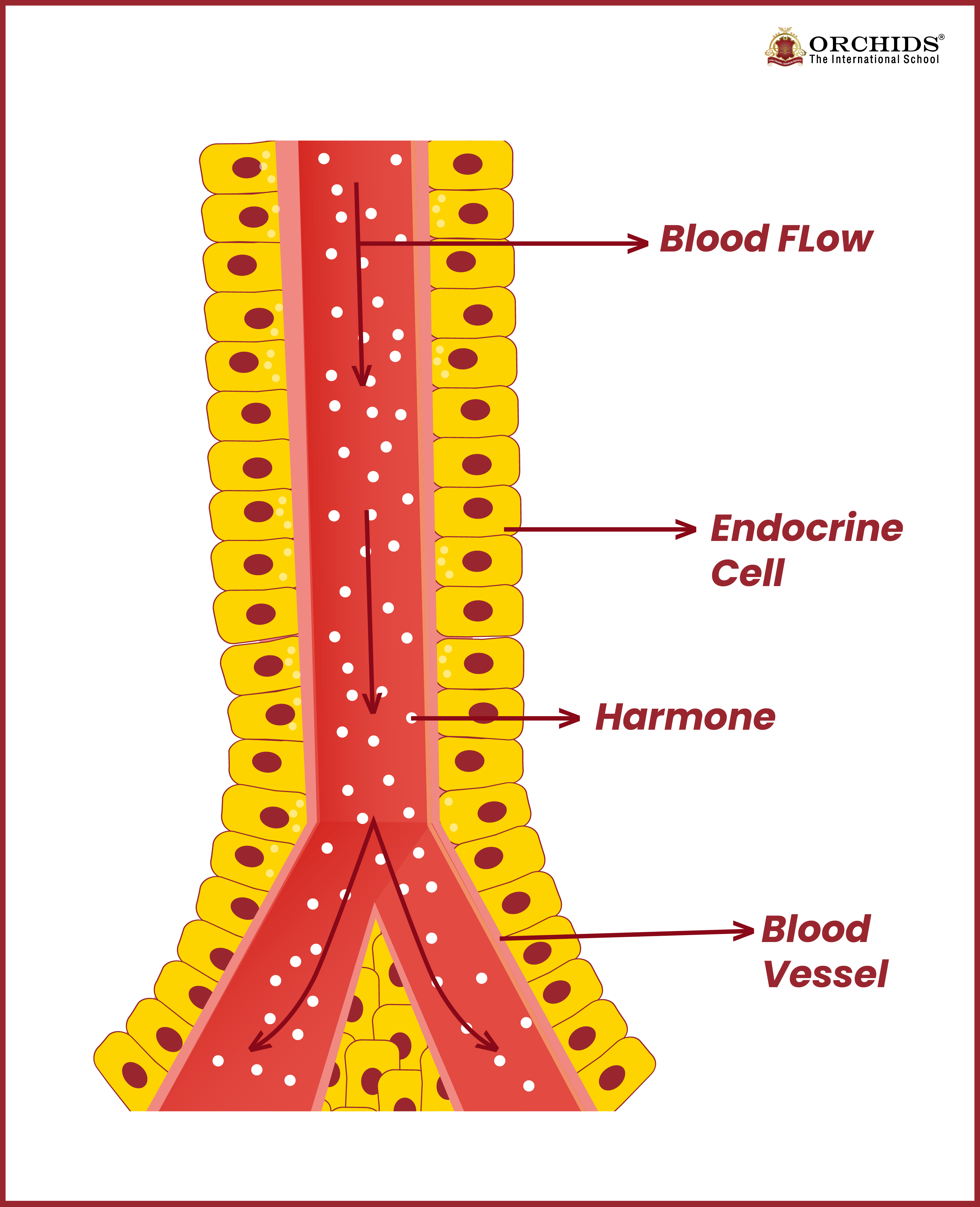
These hormones travel to different organs and control vital body functions such as growth, metabolism, and stress response.
For example:
-
The pituitary gland acts like a control center, managing other glands.
-
The thyroid gland regulates metabolism and energy.
-
The adrenal glands help the body respond to stress.
-
The pancreas (endocrine part) releases insulin to control blood sugar.
Now, what about exocrine glands?
These have ducts that carry their secretions directly to specific parts of the body or onto its surface. You can see them in action every day, like when you sweat, salivate, or digest food.
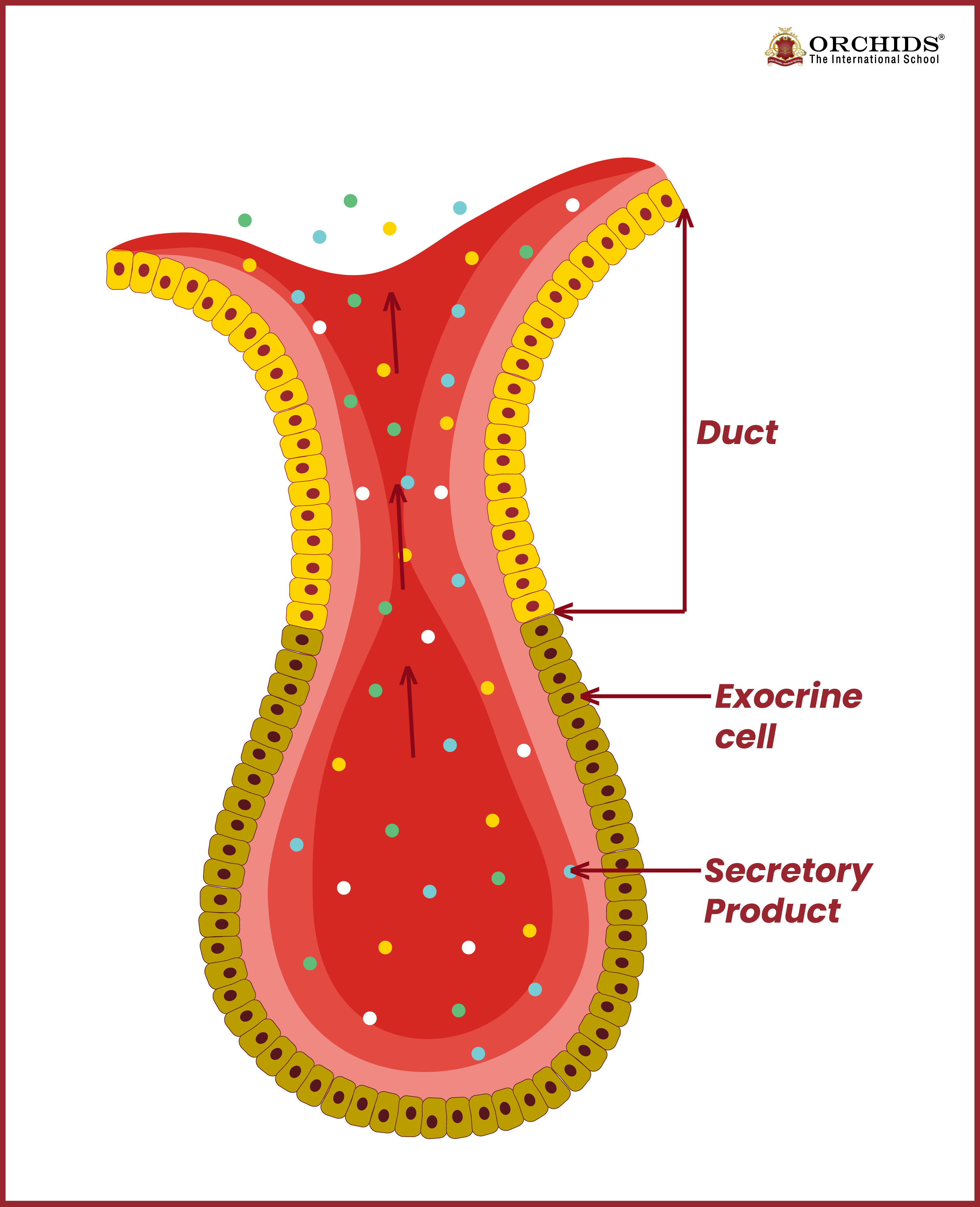
Some common examples include:
-
Sweat glands, which cool your body.
-
Salivary glands, which help start digestion.
-
Sebaceous glands, which release oils to protect your skin.
-
Pancreas (exocrine part), which sends digestive juices into the small intestine.
So, while endocrine glands work “inside” by controlling body functions through hormones, exocrine glands work “outside” by releasing substances to specific areas.
Now take a look at the visual below to get an idea of what are the differences between endocrine and exocrine glands:
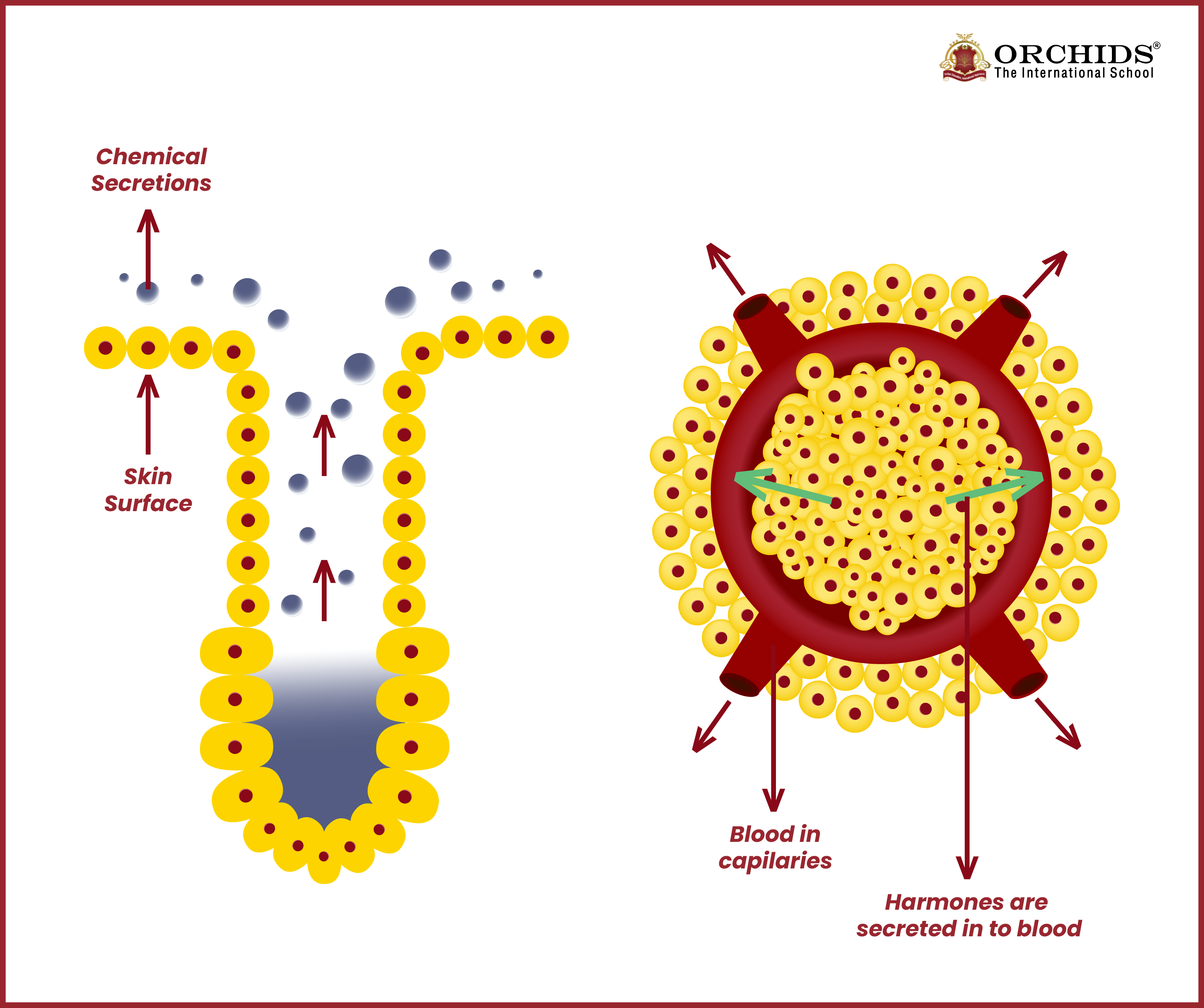
Difference Between Endocrine and Exocrine Glands
Here’s a simple comparison that makes the difference between endocrine and exocrine glands clear:
|
Feature |
Endocrine Glands |
Exocrine Glands |
|
Presence of Ducts |
Ductless |
Have ducts |
|
Mode of Secretion |
Directly into the bloodstream |
Through ducts to specific areas |
|
Type of Secretion |
Hormones |
Enzymes, saliva, sweat, mucus, etc. |
|
Target Area |
Acts on distant organs or tissues |
Acts locally on nearby areas |
|
Examples |
Pituitary, thyroid, and adrenal glands |
Sweat, salivary, and sebaceous glands |
|
Effect Duration |
Long-lasting |
Usually short-term |
|
Function |
Regulates and controls body functions |
Helps in digestion, lubrication, and protection |
Now that you’ve seen the difference, it’s easy to remember:
|
Till now, in this article, we have learnt the difference between endocrine and exocrine glands and how both work together to keep the body functioning properly, one managing what happens inside and the other taking care of what’s needed outside.
Frequently Asked Questions On Difference Between Endocrine and Exocrine Glands
1. What is the main difference between endocrine and exocrine glands?
Endocrine glands release hormones directly into the bloodstream, while exocrine glands send their secretions through ducts to specific parts of the body.
2. Why are endocrine glands called ductless glands?
They are called ductless because they do not have ducts to carry their secretions. Instead, they release hormones directly into the blood.
3. What are some examples of endocrine and exocrine glands?
Examples of endocrine glands include the pituitary, thyroid, and adrenal glands.
Exocrine glands include sweat glands, salivary glands, and sebaceous glands.
4. How do endocrine and exocrine glands work differently?
Endocrine glands control body functions by releasing hormones into the blood, while exocrine glands help in processes like digestion, lubrication, and temperature control through ducts.
5. Is the pancreas an endocrine or exocrine gland?
The pancreas acts as both, it releases insulin and glucagon (endocrine function) and also secretes digestive enzymes (exocrine function).
6. Which gland is known as the master gland, and why?
The pituitary gland is called the master gland because it controls the activity of many other endocrine glands in the body.
7. Can a gland perform both endocrine and exocrine functions?
Yes, such glands are called mixed glands. The pancreas and liver are good examples as they perform both hormonal and digestive functions.
Science isn't just a subject, it's the way of seeing the world. Curious how Orchids The International School teaches it that way? Talk to our admissions team.
Admissions Open for 2026-27
What type of concept pages would you prefer?
CBSE Schools In Popular Cities
- CBSE Schools in Bangalore
- CBSE Schools in Mumbai
- CBSE Schools in Pune
- CBSE Schools in Hyderabad
- CBSE Schools in Chennai
- CBSE Schools in Gurgaon
- CBSE Schools in Kolkata
- CBSE Schools in Indore
- CBSE Schools in Sonipat
- CBSE Schools in Delhi
- CBSE Schools in Rohtak
- CBSE Schools in Bhopal
- CBSE Schools in Aurangabad
- CBSE Schools in Jabalpur
- CBSE Schools in Jaipur
- CBSE Schools in Jodhpur
- CBSE Schools in Nagpur
- CBSE Schools in Ahmednagar
- CBSE School In Tumkur











Orchids The International School is one of India's leading chains of CBSE and ICSE schools, with 110+ schools across the country.