

Acclimatization: What It Means, Importance and Simple Examples
Acclimatization begins quietly, often without you even noticing it. You may feel slightly breathless when you reach a high altitude, sweat more during the first few days of summer, or struggle with the cold when winter sets in. At first, these reactions may seem uncomfortable, but they are signs that your body is working to adjust to new surroundings. Over time, these small changes help you function normally in different environmental conditions.
This article walks you through what is acclimatization in simple and clear language. It explains what acclimatization means, how the process works inside the body, the different types, real-life examples.
Table of Contents
- What Is Acclimatization
- Types of Acclimatization
- How Long Does Acclimatization Take
- Symptoms of Poor Acclimatization
- Key Difference Between Acclimatization and Adaptation
- Real Life Examples of Acclimatization
- Frequently Asked Questions on Acclimatization

What Is Acclimatization?
Acclimatization is the natural way your body adjusts when you move into a new environment. It is not something you consciously control.
Instead, your body slowly makes small changes to help you cope with differences in temperature, altitude, humidity, or even light.
Think about what happens when you travel to a hill station. At first, you might feel slightly breathless because the air has less oxygen. After a few days, breathing feels easier. That is your body adjusting.
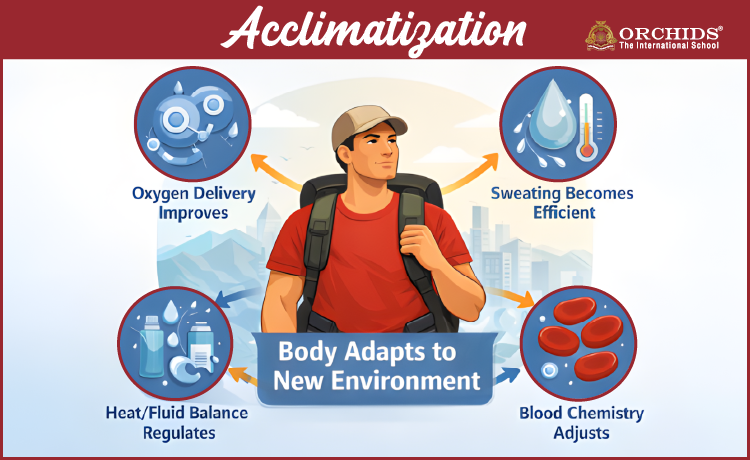
Or consider the start of summer. You may notice that you sweat more than usual. Over time, your body becomes better at cooling itself. In winter, you might initially feel very cold, but gradually your body adapts and manages the temperature more efficiently.
All of these are examples of acclimatization. They happen because your body is constantly trying to maintain balance and keep all its systems working properly under new conditions.
When your body acclimatizes properly, it:
- Keeps your vital functions stable in extreme heat, cold, or high altitude
- Reduces the risk of problems such as altitude sickness or heat stroke
- Helps you maintain strength, stamina, and performance
- Supports your overall survival in changing conditions
If the body does not get enough time to adjust, sudden environmental changes can lead to stress, fatigue, illness, or reduced energy levels. That is why gradual exposure to new conditions is always safer and healthier.
Now, the next question arises: how does acclimatization actually work?
First, the body senses stress. This could be lower oxygen at high altitude, extreme heat, or cold temperatures. The brain then sends signals to different organs to adjust their activity. As a result, breathing rate may increase, sweating patterns may change, or circulation may improve. Over time, these small adjustments lead to gradual improvement.
This process usually takes days or sometimes weeks, depending on the situation. The changes are not permanent. If a person returns to their original environment, the body slowly readjusts and returns to its normal state.
Types of Acclimatization
Acclimatization does not look the same in every situation. The changes your body makes depend on the kind of environment you are exposed to. Whether it is thin air in the mountains, intense summer heat, or freezing winter temperatures, your body responds in different ways to protect you and keep things balanced.
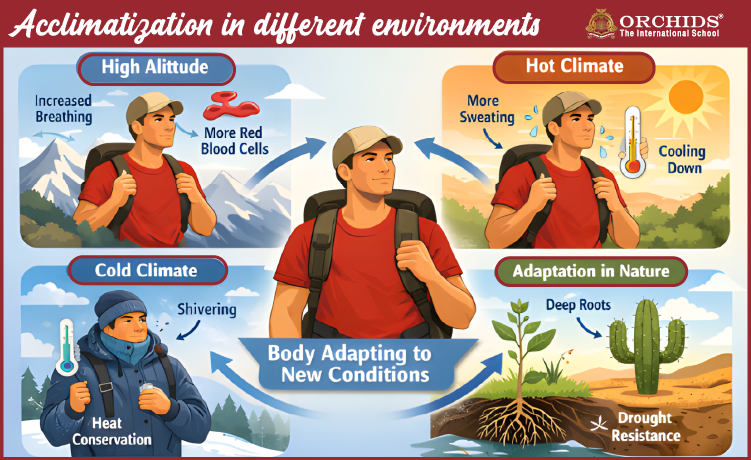
The table below explains the main types of acclimatization and how they work.
|
Type of Acclimatization |
What Happens in the Environment |
How the Body or Plant Responds |
Why It Helps |
|
High Altitude |
Oxygen levels are lower in the air |
Breathing rate increases, heart rate rises, and more red blood cells are produced |
Helps deliver more oxygen to body tissues |
|
Heat |
High temperatures cause the body to overheat |
Sweating becomes more efficient, fluid balance improves, and body temperature is better regulated |
Prevents overheating and reduces the risk of heat stroke |
|
Cold |
Low temperatures cause heat loss |
The body conserves heat, circulation improves, and metabolism increases |
Maintains body warmth and protects vital organs |
|
Plants in Changing Conditions |
Changes in water, light, or temperature |
Roots grow deeper in dry soil, and leaf size adjusts to light levels |
Helps plants survive in different environments |
In every case, the goal is the same. The body or plant is trying to maintain stability and continue functioning normally despite environmental stress. These adjustments are usually gradual and become more effective with time and consistent exposure.
How Long Does Acclimatization Take?
How long acclimatization takes is not the same for everyone. It depends on where you are going and how your body responds to the change.
- At high altitude, the body may need a few days to start adjusting, but full acclimatization can take several weeks.
- When adjusting to hot weather, most people begin to adapt within one to two weeks as the body becomes better at cooling itself.
- In cold climates, the time varies depending on how intense the exposure is and how often you are in the cold.
- The key thing to remember is that slow and steady adjustment works best. Giving your body time to adapt makes the process safer and more effective.
- If you are traveling to high altitude or extreme climates, a few simple steps can make a big difference.
- Climb or ascend gradually instead of rushing upward. Drink plenty of water to stay hydrated. Make sure you get enough rest so your body can recover and adjust.
Avoid intense physical activity during the first few days. Eat balanced, nutritious meals to support your energy levels. Most importantly, pay attention to how you feel.
Acclimatization cannot be forced. Trying to rush the process increases the risk of health problems and can make the experience uncomfortable or even dangerous. Patience and proper care allow your body to adjust naturally and safely.
Symptoms of Poor Acclimatization
When the body does not adjust properly to a new environment, it gives warning signs.
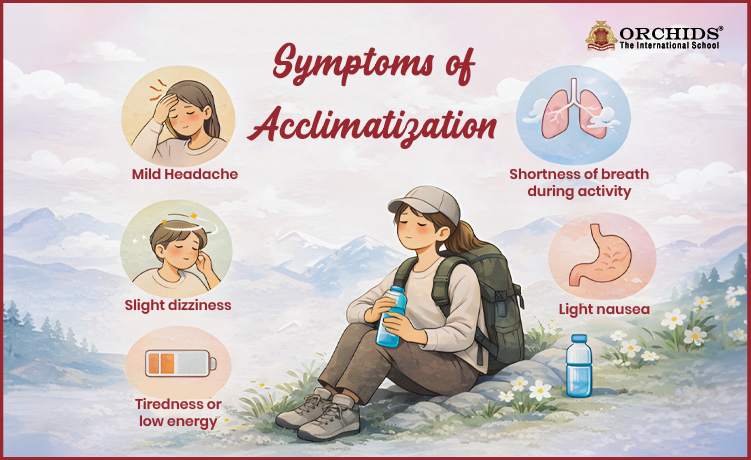
These symptoms depend on whether you are at high altitude, in hot weather, or in cold conditions, and recognizing them early is important.
- At high altitude, lower oxygen levels can cause headache, dizziness, nausea, unusual tiredness, and shortness of breath, even during simple activities. These signs show that the body is still trying to adapt to reduced oxygen.
- In hot weather, poor acclimatization may lead to excessive fatigue, dehydration, heavy sweating, muscle cramps, and weakness as the body struggles to control its temperature.
- In cold weather, you may notice numbness in the fingers or toes, constant shivering, and reduced stamina. These symptoms appear when the body is unable to conserve heat effectively.
Mild symptoms often improve with rest and gradual exposure. However, severe or worsening signs such as persistent vomiting, confusion, chest discomfort, extreme weakness, or difficulty breathing require immediate medical attention.
Key Difference Between Acclimatization and Adaptation
People often use the terms acclimatization and adaptation as if they mean the same thing. However, they describe two very different processes.
While both help living organisms survive in changing environments, the key difference lies in how quickly the change happens and whether it is temporary or permanent. Understanding this distinction makes it easier to grasp how the body responds to environmental challenges.
Here is a simple comparison to clarify the difference:
|
Acclimatization |
Adaptation |
|
Short-term change |
Long-term genetic change |
|
Happens within an individual’s lifetime |
Happens over many generations |
|
Temporary and reversible |
Permanent and inherited |
|
Occurs in response to immediate environmental change |
Develops through natural selection over time |
|
Example: breathing faster at high altitude |
Example: communities living in mountains for centuries with naturally higher lung capacity |
In simple words, acclimatization helps an individual adjust quickly to a new environment, while adaptation shapes an entire species over a long period of time.
Real Life Examples of Acclimatization
Acclimatization is not just a scientific term. It happens in everyday life more often than we realise. Here are specific examples of acclimatization:
1. Think about a trekker climbing in the Himalayas. In the beginning, they may feel tired or slightly breathless. After a few days of gradual ascent and rest, their body adjusts to the lower oxygen levels, making it easier to continue the journey.
2. Athletes experience something similar when they train in hot climates before a major competition. At first, the heat feels exhausting. Over time, their bodies learn to sweat more efficiently and manage temperature better, which improves performance.
3. Even people who move from coastal areas to hill stations notice changes. The cooler air and different altitude may feel uncomfortable initially, but with time, the body adapts and daily activities become easier.
4. Factory workers who spend long hours in high temperatures also undergo acclimatization. Their bodies gradually become better at handling heat stress, reducing fatigue and discomfort.
We learnt that these everyday situations show how the human body is designed to adjust and protect itself when faced with new environmental challenges.
Frequently Asked Questions on Acclimatization
1. What is acclimatization in simple terms?
Acclimatization is the process by which the body slowly adjusts to changes in the environment, such as heat, cold, or high altitude. It helps a person function normally under new conditions.
2. Why is acclimatization necessary?
It protects the body from environmental stress. Without proper acclimatization, sudden changes in climate or altitude can cause discomfort, illness, or reduced physical performance.
3. How does the body acclimatize to high altitude?
At high altitude, oxygen levels are lower. The body responds by increasing breathing rate, raising heart rate, and producing more red blood cells to improve oxygen delivery.
4. How long does it take to acclimatize?
The time varies depending on the individual and the environment. For high altitude, noticeable adjustment may begin within a few days, but full acclimatization can take several weeks.
5. What are the symptoms of poor acclimatization?
Common symptoms include headache, fatigue, dizziness, nausea, shortness of breath, and difficulty sleeping, especially when adjusting to high altitude.
6. Can acclimatization occur in hot and cold climates?
Yes. In hot climates, the body may sweat more efficiently and maintain better fluid balance. In cold climates, circulation and metabolism may adjust to conserve heat.
7. Is acclimatization permanent?
No. Acclimatization is usually temporary. If a person returns to their original environment, the body gradually readjusts to previous conditions.
8. What is the difference between acclimatization and adaptation?
Acclimatization is a short-term change that happens within an individual during their lifetime. Adaptation is a long-term genetic change that occurs in a species over many generations.
Science isn't just a subject, it's the way of seeing the world. Curious how Orchids The International School teaches it that way? Talk to our admissions team.
Admissions Open for 2026-27
What type of concept pages would you prefer?
CBSE Schools In Popular Cities
- CBSE Schools in Bangalore
- CBSE Schools in Mumbai
- CBSE Schools in Pune
- CBSE Schools in Hyderabad
- CBSE Schools in Chennai
- CBSE Schools in Gurgaon
- CBSE Schools in Kolkata
- CBSE Schools in Indore
- CBSE Schools in Sonipat
- CBSE Schools in Delhi
- CBSE Schools in Rohtak
- CBSE Schools in Bhopal
- CBSE Schools in Aurangabad
- CBSE Schools in Jabalpur
- CBSE Schools in Jaipur
- CBSE Schools in Jodhpur
- CBSE Schools in Nagpur
- CBSE Schools in Ahmednagar
- CBSE School In Tumkur











Orchids The International School is one of India's leading chains of CBSE and ICSE schools, with 110+ schools across the country.