

Symbiotic Nutrition: The Invisible Connections That Keep Nature Balanced
Symbiotic Nutrition is a way in which two different living organisms live together and share their resources to support each other’s life processes. Instead of surviving alone, they form a close relationship where each one gains something important, such as food, shelter, or protection.
In this article, you will understand the concept of symbiotic nutrition, see how these relationships develop in nature, explore their different types, and look at examples that show how living together helps organisms survive and grow.
Table of Contents
- What is Symbiotic Nutrition
- Examples of Symbiotic Nutrition
- Methods to Maintain and Improve Soil Nutrients
- Frequently Asked Questions on Symbiotic nutrition

What is Symbiotic Nutrition
(Sym means together and bios means life). In symbiotic relationship, two organisms live together and are beneficial to each other. In this relationship, both organisms benefit by sharing resources such as food, shelter, or protection.
These organisms form a close and long-lasting association that helps them survive in different environmental conditions. This mutual support allows them to grow better than they would if they lived alone.
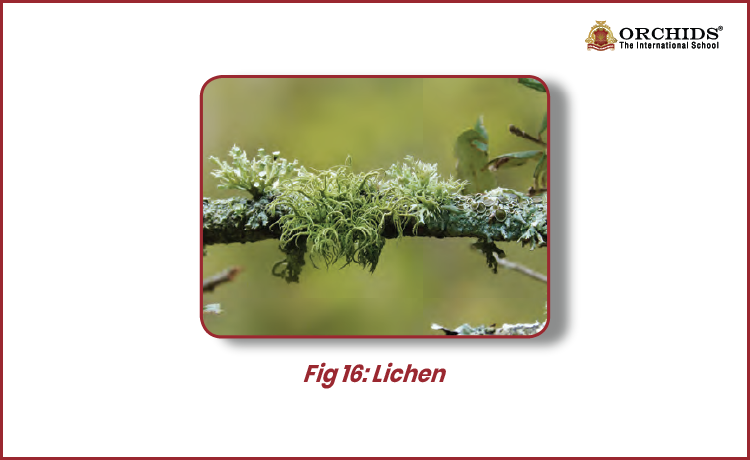
Example: Lichen and Leguminous plants.
Examples of Symbiotic Nutrition
Symbiotic nutrition becomes easier to understand when we look at real-life situations where organisms live and support each other. These relationships are not rare; they can be seen in many parts of nature, from plants to animals.
Now, let us explore some common examples of symbiotic nutrition and see how different organisms depend on each other for survival.
1. Lichen
Lichen is an example of symbiotic association between algae (phycobiont) and fungi (Mycobiont). Algae is green in colour and synthesises its own food by the process of photosynthesis. It provides food to the fungi and in return, fungi provide shelter, water and minerals to the algae. This association helps both of them to live in adverse conditions.
Some fungi live in the roots of trees. Fungi increase the surface area for absorption of water and minerals, and in return, get food from the tree.
2. Leguminous plants
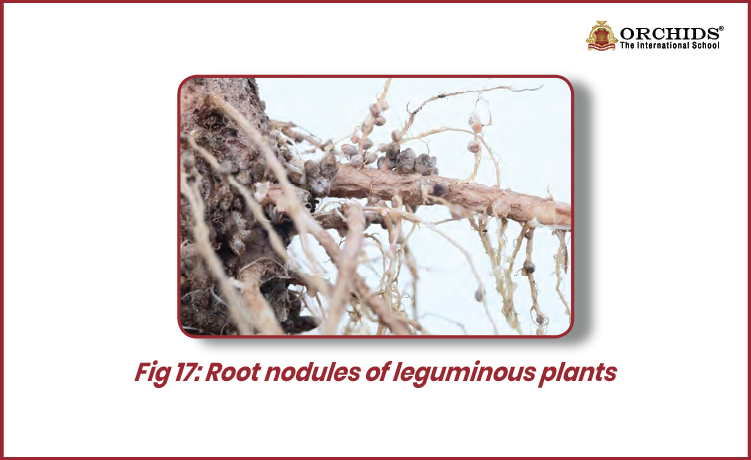
One more example of symbiotic nutrition is root nodules of leguminous plants (pea, beans, etc.) and rhizobia bacteria. Nitrogen is required for the synthesis of proteins. The plant cannot absorb the nitrogen directly. The rhizobia bacteria convert nitrogen into nitrates or ammonia (usable soluble form).
The roots absorb these nitrogenous compounds to fulfil the plant’s nitrogen requirement. In return, bacteria gets nutrition and shelter from the plant. You must have observed farmers using manure and fertiliser. They help in increasing the fertility of soil, as they are rich in nutrients.
Now, let us see how nutrients are replenished in the soil.
Methods to Maintain and Improve Soil Nutrients
Plants require minerals for their growth and development. The roots of the plants absorb nutrients like Nitrogen, phosphorous, potassium, etc. from the soil. Due to this, the quantity of nutrients declines over a period of time. In the long run, the deficiency of nutrients in soil makes it infertile.
So, there is a need to replenish nutrients back in soil regularly. Let us discuss some methods to replenish the nutrients back into the soil.
1. Crop rotation: In this method, different crops are grown one after the other on the same piece of land to maintain the fertility of the soil. Like in one season, legumes are grown and in the next season, cereals are grown. This also helps to control the diseases that occur in crops.
2. Biofertilisers: Use of biofertilisers and manure (biogas plant) to replenish nutrients in the soil.
We learnt that symbiotic nutrition is a way in which two organisms live together and support each other by sharing resources. This relationship helps both partners survive and grow in a better way. Such interactions not only benefit the organisms involved but also play an important role in maintaining balance in nature and improving soil fertility.
Frequently Asked Questions on Symbiotic nutrition
1. Why do some organisms live together in symbiotic nutrition?
Some organisms live together because it helps them meet their needs like food, safety, or support in a simple and natural way.
2. Where can we see symbiotic nutrition in everyday life?
Symbiotic relationships can be seen in soil, water, plants, and even inside animals, where organisms live closely and depend on each other.
3. Do both partners always get the same benefit?
Not always. Sometimes both get equal benefits, but in some cases, one organism may gain a little more than the other.
4. What makes symbiotic nutrition special?
It is special because two different organisms live together and support each other, instead of surviving completely on their own.
Science isn't just a subject, it's the way of seeing the world. Curious how Orchids The International School teaches it that way? Talk to our admissions team.
Admissions Open for 2026-27
What type of concept pages would you prefer?
CBSE Schools In Popular Cities
- CBSE Schools in Bangalore
- CBSE Schools in Mumbai
- CBSE Schools in Pune
- CBSE Schools in Hyderabad
- CBSE Schools in Chennai
- CBSE Schools in Gurgaon
- CBSE Schools in Kolkata
- CBSE Schools in Indore
- CBSE Schools in Sonipat
- CBSE Schools in Delhi
- CBSE Schools in Rohtak
- CBSE Schools in Bhopal
- CBSE Schools in Aurangabad
- CBSE Schools in Jabalpur
- CBSE Schools in Jaipur
- CBSE Schools in Jodhpur
- CBSE Schools in Nagpur
- CBSE Schools in Ahmednagar
- CBSE School In Tumkur











Orchids The International School is one of India's leading chains of CBSE and ICSE schools, with 110+ schools across the country.