

Arteries and Veins Difference: Structure, Roles and Interesting Facts Explained
The arteries and veins difference is one of those biology topics that helps you understand how amazingly organised our body really is.
Our heart beats continuously, pumping blood every second of our lives. But have you ever thought how blood moves in one direction and still returns safely to the heart?
Well, our circulatory system has two specialised blood vessels that make this possible. At first, arteries and veins may seem similar since both carry blood. However, they function very differently.
This article covers the arteries and veins difference, how each one works, and why both are essential for maintaining healthy blood circulation in our body.
Table of Contents
- What Are Blood Vessels
- Difference Between Arteries And Veins
- Frequently Asked Questions on Arteries and Veins Difference

What Are Blood Vessels?
Have you ever thought about how every part of your body gets oxygen and nutrients? Even your fingers and toes need a constant supply to stay healthy.
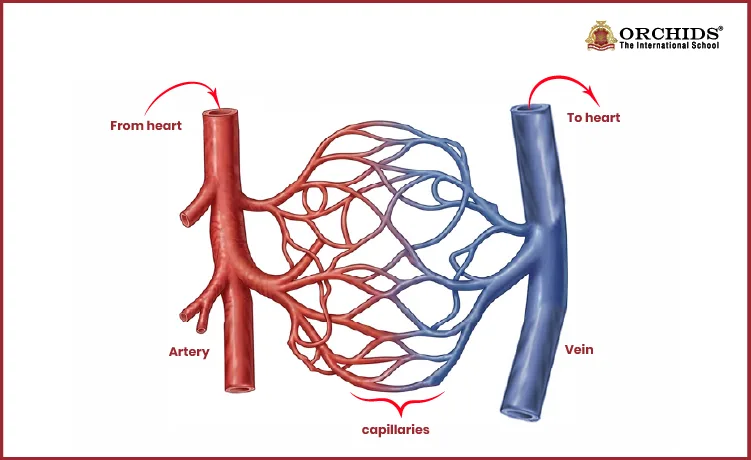
This important job is done by blood vessels. Blood vessels are hollow, tube-like structures that carry blood throughout the body. They form a huge network that connects the heart to all body parts.
You can think of them like roads and highways. The heart is like a pump, and blood vessels are the paths that allow blood to travel everywhere it is needed.
Blood carries oxygen, nutrients, hormones, and other important substances to cells. At the same time, it also carries waste products like carbon dioxide away from the cells.
There are three main types of blood vessels:
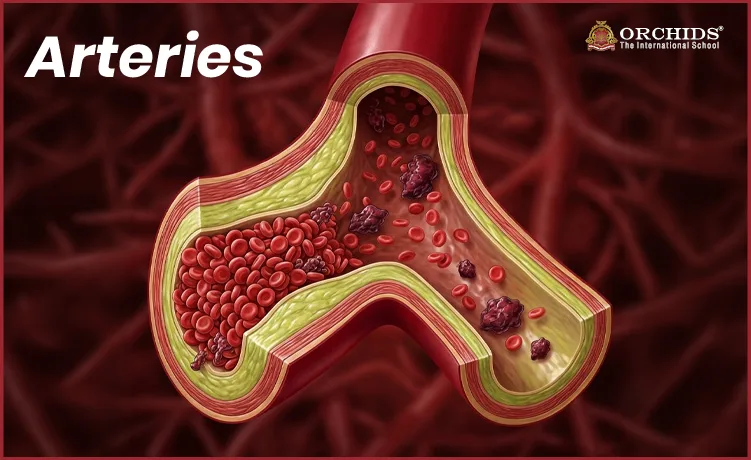
- Arteries carry blood away from the heart to different parts of the body.
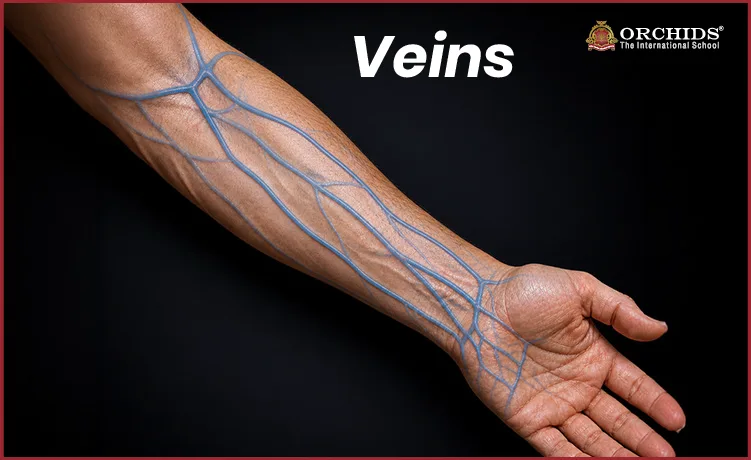
- Veins carry blood back to the heart after the oxygen has been used.
- Capillaries are tiny blood vessels that connect arteries and veins. They allow the exchange of oxygen, nutrients, and waste between blood and body cells.
All three types work together to keep blood circulating properly.
Now you might be thinking, if both arteries and veins carry blood, what exactly is the difference between arteries and veins?
Let us understand this clearly.
Difference Between Arteries And Veins
Arteries transport blood from the heart to different parts of the body, supplying oxygen and nutrients. Veins bring blood back to the heart, carrying carbon dioxide and waste products for removal.
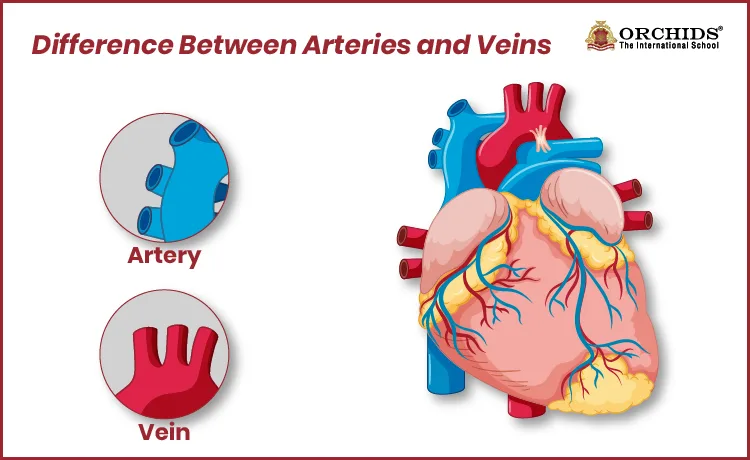
Although they may look similar, their structure, pressure handling, and functions are quite different. Let us examine the difference between arteries and veins in detail through a clear comparison table below.
|
Basis of Comparison |
Arteries |
Veins |
|
Primary Function |
Carry blood away from the heart |
Carry blood toward the heart |
|
Type of Blood |
Mostly oxygenated blood (except pulmonary artery) |
Mostly deoxygenated blood (except pulmonary vein) |
|
Blood Pressure |
High pressure due to direct pumping from the heart |
Low pressure as blood returns to the heart |
|
Wall Thickness |
Thick, muscular and highly elastic walls |
Thin, less muscular and less elastic walls |
|
Lumen Size |
Narrow lumen |
Wider lumen |
|
Valves |
Absent |
Present to prevent backflow |
|
Pulse |
Pulse is present and can be felt |
No pulse felt |
|
Location |
Usually deep inside the body |
Often closer to the skin surface |
|
Shape When Empty |
Maintains round shape |
Collapses easily |
|
Examples |
Aorta, Pulmonary Artery |
Vena Cava, Pulmonary Vein |
This comparison of arteries vs veins clearly highlights the structural and functional differences between arteries and veins, making it easier to understand how they work together to maintain smooth blood circulation in the body.
Now that you have seen the arteries and veins difference, it becomes easier to understand how blood circulation works smoothly.
From a biological point of view, arteries have thick and elastic walls because they carry blood pumped directly from the heart under high pressure. These strong walls prevent damage and help maintain blood flow.
Veins, on the other hand, carry blood at lower pressure. Since the force is weaker, veins contain valves that prevent blood from flowing backward, especially in the legs, where blood has to move upward against gravity.
By working together, arteries and veins maintain continuous circulation. Arteries supply oxygen and nutrients to body tissues, while veins return carbon dioxide and waste products to the heart.
Here is a simple trick to remember arteries vs veins:
|
A = Arteries = Away from heart V = Veins = Visit the heart |
So far, we have learnt that understanding the difference between arteries and veins helps you clearly visualise how the circulatory system keeps your body alive and functioning every second.
Frequently Asked Questions on Arteries and Veins Difference
1. What is the basic difference between arteries and veins?
Arteries carry blood away from the heart, while veins carry blood back to the heart. Their structure and function differ according to this role.
2. How do the walls of arteries and veins differ?
Arteries have thick, muscular, and elastic walls to handle high pressure. Veins have thinner walls because blood flows through them at lower pressure.
3. Why is blood pressure higher in arteries than in veins?
Blood pressure is higher in arteries because blood is pumped directly from the heart with force. In veins, the pressure decreases as blood returns to the heart.
4. Do arteries and veins carry the same type of blood?
Most arteries carry oxygenated blood and most veins carry deoxygenated blood. However, pulmonary vessels are exceptions to this rule.
5. What role do valves play in veins?
Veins contain valves that prevent the backward flow of blood. Arteries do not have valves because blood flows through them under high pressure.
6. How does the lumen size differ in arteries and veins?
Arteries have a narrow lumen to maintain pressure, while veins have a wider lumen to allow smooth return of blood to the heart.
7. Where are arteries and veins usually located in the body?
Arteries are generally located deeper in the body for protection, while many veins are closer to the skin and may appear bluish.
8. How do arteries and veins work together in circulation?
Arteries deliver oxygen and nutrients to body tissues, and veins carry carbon dioxide and waste products back to the heart, maintaining continuous blood circulation.
Science isn't just a subject, it's the way of seeing the world. Curious how Orchids The International School teaches it that way? Talk to our admissions team.
Admissions Open for 2026-27
What type of concept pages would you prefer?
CBSE Schools In Popular Cities
- CBSE Schools in Bangalore
- CBSE Schools in Mumbai
- CBSE Schools in Pune
- CBSE Schools in Hyderabad
- CBSE Schools in Chennai
- CBSE Schools in Gurgaon
- CBSE Schools in Kolkata
- CBSE Schools in Indore
- CBSE Schools in Sonipat
- CBSE Schools in Delhi
- CBSE Schools in Rohtak
- CBSE Schools in Bhopal
- CBSE Schools in Aurangabad
- CBSE Schools in Jabalpur
- CBSE Schools in Jaipur
- CBSE Schools in Jodhpur
- CBSE Schools in Nagpur
- CBSE Schools in Ahmednagar
- CBSE School In Tumkur











Orchids The International School is one of India's leading chains of CBSE and ICSE schools, with 110+ schools across the country.