

Saprophytic nutrition: Meet the organisms that clean up nature silently
Saprophytic Nutrition is a really interesting topic in biology. While most plants make their own food and animals eat plants or other animals, some organisms have a different way of surviving. Fungi, bacteria, and tiny protozoa, called saprophytes, get their food from dead plants and animals.
It might sound a little strange, but saprophytes do an important job in nature. They break down dead material into nutrients that help them grow and also make the soil healthy. In this article, we will explore how saprophytic nutrition works, the different types of saprophytes, and why they are so important for life around us.
Table of Contents
- All About Saprophytic Nutrition
- What Does a Saprophytic Plant Look Like
- How Saprophytes Keep Nature Alive
- Frequently Asked Questions on Saprophytic Nutrition

All About Saprophytic Nutrition
In this kind of nutrition, the organisms derive their nourishment from dead and decaying organic matter. These organisms secrete digestive juices on dead and decaying matter and convert them into simple, soluble substances from which they absorb nutrients. Such organisms are termed as saprotrophs or saprophytes and their mode of nutrition is saprophytic.
What Does a Saprophytic Plant Look Like?
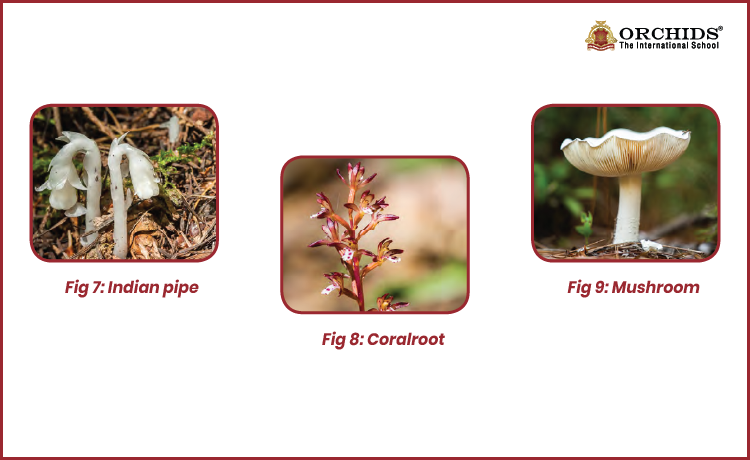
A saprophytic plant is usually whitish. These plants mostly have no leaves. They grow in the shades in tropical forests. Some examples of such plants are Indian pipe, Coralroot.
Many fungi like Mucor, Rhizopus (bread mould), unicellular yeast, mushroom and a few bacteria also derive nutrition from dead and decaying organic matter. They are called saprotrophs.
How Saprophytes Keep Nature Alive?
Saprophytes are tiny but essential workers in nature. They survive by feeding on dead plants, fallen leaves, and animals that have completed their life cycle.
As they break down this material, they release nutrients into the soil, giving life a second chance and helping new plants grow strong.
Some saprophytic plants and fungi form soft networks in the soil that support tiny soil creatures and improve the soil’s texture. This allows water and air to reach plant roots more easily.
Without these organisms, dead material would pile up, and the natural balance of forests, gardens, and fields would be lost.
By quietly recycling waste, saprophytes keep the environment clean, fertile, and full of life, showing how even the smallest organisms play a big role in the circle of life.
Till now, we have learned that Saprophytic Nutrition is the way saprophytes get their food from dead plants and animals. Saprophytic plants and other saprophytes break down decaying matter, recycle nutrients into the soil, and help keep the environment healthy and balanced.
Frequently Asked Questions on Saprophytic Nutrition
1. How do saprophytes get their food?
Saprophytes get their food from dead plants and animals. They release special juices that break the dead material into tiny pieces, which they then absorb.
2. Which living things are saprophytes?
Fungi like mushrooms and molds, bacteria, and some tiny protozoa are saprophytes. They survive by feeding on decaying matter.
3. How is saprophytic nutrition different from other types of feeding?
Saprophytes do not make their own food or eat living things. They get all their food from dead and decaying material.
4. Why are saprophytes important in nature?
Saprophytes help clean up dead plants and animals and recycle nutrients back into the soil. This keeps the environment healthy and balanced.
Science isn't just a subject, it's the way of seeing the world. Curious how Orchids The International School teaches it that way? Talk to our admissions team.
Admissions Open for 2026-27
What type of concept pages would you prefer?
CBSE Schools In Popular Cities
- CBSE Schools in Bangalore
- CBSE Schools in Mumbai
- CBSE Schools in Pune
- CBSE Schools in Hyderabad
- CBSE Schools in Chennai
- CBSE Schools in Gurgaon
- CBSE Schools in Kolkata
- CBSE Schools in Indore
- CBSE Schools in Sonipat
- CBSE Schools in Delhi
- CBSE Schools in Rohtak
- CBSE Schools in Bhopal
- CBSE Schools in Aurangabad
- CBSE Schools in Jabalpur
- CBSE Schools in Jaipur
- CBSE Schools in Jodhpur
- CBSE Schools in Nagpur
- CBSE Schools in Ahmednagar
- CBSE School In Tumkur











Orchids The International School is one of India's leading chains of CBSE and ICSE schools, with 110+ schools across the country.