

Botany: Branches, Importance and Interesting Facts About Plant Science
Botany is the scientific study of plants, ranging from tiny algae to the tallest trees. Botanists explore plant life, their biology, growth, and how they adapt to their surroundings. But studying plants is more than just observing them in a lab. Plants influence agriculture, horticulture, forestry, conservation, and even medicine. By learning how plants function, we can improve food production, protect ecosystems, and develop life-saving medicines.
This article explains what is botany, the role of botanists, its connection to daily life, and why understanding plants is crucial for sustaining life on Earth.
Table of Contents
- What is Botany
- Different Branches of Botany
- Why Botany Matters Today
- Frequently Asked Questions on Botany

What is Botany?
Botany, the scientific study of plants, comes from the Greek word botanikos, meaning "of plants." It is one of the oldest branches of science, exploring everything from plant structure and growth to reproduction, classification, diversity, and how plants interact with their environment.
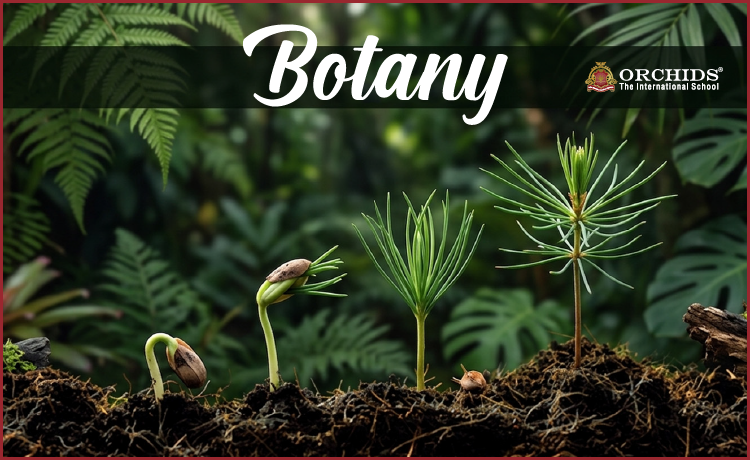
Studying plants helps us understand how they support life on Earth and how we can use them wisely.
Plants are essential to our world. They provide food, oxygen, medicine, and raw materials. By learning about plants, we can protect ecosystems, improve crops, and develop medicines that benefit both humans and animals.
But how did humans first begin studying plants?
Let’s discuss.
Early humans identified plants for food, medicine, and safety. Ancient Greek scholars like Theophrastus, known as the “Father of Botany,” classified plants into trees, shrubs, and herbs around 300 BC.
Later contributions from Dioscorides, who wrote De Materia Medica, and Avicenna in Persia advanced the understanding of medicinal plants.
So, how did botany evolve into the science we know today?
The invention of the compound microscope by Robert Hooke in 1665 allowed scientists to examine plant anatomy and physiology in greater detail. Discoveries like chlorophyll, photosynthesis, and Gregor Mendel’s experiments with pea plants further shaped modern botany.
Today, botany combines traditional knowledge with modern technologies like biotechnology and genetic engineering.
These advances help increase crop yields, improve plant health, develop new medicines, and explore sustainable energy solutions. Studying plants is not just about understanding nature; it’s about enhancing life on Earth.
Different Branches of Botany
Botany is a wide field, and each branch studies a different part of plant life. Below are the main branches of botany:
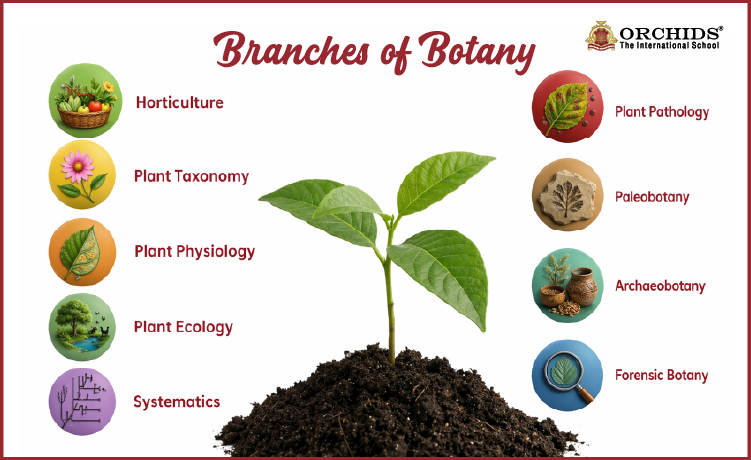
1. Horticulture focuses on growing plants for food, medicine, or decoration, including gardening, landscaping, and farming.
2. Plant taxonomy helps organise plants by looking at features like flower color, leaf shape, and how they reproduce.
3. Plant physiology looks at how plants work inside, including how they make food, breathe, and move nutrients.
4. Plant ecology studies how plants interact with their surroundings and with other living things.
5. Systematics explores how plants are related to each other and how new species develop over time.
6. Some plants get sick, which is where plant pathology comes in. It studies plant diseases, what causes them, and how to stop them.
7. Paleobotany studies plant fossils to learn about the history of plants, while archaeobotany looks at how people in the past used plants for food, medicine, or religious purposes.
8. Even modern science uses plants in law; forensic botany uses plant evidence to help solve crimes.
Even though each branch studies plants in a different way, they all aim to understand how plants live, grow, and connect with the world around them.
Why Botany Matters Today
Botany is often called the "mother of all sciences" because of its impact on society. Its importance can be seen in agriculture, medicine, and environmental conservation.
1. Botanical research has led to new crop varieties that resist pests, diseases, and harsh environments. These advances improve food security, reduce poverty, and help farmers worldwide increase yields.
2. Plants have been used for thousands of years to treat illnesses. Modern botany has discovered new compounds for pharmaceuticals, cosmetics, and natural remedies, showing how plant science directly benefits human health.
3. Botanists study plant species and ecosystems, helping protect endangered plants and preserve natural habitats. This knowledge ensures that humans live in harmony with nature and maintain a healthy planet.
4. Botany also inspires innovations in technology and energy. By learning how plants convert sunlight into energy, scientists develop artificial photosynthesis systems, biofuels, and sustainable energy solutions. It also plays a key role in biotechnology, helping create plants that thrive in changing climates and support global food security.
5. With the growing focus on sustainability, climate change, and food security, careers in botany are becoming more important and rewarding. Botany is the study of plants, but its impact stretches far beyond biology.
In this article, we learnt that the food we eat and the air we breathe are affected by medicines and environmental protection, botany shapes our world. It blends traditional knowledge with modern science, offering solutions for agriculture, medicine, and sustainable living.
Every flower, tree, and algae bloom reminds us of the vital role plants play in life. Studying botany allows us to appreciate nature, harness its potential, and ensure a sustainable future.
Frequently Asked Questions on Botany
1. What exactly does Botany study?
Botany is the scientific study of plants. It looks at how plants grow, reproduce, and interact with their surroundings, helping us understand their essential role in life on Earth.
2. Why should we care about Botany?
Plants are vital for life. They provide food, oxygen, medicine, and materials we use every day. Studying botany helps protect ecosystems, improve crops, and develop medicines that benefit humans and animals.
3. Who works with plants and studies them?
Scientists who focus on plants are called botanists. They explore plant life in labs, farms, forests, and other natural habitats to understand plant structure, function, and behavior.
4. How does Botany affect our daily lives?
Plants influence many parts of everyday life, from the food we eat and medicine we use to agriculture, gardening, and industries such as biofuels and cosmetics. Botany connects directly to what we rely on every day.
5. What areas or branches does Botany include?
Botany has several branches, including plant physiology, which studies how plants function; taxonomy, which organizes and classifies plants; ecology, which explores plant-environment interactions; and plant pathology, which investigates plant diseases.
6. How did humans first start studying plants?
Botany has been studied for thousands of years. Early humans learned about plants for food and medicine. The Greek scholar Theophrastus, known as the Father of Botany, classified plants and wrote foundational works that shaped plant science.
7. How does Botany help in modern science and technology?
Botany is behind innovations like genetic engineering, crop improvement, drug discovery, and environmental conservation. It allows us to use plants sustainably while solving practical problems.
8. Can anyone explore Botany, or is it just for scientists?
Anyone curious about plants can learn botany. Even basic knowledge helps people understand nature better and appreciate the role of plants in everyday life.
Science isn't just a subject, it's the way of seeing the world. Curious how Orchids The International School teaches it that way? Talk to our admissions team.
Admissions Open for 2026-27
What type of concept pages would you prefer?
CBSE Schools In Popular Cities
- CBSE Schools in Bangalore
- CBSE Schools in Mumbai
- CBSE Schools in Pune
- CBSE Schools in Hyderabad
- CBSE Schools in Chennai
- CBSE Schools in Gurgaon
- CBSE Schools in Kolkata
- CBSE Schools in Indore
- CBSE Schools in Sonipat
- CBSE Schools in Delhi
- CBSE Schools in Rohtak
- CBSE Schools in Bhopal
- CBSE Schools in Aurangabad
- CBSE Schools in Jabalpur
- CBSE Schools in Jaipur
- CBSE Schools in Jodhpur
- CBSE Schools in Nagpur
- CBSE Schools in Ahmednagar
- CBSE School In Tumkur











Orchids The International School is one of India's leading chains of CBSE and ICSE schools, with 110+ schools across the country.