

Global Warming
Global warming often feels like a distant issue, but its early signs are already showing up around us, like in rising temperatures, unusual weather patterns, melting ice and even changes in human health. But over time, the gradual rise in Earth’s temperature begins to affect the climate systems that support our water, food, health and natural environments.
This article provides insights into what is global warming, why it happens, and why understanding it is important for protecting our planet and our future.
Table of Contents
- What is Global Warming?
- Causes of Global Warming
- Effects of Global Warming
- Solutions to Reduce Global Warming
- Frequently Asked Questions on Global Warming

What Is Global Warming?
Global warming refers to the long-term rise in Earth’s average temperature, mainly caused by the increasing levels of greenhouse gases such as carbon dioxide (CO₂), methane and chlorofluorocarbons (CFCs).
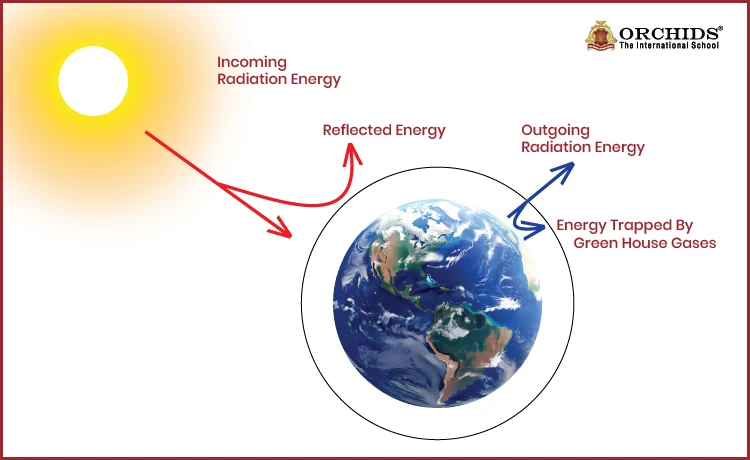
This warming has been observed for more than a century and forms one of the core aspects of climate change.
And human activities like burning fossil fuels, cutting down forests and rapid industrial growth have intensified the greenhouse effect, disturbing the natural balance of Earth’s climate.
But why does understanding global warming matter in our daily lives?
Let’s find out.
Knowing how global warming works helps us take the right steps to:
-
Protect and restore ecosystems that are getting damaged
-
Reduce health risks linked to heat waves and the spread of diseases
-
Safeguard agriculture and economies from changing weather patterns
-
Build sustainable habits that support the long-term health of the planet
Now that we understand what is global warming, the next question is, what are the reasons for global warming?
Also Read: Causes of Air Pollution
Causes of Global Warming
Global warming is not caused by a single factor. It builds up over time through a mix of human activities and natural processes, all of which increase the amount of heat trapped in our atmosphere.
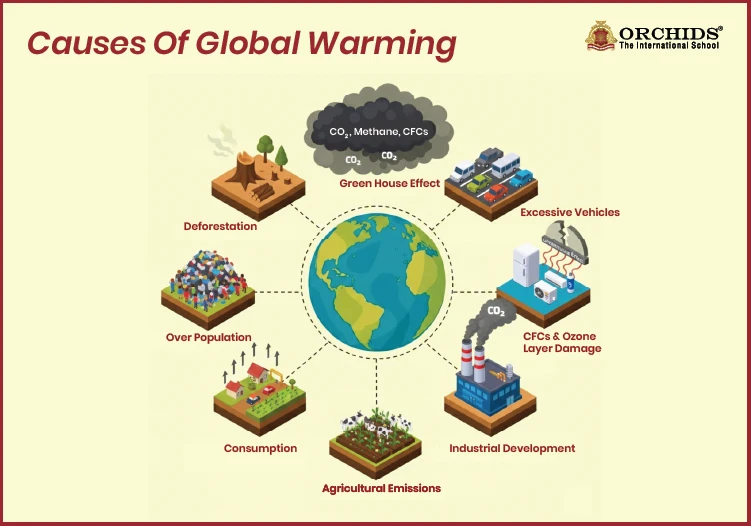
To understand how this happens, it helps to look at different causes of global warming and how these natural events add greenhouse gases to the air.
A major part of this warming comes from the choices humans make.
1. For example, deforestation removes nature’s ability to absorb carbon dioxide, because cutting down forests leaves fewer trees to clean the air.
With less CO₂ being absorbed, more of it remains in the atmosphere and strengthens the greenhouse effect.
2. Excessive use of vehicles contributes directly to this problem. Cars, buses, and trucks burn fossil fuels and release CO₂, nitrogen oxides, and other pollutants.
Even short trips add to the rising concentration of greenhouse gases.
3. Another major contributor is chlorofluorocarbons, or CFCs, found in older refrigerators, air conditioners, and aerosol sprays.
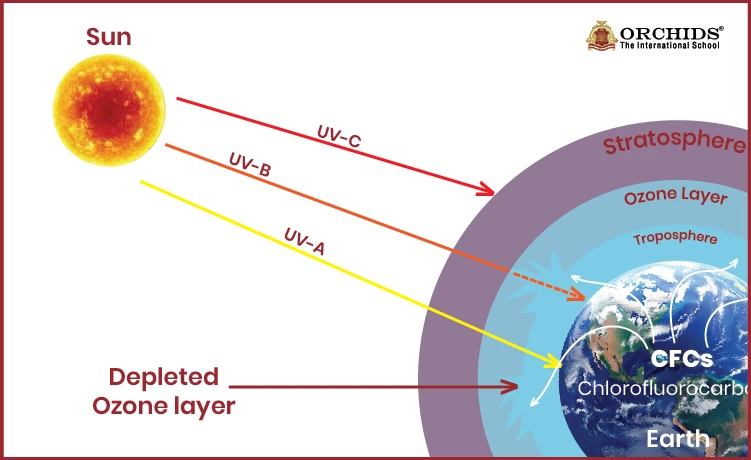
These gases damage the ozone layer, allowing more harmful UV rays to reach Earth, which indirectly adds to temperature rise.
4. Industrial development also pushes global temperatures upward. Factories and power plants release large amounts of CO₂, methane, and toxic pollutants.
Since the Industrial Revolution, these emissions have grown at an extraordinary rate.
5. In addition, agriculture plays a major role. Cattle release methane, and fertilisers produce nitrous oxide, two gases that trap heat far more effectively than CO₂.
6. Finally, overpopulation increases the pressure on the environment, because more people mean higher energy demand, increased fuel use, greater waste generation and consequently more emissions.
Alongside human activities, some natural processes also play a role in warming the planet.
1. Volcanic activity releases ash and gases that can temporarily cool the atmosphere, but continuous emissions influence long-term climate patterns.
2. Water vapour is another natural greenhouse gas. As temperatures rise, more water evaporates, adding additional vapour to the atmosphere and strengthening the warming effect.
3. Then there’s melting permafrost, which releases huge amounts of methane and CO₂ stored for thousands of years. Once released, these gases accelerate global warming even further.
4. And finally, forest fires naturally release carbon into the air. Repeated or large-scale fires reduce forest cover, weakening Earth’s ability to absorb CO₂ and contributing to long-term warming.
With the causes of global warming clearly understood, it becomes easier to see how damaging the results can be. Now, let’s see how the Earth is being affected
Effects of Global Warming
Global warming is slowly changing the world around us, and its effects can be seen in our weather, nature and even our health.
Here’s how it is impacting life on Earth.
1. One of the first changes we see is the rise in global temperature, as the Earth has warmed by about 1°C since the late 1800s.
This extra heat melts glaciers more quickly, raising sea levels and putting coastal areas at a higher risk of floods.
2. This warming also brings threats to ecosystems, where coral reefs begin to bleach, forests lose their natural balance, and many plants and animals start disappearing because they cannot adjust to the new conditions.
3. As these ecosystems weaken, it leads to more extreme and unpredictable weather, causing longer droughts, stronger floods, hotter heatwaves and more powerful storms that communities struggle to manage.
4. Alongside these changes, the spread of diseases also increases, because the warmer climate allows mosquitoes and ticks to survive in new regions.
This expands illnesses like malaria, dengue and Lyme disease into areas that previously had little or no risk.
5. With these environmental and health pressures growing, we also face an increase in natural disasters and mortality.
Stronger hurricanes, severe heatwaves and sudden floods happen more often, leading to loss of life, damaged homes and reduced access to clean water and food.
6. All these changes finally contribute to the loss of natural habitats, because rising temperatures force many plants and animals to move to cooler areas.
But not all species can migrate or adapt quickly, resulting in shrinking habitats, falling populations and, in some cases, extinction.
The following recent events highlight the real and serious impacts of global warming on people, nature, and communities worldwide.
Also Read: Causes of Water Pollution
These impacts show how serious the issue has become. But the good news is, it’s not too late to act. So, what can we do about it?
Let’s look at the steps we can take to slow down global warming.
Solutions to Reduce Global Warming
Reducing global warming requires a mix of individual action, community responsibility and global cooperation.
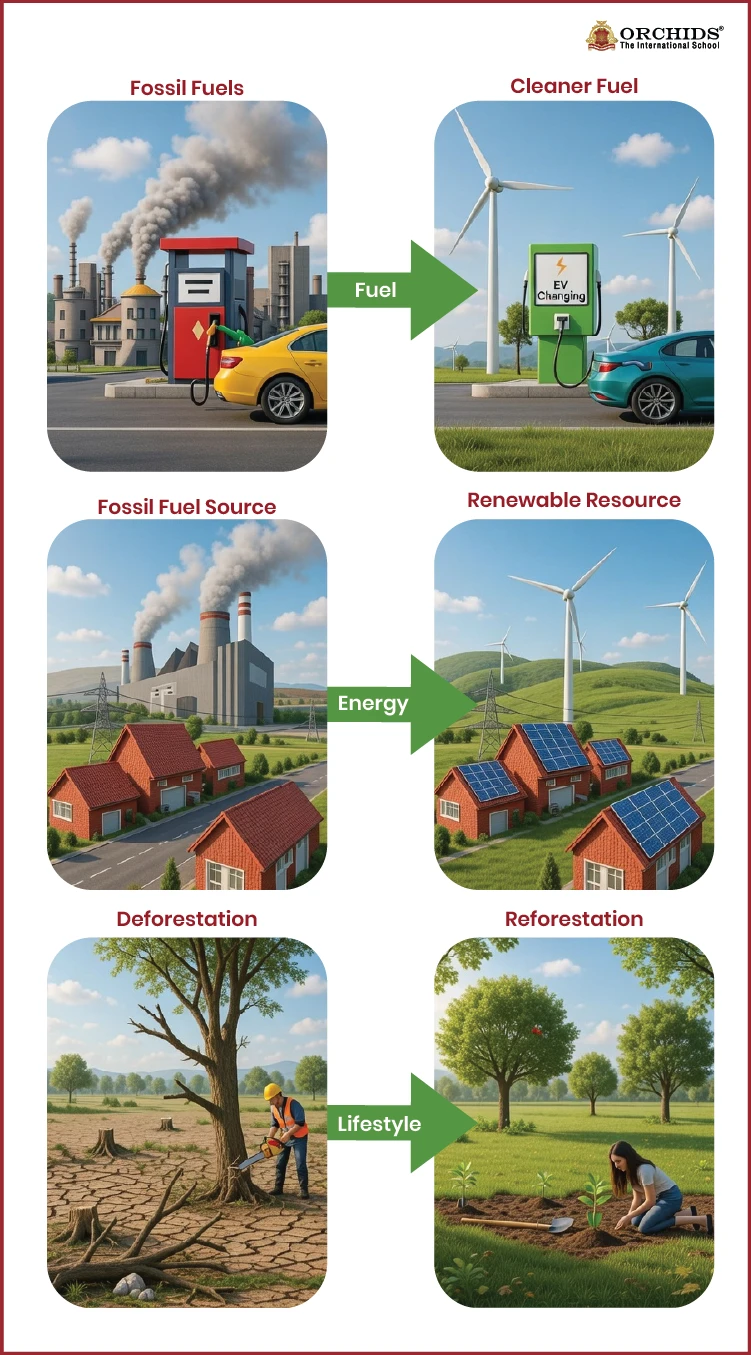
But where do we begin?
Let’s discuss.
1. A major step is shifting to cleaner energy. Renewable sources like solar, wind, hydropower and geothermal help replace fossil fuels and cut carbon emissions. From there, improving everyday energy use becomes important.
2. Using efficient appliances and LED lighting and switching off unused devices lowers overall energy demand and reduces pollution.
3. Transportation is another key area. Choosing public transport, carpooling, cycling, walking or switching to electric vehicles helps reduce emissions from one of the largest contributing sectors.
4. Waste management also plays a role. By reducing, reusing, recycling and composting, we limit the amount of waste entering landfills, thereby reducing methane emissions.
5. Forests remain one of our strongest natural defences against climate change. Protecting existing forests and expanding green cover through afforestation and reforestation helps restore carbon-absorbing ecosystems.
Alongside these physical measures, climate education is essential.
6. When people understand the causes and impact of global warming, they are more likely to support sustainable practices and policies.
-
Local and national actions are strengthened by global initiatives.
-
Agreements like the Paris Agreement (2015) guide countries to limit temperature rise below 2°C, ideally 1.5°C.
-
The UNFCCC provides a framework for global climate cooperation, while the Green Climate Fund supports climate-friendly development in countries that need financial assistance.
In this article, we learnt what the reasons are for global warming, and how these efforts, from individual choices to international commitments, create a comprehensive path toward reducing global warming and building a sustainable future.
Frequently Asked Questions on Global Warming
1. What is the scientific definition of global warming?
It is the long-term increase in Earth’s average surface temperature caused by rising levels of greenhouse gases from human activities.
2. How is global warming different from climate change?
Global warming refers only to temperature rise, while climate change includes all broader impacts such as shifting rainfall, stronger storms, droughts and sea-level rise.
3. Why is melting permafrost dangerous?
As permafrost thaws, it releases trapped methane and carbon dioxide, creating a feedback loop that accelerates global warming.
4. Can volcanic eruptions stop global warming?
Volcanoes can cool the planet briefly by releasing particles that block sunlight, but this effect is temporary and does not counter long-term warming.
5. What is the most effective solution?
Cutting greenhouse gas emissions mainly CO₂ through renewable energy, energy efficiency and sustainable land use is the most powerful long-term solution.
6. How do greenhouse gases trap heat?
They absorb infrared radiation from Earth’s surface and re-emit it in all directions, keeping heat in the atmosphere and raising global temperatures.
7. How does global warming affect oceans?
It causes ocean warming, coral bleaching, sea-level rise and increased acidity, all of which harm marine life and coastal communities.
8. Why is the Arctic warming faster than the rest of the world?
When reflective ice melts, darker land and water absorb more heat, speeding up warming, a process known as Arctic amplification.
Science isn't just a subject, it's the way of seeing the world. Curious how Orchids The International School teaches it that way? Talk to our admissions team.
Admissions Open for 2026-27
What type of concept pages would you prefer?
CBSE Schools In Popular Cities
- CBSE Schools in Bangalore
- CBSE Schools in Mumbai
- CBSE Schools in Pune
- CBSE Schools in Hyderabad
- CBSE Schools in Chennai
- CBSE Schools in Gurgaon
- CBSE Schools in Kolkata
- CBSE Schools in Indore
- CBSE Schools in Sonipat
- CBSE Schools in Delhi
- CBSE Schools in Rohtak
- CBSE Schools in Bhopal
- CBSE Schools in Aurangabad
- CBSE Schools in Jabalpur
- CBSE Schools in Jaipur
- CBSE Schools in Jodhpur
- CBSE Schools in Nagpur
- CBSE Schools in Ahmednagar
- CBSE School In Tumkur











Orchids The International School is one of India's leading chains of CBSE and ICSE schools, with 110+ schools across the country.