

Difference Between Diffusion and Osmosis
The difference between diffusion and osmosis helps us understand how tiny molecules move within and around cells to keep living things alive.
Have you ever wondered how plants absorb water from the soil or why the smell of food spreads through a room? Both happen because of two interesting natural processes, such as osmosis and diffusion.
At first, they might seem almost identical since both involve the movement of particles from one place to another. But when you look closely, there’s a clear difference in how they work and what they move.
This article focuses on what is the difference between diffusion and osmosis, how they function, explained simply with examples.
Table of Contents
- What is Osmosis and Diffusion
- Difference Between Diffusion and Osmosis
- Frequently Asked Questions On Difference Between Diffusion and Osmosis

What is Osmosis and Diffusion
Have you ever thought about how plants get water from the soil or how a perfume’s scent reaches every corner of a room?
The reason lies in two amazing natural processes: osmosis and diffusion.
Let’s start with osmosis. It’s the movement of water through a semipermeable membrane from an area where there’s more water to one where there’s less, until both sides are balanced. It happens naturally, without needing any energy.
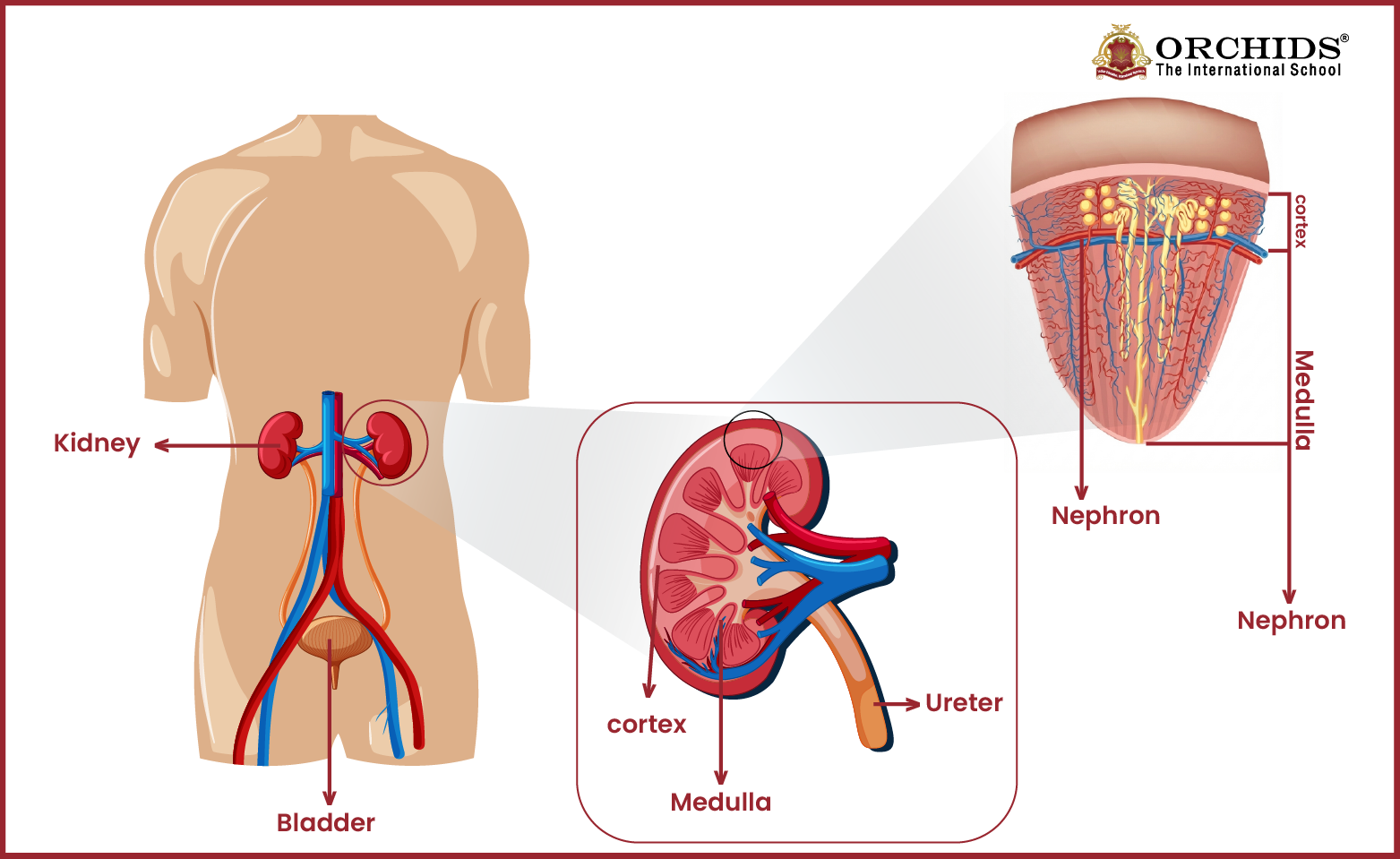
That’s how plants absorb water through their roots. When pressure is applied to reverse the process, it’s called reverse osmosis, and that’s the same method used in water purifiers.
Now, have you noticed how oxygen moves into your blood or how a scent fills a room?
That’s diffusion, when particles move from a region of high concentration to a lower one until they’re evenly spread out.
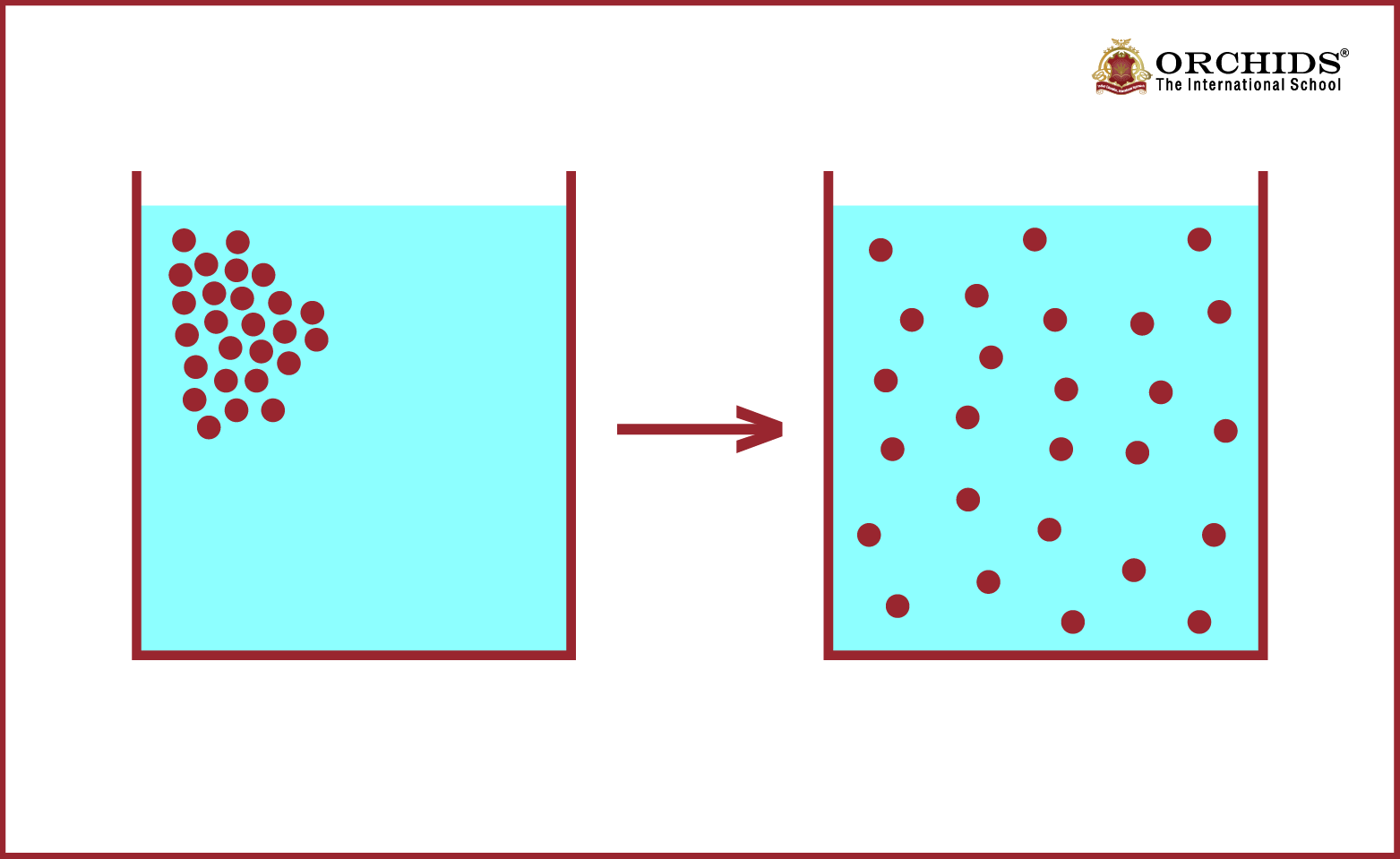
It’s also a passive process, happening without effort. Sometimes, larger molecules like glucose get help from special proteins, that’s known as facilitated diffusion.
The semipermeable membrane plays a key role here; it allows only certain molecules (like water) to pass through while blocking others.
Interestingly, when extra pressure is applied on the concentrated side, the process can be reversed. This is called reverse osmosis, and it’s the same method used in water purifiers to clean drinking water.
Let’s now understand in detail about what is the difference between osmosis and diffusion with the help of the visual below:
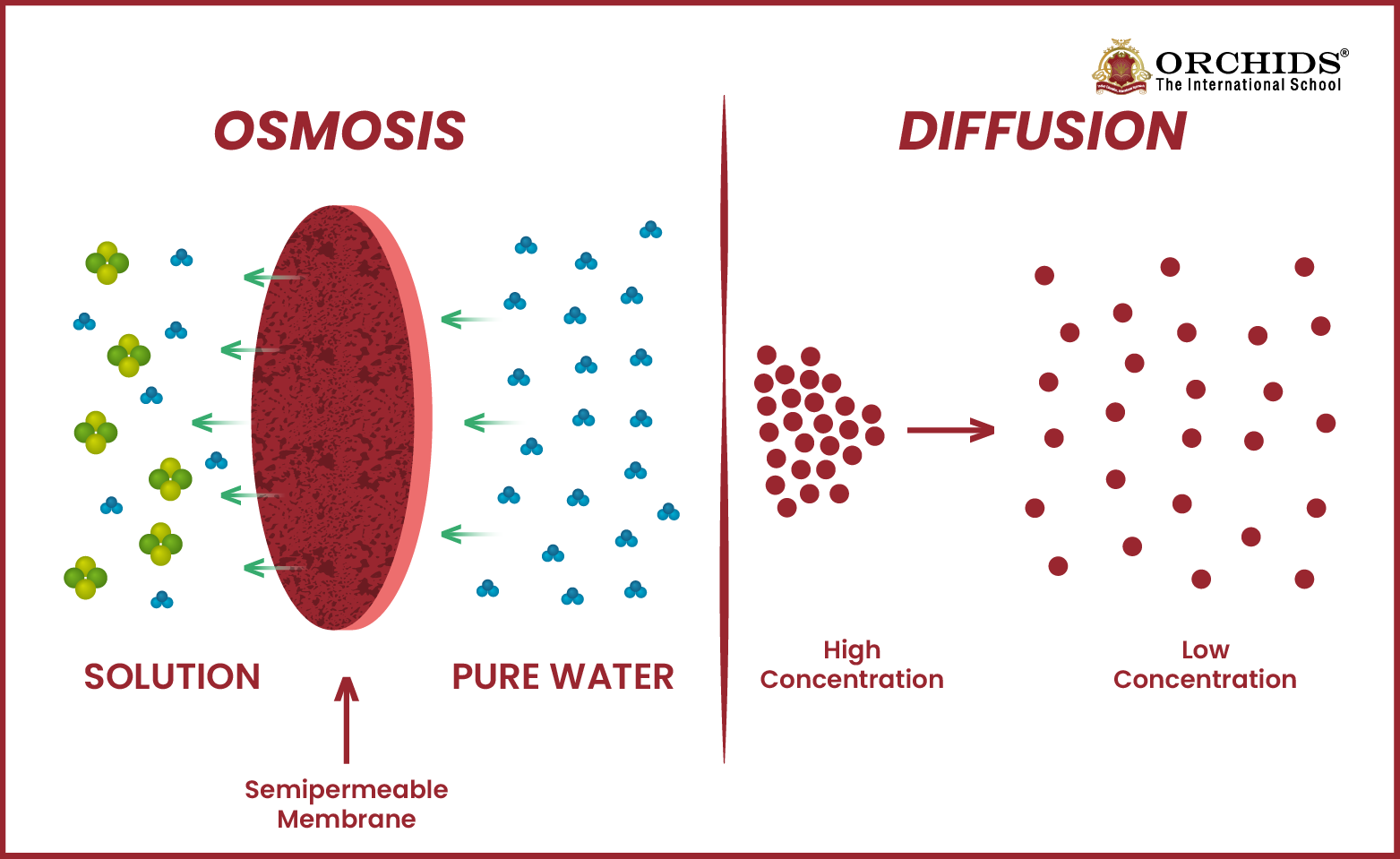
Difference Between Diffusion and Osmosis
Now here’s a simple table to help you clearly see what is the difference between osmosis and diffusion:
|
Feature |
Osmosis |
Diffusion |
|
Definition |
Movement of water or solvent molecules through a semipermeable membrane |
Movement of any particles from a region of high concentration to a low concentration |
|
Medium |
Takes place only in liquids |
It can occur in gases, liquids, and solids |
|
Membrane Requirement |
Needs a semipermeable membrane |
Does not require any membrane |
|
Molecules Involved |
Only solvent (water) molecules move |
Solvent and solute molecules move |
|
Direction of Flow |
Occurs in a single direction |
Occurs in all possible directions |
|
Energy Use |
No energy required |
No energy needed (facilitated diffusion may need ATP) |
|
Example |
Absorption of water by roots |
Fragrance spreading in the air |
|
Reversibility |
Can be reversed by applying pressure |
Cannot be reversed once complete |
|
Need for Water |
Always involves water or another solvent |
Water not required |
|
Equilibrium |
Solvent concentration may not equalise fully |
Concentration equalises completely |
Now that we have a clear idea of what the difference is between osmosis and diffusion, let’s find out how both work.
Although osmosis and diffusion work differently, they often occur side by side to keep cells healthy. Osmosis controls water movement, while diffusion spreads gases and nutrients.
Together, they maintain homeostasis, keeping cells balanced and functioning smoothly without using any energy.
And the best part? Neither needs any extra energy to happen; they occur naturally.
In this article, we learnt what the difference is between osmosis and diffusion and how they work together to keep plants hydrated, allow cells to exchange gases, and maintain balance in living organisms.
So, the next time you see a wilting plant come back to life after watering or smell food cooking from another room, that’s osmosis and diffusion working quietly behind the scenes.
Frequently Asked Questions On Difference Between Diffusion and Osmosis
1. What is the basic Difference Between Diffusion and Osmosis?
Osmosis is the movement of water across a semipermeable membrane, while diffusion is the movement of any molecules from a high concentration to low concentration.
2. Can diffusion occur in solids?
Yes. Diffusion can take place in solids, liquids, and gases, though it happens much more slowly in solids compared to liquids and gases.
3. Does osmosis require energy?
No, osmosis is a passive process, meaning it does not need any external energy (ATP). The movement happens naturally due to concentration differences.
4. What is a real-life example of osmosis?
A common example is the absorption of water by plant roots from the soil through root hairs.
5. Why is diffusion important in living organisms?
Diffusion is essential for gas exchange as oxygen diffuses into the lungs and carbon dioxide diffuses out. It also helps in the distribution of nutrients and the removal of waste inside cells.
6. Can osmosis and diffusion occur together?
Yes, both processes often occur simultaneously in cells. They help maintain water balance, nutrient levels, and internal stability (homeostasis).
Science isn't just a subject, it's the way of seeing the world. Curious how Orchids The International School teaches it that way? Talk to our admissions team.
Admissions Open for 2026-27
What type of concept pages would you prefer?
CBSE Schools In Popular Cities
- CBSE Schools in Bangalore
- CBSE Schools in Mumbai
- CBSE Schools in Pune
- CBSE Schools in Hyderabad
- CBSE Schools in Chennai
- CBSE Schools in Gurgaon
- CBSE Schools in Kolkata
- CBSE Schools in Indore
- CBSE Schools in Sonipat
- CBSE Schools in Delhi
- CBSE Schools in Rohtak
- CBSE Schools in Bhopal
- CBSE Schools in Aurangabad
- CBSE Schools in Jabalpur
- CBSE Schools in Jaipur
- CBSE Schools in Jodhpur
- CBSE Schools in Nagpur
- CBSE Schools in Ahmednagar
- CBSE School In Tumkur











Orchids The International School is one of India's leading chains of CBSE and ICSE schools, with 110+ schools across the country.