

Blood Groups: Types, Compatibility and Significance
Blood groups classify human blood based on specific substances present on red blood cells. Blood is a special connective tissue that transports oxygen, nutrients, and hormones while removing waste products. An adult body contains about 5 litres of blood. Although blood looks similar in everyone, it differs by type, making blood groups essential for transfusions, organ transplants, and pregnancy care.
This article provides insights into everything about blood groups, including their types, systems, importance, and compatibility, explained clearly and simply.
Table of Contents
- What is a Blood Group System
- Composition of Blood and Blood Group
- ABO Blood Group System
- Rh Blood Group System
- Frequently Asked Questions on Blood Groups

What is a Blood Group System?
Blood is not just a red liquid; it is a mixture of many important cells and substances, each doing a specific job.
It contains red blood cells (RBCs) that carry oxygen, white blood cells (WBCs) that fight infections, platelets that help stop bleeding by forming clots, and plasma, the liquid that transports nutrients, hormones, and waste.
Inside plasma, millions of tiny molecules like proteins and antibodies work silently to keep you healthy every day.
Composition of Blood and Blood Groups
Now you might ask, if our blood looks the same, why are there different blood groups?
Even though everyone has the same basic blood components, not all blood is identical. Scientists have discovered more than 40 blood group systems, although only a few are medically important.
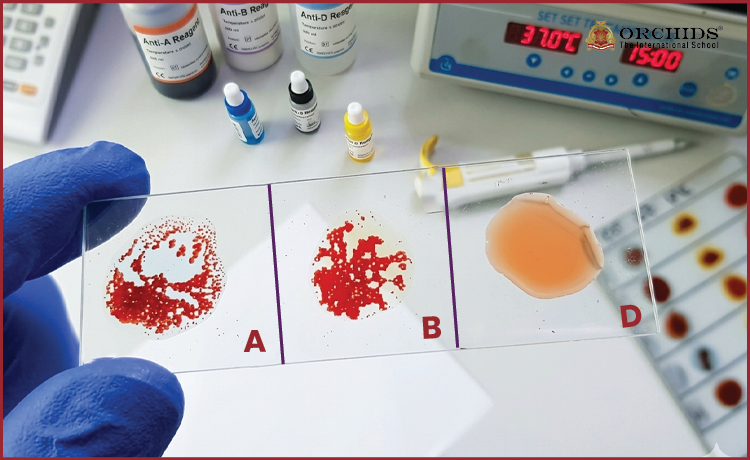
Before the year 1900, doctors believed that all blood was the same. Sadly, this false idea led to many failed and dangerous blood transfusions.
So, who finally solved this mystery?
In 1900, Austrian scientist Karl Landsteiner noticed that when blood from some people was mixed, it formed clots. This process, called agglutination, happened because of special proteins called antigens on red blood cells and antibodies in plasma.
After careful research, he identified four main blood groups: A, B, AB, and O. His discovery earned him the Nobel Prize and changed medical science forever.
But why does blood grouping matter so much?
Your immune system naturally attacks anything it sees as foreign. If the wrong blood group enters your body, the immune system reacts strongly. This can lead to blood clots, severe reactions, kidney failure, and even death.
That is why blood group testing is always done before surgery or a blood transfusion. Doctors mainly check two systems: the ABO blood group system and the Rh system.
So, how are blood groups actually classified?
Let’s discuss.
ABO Blood Group System
The ABO blood group system is based on two special substances called antigens found on the surface of red blood cells, Antigen A and Antigen B.
Depending on whether these antigens are present or absent, blood is divided into four main groups: A, B, AB, and O.
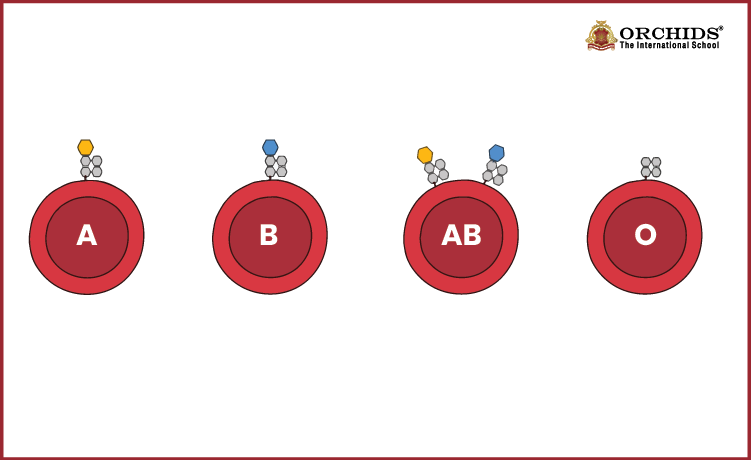
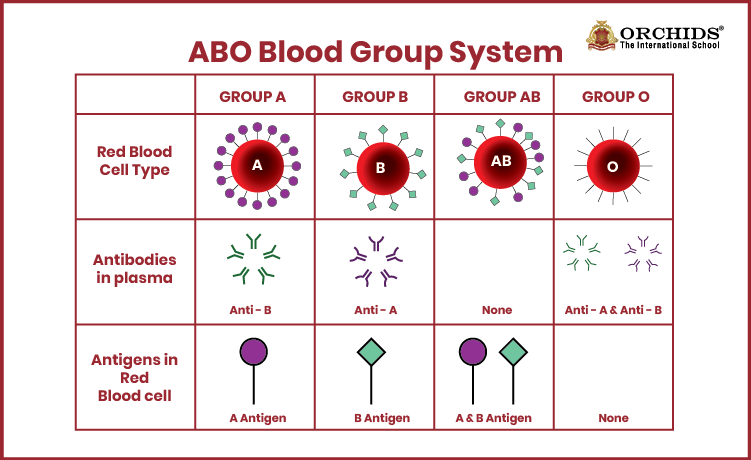
You might wonder, what makes each blood group different? The answer lies in the combination of antigens on red blood cells and antibodies in plasma:
- Blood Group A has Antigen A and antibodies against B
- Blood Group B has Antigen B and antibodies against A
- Blood Group AB has both Antigen A and Antigen B but no antibodies
- Blood Group O has no antigens but has both Anti-A and Anti-B antibodies
This simple difference decides who can receive whose blood safely.
Now comes an important question: Can everyone receive blood from anyone?
The answer is no. For a safe blood transfusion, blood groups must be compatible; otherwise, the immune system will attack the donor blood.
Here’s how compatibility works:
- Group A → A, O
- Group B → B, O
- Group AB → A, B, AB, O (Universal Recipient)
- Group O → Can donate to all blood groups, so it is called the universal donor, but it can receive blood only from O
That is why doctors always test blood groups carefully before transfusion; a small mismatch can cause a serious reaction.
Rh Blood Group System
Apart from the ABO blood group system, another important factor that decides your blood type is the Rh blood group system.
You may wonder, what does Rh actually mean?
Rh stands for Rhesus, and this system is based on many antigens. However, the most important one is called the D antigen.
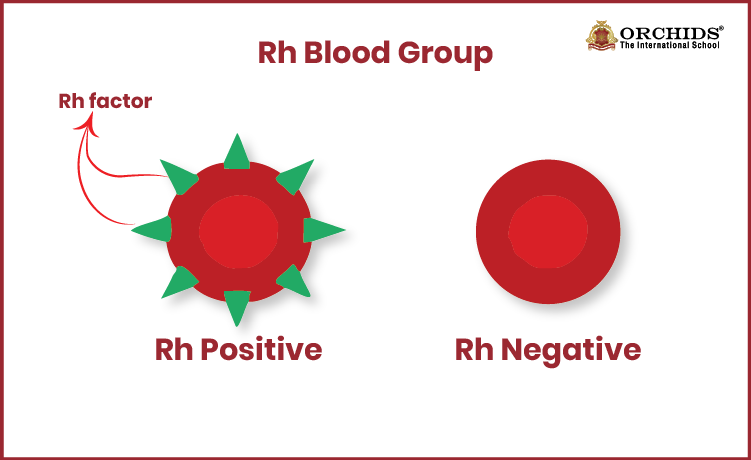
So, how does the Rh blood group system work? It is quite simple:
- If the D antigen is present, the blood group is Rh positive (Rh⁺)
- If the D antigen is absent, the blood group is Rh negative (Rh⁻)
Now the important question: what happens if Rh-negative blood receives Rh-positive blood?
Let’s discuss.
The immune system treats Rh-positive blood as foreign and starts producing antibodies, which can destroy red blood cells and cause serious complications.
Why is the Rh factor so important during pregnancy? Problems can arise when:
- The mother is Rh-negative
- The baby is Rh positive
In this case, the mother’s immune system may produce antibodies that attack the baby’s red blood cells. This condition is known as Erythroblastosis Fetalis or Haemolytic Disease of the Newborn.
Thankfully, modern medicine has a solution. Doctors give a special Rh injection during pregnancy, which prevents the mother’s immune system from attacking the baby’s blood cells and ensures a healthy pregnancy.
And till now we discussed that blood groups are essential for safe transfusions, pregnancy care, and emergency treatment. The ABO and Rh blood group systems explain how blood types differ based on antigens and the Rh factor. Knowing your blood group helps prevent serious reactions and ensures timely medical care when it matters most.
Frequently Asked Questions on Blood Groups
1. What are blood antigens and antibodies?
In blood groups, antigens are proteins present on the surface of red blood cells, while antibodies are proteins found in the plasma that attack incompatible or foreign blood cells.
2. How are antibodies formed?
Antibodies are formed when unfamiliar blood group antigens enter the body. The immune system recognises them as foreign and produces antibodies to destroy them.
3. Why is O negative called the universal donor?
The O-negative blood group has no A, B, or Rh antigens, so it does not usually cause a reaction in the recipient’s body and can be given to any blood group in emergencies.
4. How are blood groups inherited?
Blood groups are inherited from parents through genes. The combination of genes from both parents decides the child’s blood type.
5. Can blood group change?
A person’s blood group normally remains the same throughout life. In rare cases, such as after a bone marrow transplant, it may change.
6. What is the Bombay blood group?
The Bombay blood group is a rare type that looks similar to the O blood group, but is genetically different. People in this group can receive blood only from Bombay-type donors.
7. Why should you know your blood group?
Knowing your blood group is important for blood transfusions, medical treatment, pregnancy care, and emergencies.
8. Is any blood group better than others?
No blood group is better than another. All blood groups are equally important and valuable.
Science isn't just a subject, it's the way of seeing the world. Curious how Orchids The International School teaches it that way? Talk to our admissions team.
Admissions Open for 2026-27
What type of concept pages would you prefer?
CBSE Schools In Popular Cities
- CBSE Schools in Bangalore
- CBSE Schools in Mumbai
- CBSE Schools in Pune
- CBSE Schools in Hyderabad
- CBSE Schools in Chennai
- CBSE Schools in Gurgaon
- CBSE Schools in Kolkata
- CBSE Schools in Indore
- CBSE Schools in Sonipat
- CBSE Schools in Delhi
- CBSE Schools in Rohtak
- CBSE Schools in Bhopal
- CBSE Schools in Aurangabad
- CBSE Schools in Jabalpur
- CBSE Schools in Jaipur
- CBSE Schools in Jodhpur
- CBSE Schools in Nagpur
- CBSE Schools in Ahmednagar
- CBSE School In Tumkur











Orchids The International School is one of India's leading chains of CBSE and ICSE schools, with 110+ schools across the country.