

Effects of Air Pollution on Human Health

Effects of air pollution on human health have become a major global concern as pollutants enter the body every time we breathe. What once came mainly from natural events like volcanic eruptions or forest fires is now largely driven by human activities. These pollutants collect in the air and gradually affect the lungs, heart, blood and even the brain.
This article focuses on how polluted air interacts with the human body and the major health problems it causes, from breathing difficulties to long-term diseases.
Table of Contents
- 11 Major Effects of Air Pollution on Human Health
- Why Is It Important to Understand the Effects of Air pollution
- Frequently Asked Questions on Effects of Air Pollution on Human Health

11 Major Causes of Air Pollution on Human Health
Air pollution doesn’t just stay in the environment; it enters our bodies with every breath we take. The tiny particles and harmful gases present in polluted air slowly affect different organs, often without us realising it at first.
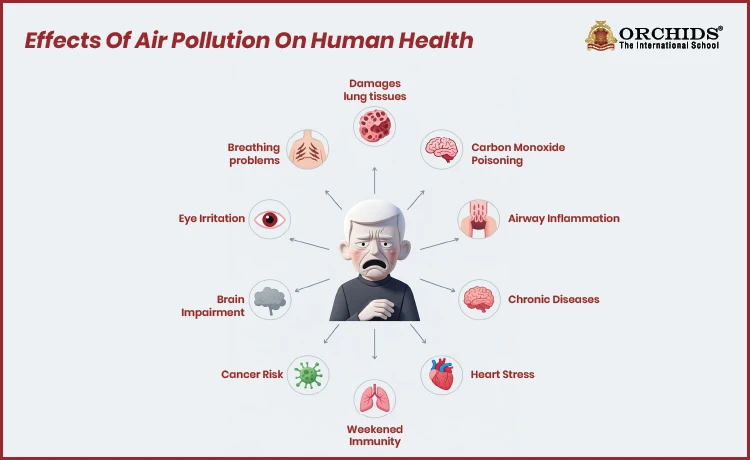
Over time, this continuous exposure builds up, leading to a range of health problems that impact breathing, immunity, heart function, skin, and even the brain.
To understand how deeply polluted air affects overall well-being, here are the major ways it harms human health:
-
Breathing problems become more common because polluted air irritates the respiratory tract, making each breath feel heavier, especially for children, the elderly, and people with asthma.
-
Fine particulate matter (PM2.5 and PM10) travels deep into the lungs and settles in the alveoli, reducing oxygen exchange and slowly damaging lung tissues over time.
-
Gases like carbon monoxide enter the bloodstream and bind to hemoglobin, reducing the body’s ability to carry oxygen and causing dizziness, headaches, confusion, or even life-threatening situations in high exposure.
-
Ozone and nitrogen oxides inflame the airways and weaken lung function, leading to coughing, chest tightness, and increased hospital visits during
high-pollution days.
-
Long-term exposure increases the risk of chronic diseases, including asthma, bronchitis, COPD, and reduced lung development in children.
-
Pollutants enter the bloodstream and place stress on the heart, raising the chances of hypertension, irregular heartbeat, heart attacks, and strokes.
-
Air pollution weakens the immune system, making the body more vulnerable to infections and slowing down recovery from common illnesses.
-
Toxic chemicals and heavy metals from polluted air can impair brain function, affecting memory, focus, mood, and in children, even cognitive and behavioral development.
-
Extended exposure increases cancer risk, especially lung cancer, as carcinogenic particles trigger cellular damage and genetic changes.
-
Eyes become irritated due to pollutants reacting with the tear film, causing burning, redness, dryness, and discomfort during long exposure.
- Pollutants inflame the skin and speed up aging, leading to dermatitis, rashes, acne flare-ups, and dullness due to blocked pores and oxidative stress.
Why Is It Important to Understand the Effects of Air Pollution?
When we know what polluted air does to our bodies, our food, our climate and our surroundings, we become more aware of the choices that either protect or harm our environment.
This awareness encourages people, communities and governments to take timely action instead of waiting for problems to worsen.
Learning about these effects also helps us connect the dots between our habits like burning waste, using private vehicles excessively or relying on fossil fuels and the long-term consequences they create.
Once we understand this connection, it becomes easier to support cleaner technologies, demand better environmental policies and adopt small but meaningful lifestyle changes.
In simple terms, knowing the impact of air pollution is the first step toward prevention.
In this article, we learnt that understanding the effects of air pollution on human health empowers us to recognise risks early, protect our health, safeguard ecosystems and contribute to a future where clean air is not a privilege but a basic right for everyone.
Frequently Asked Questions on Effects of Air Pollution on Human Health
1. What are the effects of air pollution on human health?
Air pollution affects the lungs, heart, brain, immune system and skin. Long-term exposure increases the risk of respiratory diseases, heart problems and even cancer.
2. How does air pollution affect the respiratory system?
Pollutants irritate the airways, reduce lung capacity and make breathing difficult. Fine particles reach the alveoli and damage lung tissues over time.
3. Can air pollution cause long-term diseases?
Yes. Continuous exposure can lead to asthma, bronchitis, COPD, reduced lung development in children and increased chances of heart disease and stroke.
4. How does air pollution affect the heart?
Pollutants enter the bloodstream, increase inflammation and put extra stress on the heart, raising the risk of hypertension, irregular heartbeat and heart attacks.
5. Does air pollution affect mental health or the brain?
Toxic chemicals and heavy metals can impair memory, concentration and mood. In children, it may affect cognitive development and behaviour.
6. Can air pollution cause cancer?
Yes. Carcinogenic pollutants like benzene, formaldehyde and fine particles increase the risk of cancers, especially lung cancer.
7. How does air pollution affect the skin and eyes?
Pollutants irritate the eyes, causing redness and burning. They also trigger skin problems like rashes, acne, dermatitis and premature ageing.
8. Who is most vulnerable to air pollution?
Children, the elderly, pregnant women and people with existing respiratory or heart conditions are more sensitive to polluted air.
Science isn't just a subject, it's the way of seeing the world. Curious how Orchids The International School teaches it that way? Talk to our admissions team.
Admissions Open for 2026-27
What type of concept pages would you prefer?
CBSE Schools In Popular Cities
- CBSE Schools in Bangalore
- CBSE Schools in Mumbai
- CBSE Schools in Pune
- CBSE Schools in Hyderabad
- CBSE Schools in Chennai
- CBSE Schools in Gurgaon
- CBSE Schools in Kolkata
- CBSE Schools in Indore
- CBSE Schools in Sonipat
- CBSE Schools in Delhi
- CBSE Schools in Rohtak
- CBSE Schools in Bhopal
- CBSE Schools in Aurangabad
- CBSE Schools in Jabalpur
- CBSE Schools in Jaipur
- CBSE Schools in Jodhpur
- CBSE Schools in Nagpur
- CBSE Schools in Ahmednagar
- CBSE School In Tumkur











Orchids The International School is one of India's leading chains of CBSE and ICSE schools, with 110+ schools across the country.