

Effects of Air Pollution on the Environment
Effects of air pollution on the environment have existed in nature for millions of years through events like volcanic eruptions and forest fires. But the modern crisis began when human activities, especially burning fossil fuels, started releasing pollutants faster than the Earth could absorb. These gases and particles built up in the atmosphere and gradually damaged soil, water, ecosystems and the climate.
This article provides insights on what are the effects of air pollution on the environment, such as acid rain, eutrophication and more.
Table of Contents
- What Is Air Pollution & How Do We Measure It
- How Air Pollution Affects the Environment
- Other Environmental Effects of Air Pollution
- Frequently Asked Questions on Effects of Air Pollution on the Environment

What Is Air Pollution & How Do We Measure It?
Air pollution simply means the air contains harmful gases or particles that don’t belong there. These pollutants usually come from everyday sources like vehicles, factories, burning fossil fuels or even certain chemical reactions happening in the atmosphere.
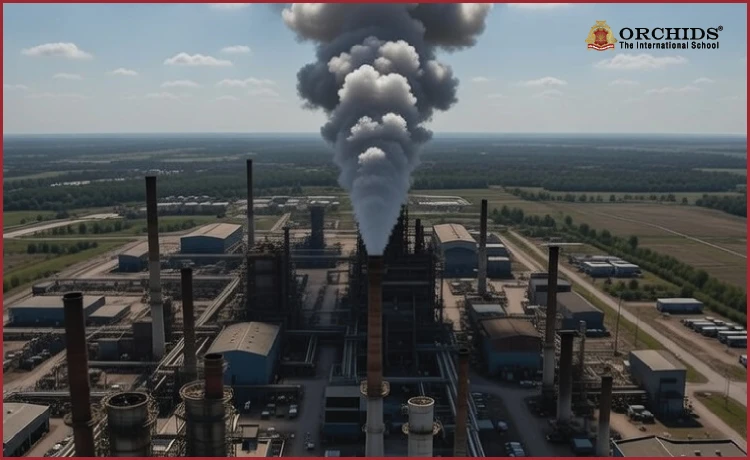
When too many of these substances build up, the air becomes unsafe to breathe and starts affecting the environment around us.
To understand how clean or polluted the air is, most countries use the Air Quality Index (AQI). It’s an easy-to-read scale that tells you whether the air is good, moderate or dangerous.
So what factors does AQI measure?
Let’s find out.
The AQI mainly measures five key pollutants:
-
Ground-level ozone is formed when sunlight reacts with pollutants from vehicles and industries.
-
Carbon monoxide is released from cars, trucks and incomplete fuel burning.
-
Nitrogen dioxide is produced by high-temperature combustion, especially in vehicles.
-
Sulphur dioxide is emitted from power plants and industries using coal.
-
Particulate matter (PM10 and PM2.5), are tiny particles from dust, smoke, construction and burning fuels
The rule is simple: the higher the AQI, the more polluted the air is, and the greater the risk to both health and the environment.
Also Read: Effects of Air Pollution
How Air Pollution Affects the Environment?
Effects of air pollution on the environment can be found in several interconnected ways. Sometimes the damage is immediate, like when polluted particles fall onto soil and alter its chemistry.
Other times, the impact is indirect, such as when gases in the atmosphere slowly change the climate.
To understand how deeply air pollution influences the natural world, it helps to look at these effects as part of a continuous chain rather than separate problems.
1. One major consequence is acid rain, which forms when sulphur dioxide and nitrogen dioxide mix with clouds and make rainwater far more acidic than usual.
So, why is acid rain harmful?
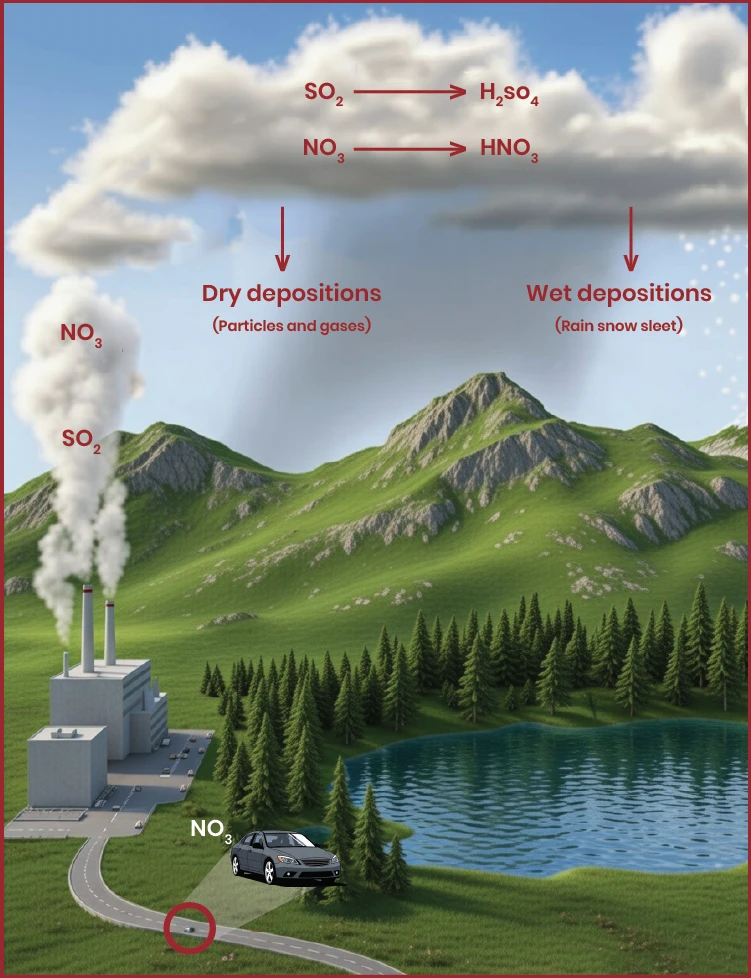
Let’s discuss.
This acidic water triggers a series of harmful reactions:
-
Soil releases aluminium, which then becomes toxic to plant roots
-
Essential nutrients like calcium wash away, making it harder for plants to absorb water
-
Forests weaken, leaves burn, and crop yields decline
-
Freshwater ecosystems suffer because many fish and amphibians cannot survive in lower pH levels
And the result is an ecosystem weakened from the ground up, affecting soil life, vegetation and aquatic organisms all at once.
2. Air pollution also leads to eutrophication, a process that may sound technical but has a simple outcome: too many nutrients enter waterbodies, causing algae to grow uncontrollably.
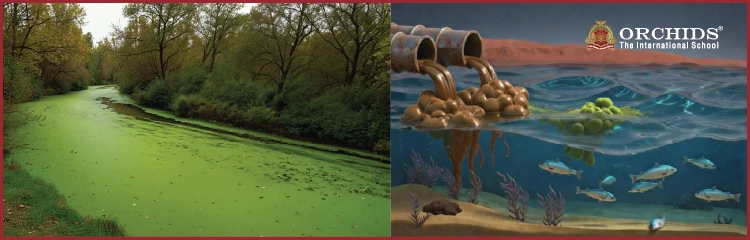
But how does this contribute to air pollution?
The fact is it often begins when nitrogen dioxide from vehicles and industries settles on land and water. Excess nitrogen acts as a fertiliser for algae, and agricultural runoff adds even more nutrients.
And what happens during eutrophication?
Let’s find out.
During this process, the chain reaction that follows is damaging:
-
Thick algae layers block sunlight for underwater plants
-
Dying algae decompose and consume large amounts of oxygen
-
Oxygen levels drop sharply, killing fish and aquatic species
-
Lakes, ponds and rivers gradually lose their ability to support life
While eutrophication can occur naturally, human pollution speeds it up significantly.
3. Air pollution is also deeply tied to climate change. Both issues largely originate from burning fossil fuels, and many pollutants directly influence temperature patterns.
After understanding what are the effects of air pollution on the environment. Now you might wonder, how do pollutants influence the climate?
Let’s break it down.
Greenhouse gases trap heat and warm the planet, ground-level ozone adds to this warming, and aerosols sometimes have the opposite effect by reflecting sunlight into space.
A dramatic example of this cooling effect was seen after the 1991 Mount Pinatubo eruption, when millions of tonnes of ash and sulphur dioxide temporarily cooled the planet for nearly two years.
But occasional cooling does not outweigh the long-term trend; overall, polluted air intensifies global warming and increases the frequency of extreme weather events like storms, cyclones, droughts and heatwaves.
Together, these effects show that air pollution does not harm the environment in isolated ways. Each impact feeds into the next, creating a cycle that weakens ecosystems, alters climate patterns and reduces the consequences of pollution on the environment.
Also Read: Causes of Air Pollution
Other Environmental Effects of Air Pollution
Air pollution doesn’t stay in the air; it settles, spreads and interacts with the environment in many harmful ways.
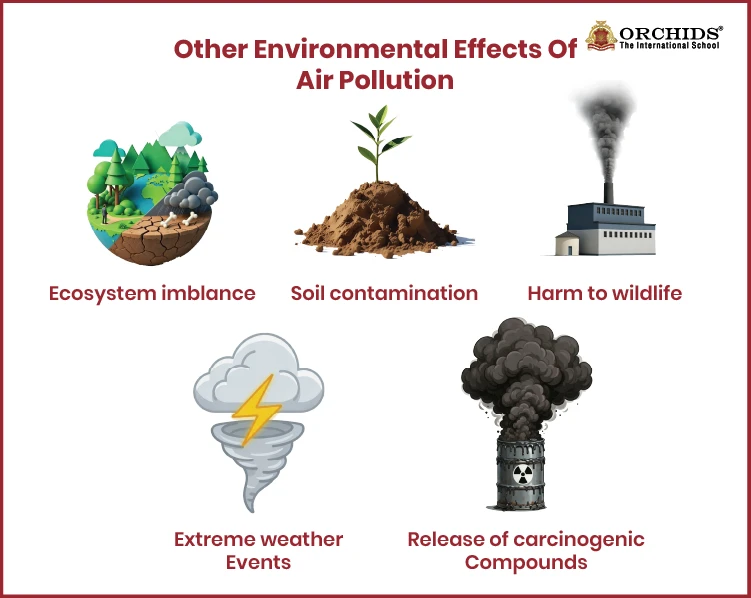
Beyond acid rain, eutrophication and climate change, it causes several additional forms of damage.
1. Ecosystem imbalance, when pollutants enter air, water or soil, they disrupt natural food chains and reduce biodiversity.
Over time, these disturbances weaken ecosystems and make them less resilient.
2. Soil contamination, particles released into the air eventually settle on the groAlt und.
Once in the soil, they alter its chemistry, reduce nutrient levels and affect plant growth, slowly degrading land quality.
3. Harm to wildlife, animals often breathe the same polluted air humans do, but with fewer defences.
Pollutants can cause respiratory issues, affect reproduction and shorten lifespans. In severe cases, habitat quality declines, forcing species to migrate or die out.
4. Extreme weather events, air pollutants contribute to climate change, which increases the frequency and intensity of storms, cyclones, droughts and heatwaves. These events can devastate both natural habitats and human communities.
5. Release of carcinogenic compounds and the burning of plastics, chemicals and low-grade fuels releases toxic, cancer-causing substances into the atmosphere.
These compounds settle on land and water, harming both wildlife and humans over time.
In this article so far, we have studied that air pollution may be invisible, but its impact on the environment is unmistakable. Understanding what are the effects of air pollution on the environment is the first step. Acting on them individually and collectively is the only way to avoid the consequences of pollution on the environment and ensure a sustainable future.
Frequently Asked Questions on Effects of Air Pollution on the Environment
1. What are the effects of air pollution on the environment?
It damages soil, contaminates water, weakens forests, reduces biodiversity and contributes to problems like acid rain, eutrophication and climate change.
2. How does air pollution impact ecosystems?
Pollutants disturb food chains, harm plant and animal life and make ecosystems less stable and less resilient.
3. What are the consequences of pollution on the environment?
It leads to poor air quality, degraded land, polluted water, loss of wildlife and more extreme weather events.
4. How does acid rain form, and why is it harmful?
It forms when sulphur dioxide and nitrogen dioxide mix with moisture in the air. Acid rain damages soil, burns plant leaves and harms aquatic life.
5. What is eutrophication, and how is it linked to air pollution?
Excess nitrogen from polluted air enters waterbodies, causing algae to grow too quickly and reduce oxygen levels. This suffocates fish and affects aquatic ecosystems.
6. Does air pollution affect climate change?
Yes. Pollutants trap heat and alter temperature patterns, increasing storms, droughts, heatwaves and long-term global warming.
7. How does air pollution harm animals and wildlife?
Animals inhale pollutants, which damage their lungs, affect reproduction and reduce survival in polluted habitats.
8. What is particulate matter, and why is it dangerous?
PM10 and PM2.5 are tiny particles that travel deep into the lungs and bloodstream, harming both human health and the environment.
Science isn't just a subject, it's the way of seeing the world. Curious how Orchids The International School teaches it that way? Talk to our admissions team.
Admissions Open for 2026-27
What type of concept pages would you prefer?
CBSE Schools In Popular Cities
- CBSE Schools in Bangalore
- CBSE Schools in Mumbai
- CBSE Schools in Pune
- CBSE Schools in Hyderabad
- CBSE Schools in Chennai
- CBSE Schools in Gurgaon
- CBSE Schools in Kolkata
- CBSE Schools in Indore
- CBSE Schools in Sonipat
- CBSE Schools in Delhi
- CBSE Schools in Rohtak
- CBSE Schools in Bhopal
- CBSE Schools in Aurangabad
- CBSE Schools in Jabalpur
- CBSE Schools in Jaipur
- CBSE Schools in Jodhpur
- CBSE Schools in Nagpur
- CBSE Schools in Ahmednagar
- CBSE School In Tumkur











Orchids The International School is one of India's leading chains of CBSE and ICSE schools, with 110+ schools across the country.