

Holozoic Nutrition Made Simple: How Every Animal Feeds and Grows
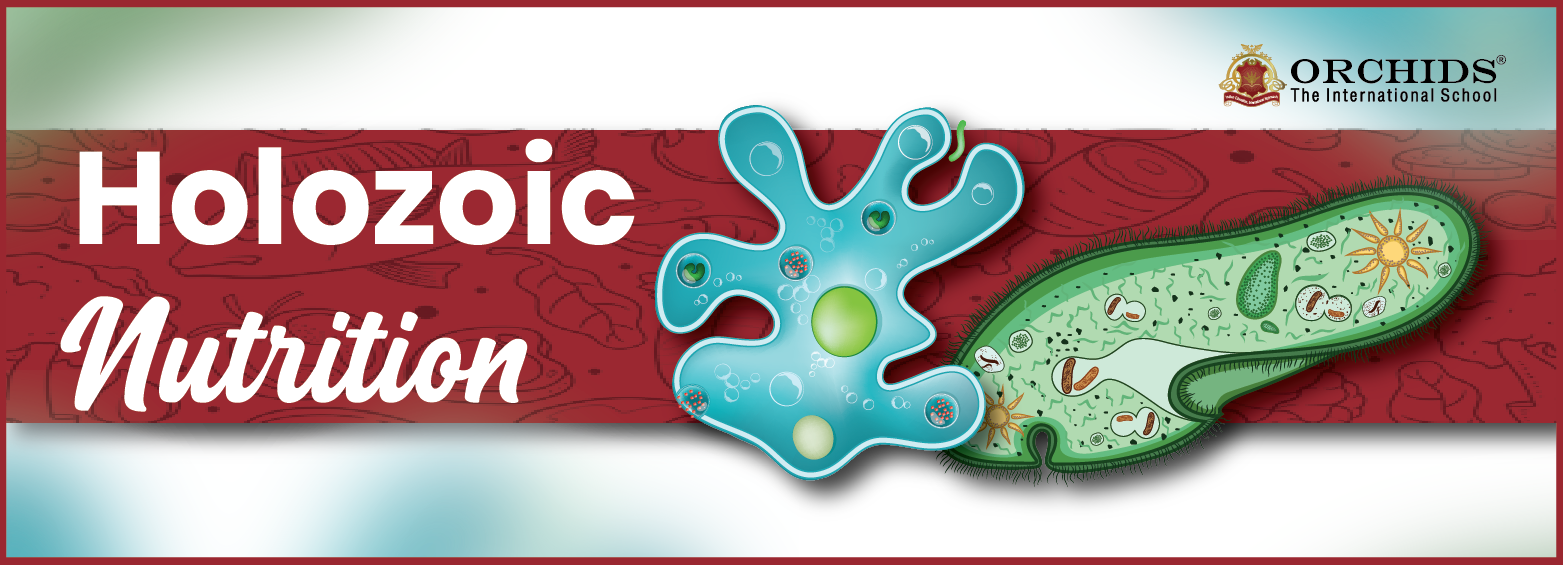
Holozoic Nutrition is how most animals get their food. Compared plants that make food from sunlight, animals need to eat other living things to survive. They take in food, break it down inside their bodies, and use it for energy, growth, and staying healthy.
This way of eating helps animals live in different places, from forests and rivers to deserts and oceans. By eating what’s available around them, they get the energy they need to move, grow, and reproduce. In this article, we will see how holozoic nutrition works, learn its main steps, and look at some animals that follow this interesting way of feeding.
Table of Contents
- What is Holozoic Nutrition
- How Holozoic Nutrition Happens in 5-Steps
- Frequently Asked Questions on Holozoic Nutrition

What is Holozoic Nutrition?
Holozoic nutrition is a type of heterotrophic nutrition in which animals ingest solid or liquid food, digest it internally, absorb nutrients, and use them for energy, growth, and survival.
In simple words: animals eat food, break it down inside their body, and use it to live and grow.
The term holozoic is a combination of two words: holo means ‘whole’, and zoikos means ‘animals’. Let’s study it in detail.
How Holozoic Nutrition Happens in 5 Steps
Holozoic nutrition is that nutrition that involves the ingestion of liquid or solid organic material and its digestion, absorption and assimilation. It includes taking in complex substances and converting them into simpler forms. Holozoic nutrition occurs in five steps as described below:
1. Ingestion
The process of taking in food is called as ingestion. It involves taking in the food through the mouth. Different animals have different ways of feeding or ingesting based on the morphology of their mouthparts.
Let us study a few of them.
- A frog uses its long, sticky tongue to catch its prey.
- Houseflies, mosquitoes and butterflies have long sucking tubes called proboscis, which help them suck liquid food.
- Paramecium uses hair-like projections called cilia to push small particles of food into its mouth.
- The hummingbird uses its long and narrow beak to suck nectar.
- Crocodile eats its prey whole.
2. Digestion
The process of digestion involves the breakdown or conversion of complex food materials, such as carbohydrates, proteins, and fats, into small, soluble substances. Food undergoes both physical and chemical changes during digestion. Breaking of food into smaller pieces by teeth is a physical change.
The action of various digestive juices on food to form simple substances is a chemical change.
3. Absorption
The simple, soluble, digested food molecules formed during the process of digestion pass through the wall of the small intestine into the blood which transports it to different parts of the body. These simple food molecules are absorbed by the cells of the body.
4. Assimilation
The process through which the absorbed food is utilised for energy, growth and development.
5. Egestion
The process by which the undigested food is removed from the body in the form of faeces. Different animals have different body structures. Hence, the process of nutrition is also different.
Till now, we have seen how holozoic nutrition allows animals to get the energy and nutrients they need to survive, grow, and reproduce. By ingesting, digesting, absorbing, and utilizing food, animals can adapt to different environments and stay healthy. From tiny single-celled organisms like amoeba to large animals like humans and crocodiles, holozoic nutrition is essential for life.
Frequently Asked Questions on Holozoic Nutrition
1. What exactly is holozoic nutrition?
Holozoic nutrition is a way animals get their food by eating solid or liquid matter, breaking it down inside their body, and using it for energy, growth, and survival.
2. Which animals or organisms follow holozoic nutrition?
Most animals, including humans, dogs, cats, and even some single-celled organisms like amoeba, follow holozoic nutrition.
3. How is holozoic nutrition different from other feeding methods?
Unlike saprophytic nutrition (feeding on decaying matter) or holophytic nutrition (like plants making food via photosynthesis), holozoic nutrition involves eating and digesting food internally.
4. Do unicellular organisms also use holozoic nutrition?
Yes! Amoeba and paramecium engulf food particles and digest them inside their body, which is a simple form of holozoic nutrition.
5. Why is holozoic nutrition important for animals?
It provides energy and nutrients necessary for growth, repair, and overall survival, making it essential for the life of animals.
Science isn't just a subject, it's the way of seeing the world. Curious how Orchids The International School teaches it that way? Talk to our admissions team.
Admissions Open for 2026-27
What type of concept pages would you prefer?
CBSE Schools In Popular Cities
- CBSE Schools in Bangalore
- CBSE Schools in Mumbai
- CBSE Schools in Pune
- CBSE Schools in Hyderabad
- CBSE Schools in Chennai
- CBSE Schools in Gurgaon
- CBSE Schools in Kolkata
- CBSE Schools in Indore
- CBSE Schools in Sonipat
- CBSE Schools in Delhi
- CBSE Schools in Rohtak
- CBSE Schools in Bhopal
- CBSE Schools in Aurangabad
- CBSE Schools in Jabalpur
- CBSE Schools in Jaipur
- CBSE Schools in Jodhpur
- CBSE Schools in Nagpur
- CBSE Schools in Ahmednagar
- CBSE School In Tumkur











Orchids The International School is one of India's leading chains of CBSE and ICSE schools, with 110+ schools across the country.