

Throat Cancer Symptoms: Early Signs, Causes and Health Impact
Throat cancer symptoms often begin quietly, such as a persistent sore throat, hoarseness, or difficulty swallowing. At first, you might think it’s just a minor cold or fatigue, but over time, these signs can indicate a more serious condition that affects essential functions like speaking, breathing, and swallowing.
This article takes you through throat cancer symptoms, the different types of throat cancer, its causes, diagnosis methods, and treatment options, helping you recognise the warning signs early and understand the condition better.
Table of Contents
- What is Throat Cancer
- Symptoms of Throat Cancer
- Frequently Asked Questions on Throat Cancer Symptoms

What Is Throat Cancer?
The throat is a muscular tube extending from the nose to the bottom of the neck, playing a key role in breathing, speaking, and swallowing. Throat cancer refers to malignant tumours developing in the pharynx, larynx, or other parts of the throat.
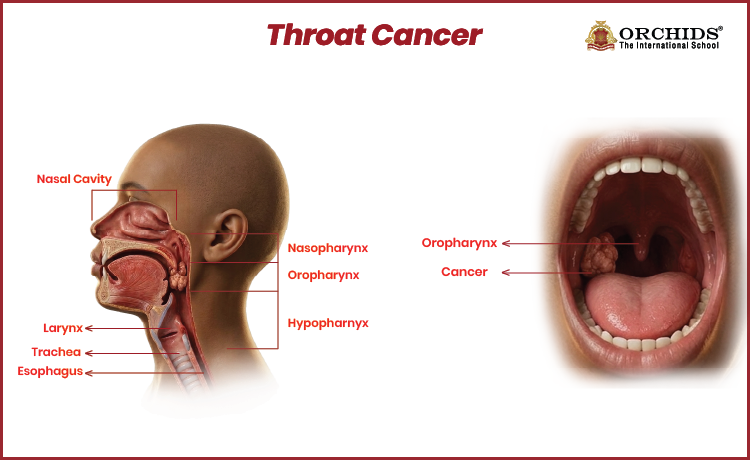
Sometimes, it is also called laryngeal cancer, vocal cord cancer, or cancer of the glottis. And throat cancer can even affect the cartilage, like the epiglottis, which acts as a lid over the windpipe.
Interestingly, the signs of throat cancer are often detectable early, meaning timely treatment can lead to successful recovery.
To understand how throat cancer develops and why treatment may differ from one person to another, let’s take a look at the main types of throat cancer and where they begin.
Because each type begins in a different area and spreads differently, doctors plan treatment carefully based on the exact location and stage of the tumour.
Now that you know where throat cancer develops, the next important step is learning how your body may signal a problem through early warning signs.
Symptoms of Throat Cancer
Throat cancer symptoms and signs may appear mild in the beginning and are often mistaken for a simple throat infection or seasonal illness, which makes them easy to ignore at first.
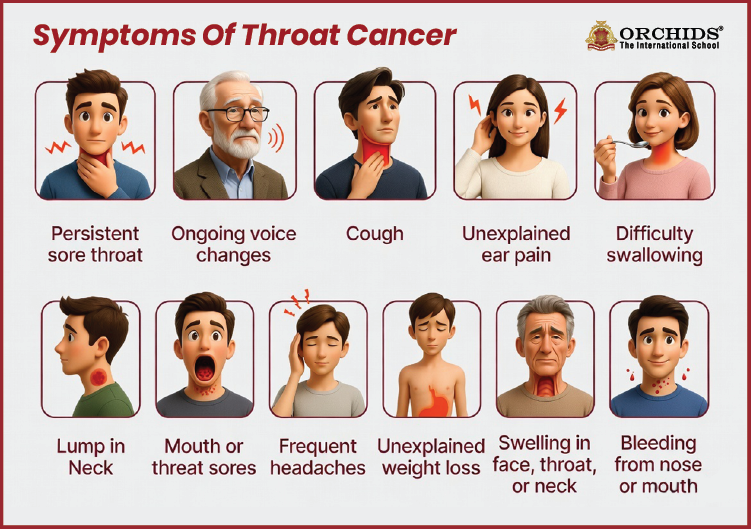
But when discomfort persists for more than two weeks, it’s important to pay attention.
Key warning signs of throat cancer to watch for include:
1. Persistent sore throat that stays for weeks and does not improve with usual treatment, and it may feel scratchy or painful while swallowing, and often returns even after relief medicines
2. Ongoing voice changes where the voice becomes rough, hoarse or weak and may not return to normal even after rest, and it may feel tiring to speak for long
3. Chronic coughing that continues for many weeks and may worsen at night or while talking, and sometimes brings blood in the mucus.
4. Unexplained ear pain that occurs without infection and feels deep or sharp and may increase when swallowing or turning the head.
5. Difficulty swallowing that causes discomfort while eating or drinking and creates a feeling of food being stuck in the throat.
6. Lump in the neck that slowly grows over time and feels firm to the touch and does not reduce with medicines.
7. Mouth or throat sores that do not heal for weeks and may enlarge or bleed and cause pain while eating.
8. Frequent headaches that continue without any clear reason and may feel heavy around the neck and jaw area.
9. Unexplained weight loss, even without dieting, and often linked with reduced appetite and weakness
10. Swelling in the face, throat or neck that increases gradually and may affect breathing or facial movement.
11. Bleeding from the nose or mouth that happens without injury and keeps repeating over time.
If these throat cancer symptoms and signs last more than two weeks or increase suddenly, consulting a doctor early can greatly improve recovery chances.
You might ask, What triggers throat cancer? Several factors increase the risk:
-
Smoking and tobacco use
-
Excessive alcohol consumption
-
Poor diet lacking fruits and vegetables
-
Gastroesophageal reflux disease (GERD)
-
Infection with human papillomavirus (HPV)
Genetic predisposition and poor dental hygiene can also contribute. Lifestyle choices play a significant role in prevention, so awareness is key.
Early detection of throat cancer can make all the difference, but how do doctors know if something is wrong?
Usually, they start with a biopsy, taking a small tissue sample from the throat to check for cancer cells.
Imaging tests like MRI, CT scans, barium swallow, or PET scans help locate tumours and understand how extensive they are. This careful approach ensures the right treatment is chosen and improves chances of recovery.
Once throat cancer is confirmed, the next step is choosing the most effective treatment based on its location and severity.
Treatment depends on the type, location, and stage of the cancer.
-
Surgery can remove tumours or affected tissue, while radiation therapy uses high-energy rays to target cancer cells.
-
Chemotherapy employs drugs to destroy malignant cells, and targeted therapy focuses specifically on attacking cancer cells without affecting healthy ones.
-
The good news is that when detected early, many patients respond well and recovery is possible.
But what about the symptoms, and does it progress?
At first, you might notice just a persistent sore throat or a change in your voice.
Over time, symptoms may worsen, including difficulty swallowing, lumps in the neck, unexplained weight loss, bleeding, or swelling. That’s why paying attention to these warning signs and acting quickly is crucial.
In this article, so far, we have discussed the symptoms of throat cancer and how it may sound worrying. But knowing the signs of throat cancer and seeking help promptly can save lives. By staying informed and consulting a doctor early, recovery becomes much more achievable. Awareness and timely action are your best tools in managing throat cancer.
Frequently Asked Questions on Throat Cancer Symptoms
1. What exactly is throat cancer?
Throat cancer happens when cells in the throat, voice box, or tonsils grow uncontrollably, forming malignant tumours that affect speaking, swallowing, and breathing.
2. How can I tell if I might have throat cancer?
Watch for persistent symptoms like a sore throat that doesn’t go away, changes in your voice, chronic cough, ear pain, difficulty swallowing, lumps in the neck, or sudden weight loss.
3. What causes throat cancer to develop?
Major causes include smoking, alcohol use, poor diet, acid reflux (GERD), HPV infection, and certain genetic factors.
4. How do doctors confirm throat cancer?
Diagnosis usually involves a biopsy, imaging tests such as CT or MRI scans, and scoping procedures like laryngoscopy to check the throat thoroughly.
5. What are the main treatment options?
Treatment depends on the type and stage of cancer and may include surgery, radiation therapy, chemotherapy, or targeted therapy.
6. How do throat cancer symptoms and signs change over time?
Early signs can be mild, like a sore throat or hoarseness. Later, symptoms may worsen to difficulty swallowing, lumps, bleeding, and swelling in the throat or neck.
7. Can throat cancer be cured?
Yes, especially when detected early. The chances of recovery depend on the cancer’s type, location, and how quickly treatment begins.
8. What is the difference between laryngeal and pharyngeal cancer?
Laryngeal cancer starts in the voice box, while pharyngeal cancer develops in the throat (upper, middle, or lower regions) and may require different treatments.
Science isn't just a subject, it's the way of seeing the world. Curious how Orchids The International School teaches it that way? Talk to our admissions team.
Admissions Open for 2026-27
What type of concept pages would you prefer?
CBSE Schools In Popular Cities
- CBSE Schools in Bangalore
- CBSE Schools in Mumbai
- CBSE Schools in Pune
- CBSE Schools in Hyderabad
- CBSE Schools in Chennai
- CBSE Schools in Gurgaon
- CBSE Schools in Kolkata
- CBSE Schools in Indore
- CBSE Schools in Sonipat
- CBSE Schools in Delhi
- CBSE Schools in Rohtak
- CBSE Schools in Bhopal
- CBSE Schools in Aurangabad
- CBSE Schools in Jabalpur
- CBSE Schools in Jaipur
- CBSE Schools in Jodhpur
- CBSE Schools in Nagpur
- CBSE Schools in Ahmednagar
- CBSE School In Tumkur











Orchids The International School is one of India's leading chains of CBSE and ICSE schools, with 110+ schools across the country.