

Diagram of Water Cycle
A diagram of water cycle helps us visually understand how water keeps moving in nature without ever finishing or disappearing. The same water travels again and again between land, oceans and the sky, even though we cannot see the full cycle happening with our eyes.
Interestingly!! This is the reason why the water that existed thousands of years ago is still present on Earth today.
This article explains how to draw a diagram of the water cycle and why this repeating loop matters in nature and in our lives.
Table of Contents
- What do we mean by the Water Cycle
- How To Draw a Diagram of Water Cycle: Stages and Importance
- How do our everyday actions impact the water cycle?
- Frequently Asked Questions on Diagram of Water Cycle

What do we mean by the Water Cycle?
Before we try to draw a well-labelled diagram of water cycle, it is important to first be clear about what the water cycle actually means.
Let’s discuss.
In the simplest words, the water cycle is the endless movement of water in nature; you may also see the term 'hydrological cycle' for the same thing.
.webp "Diagram of water cycle")
Throughout this cycle, the same water keeps changing its form again and again. Sometimes it is liquid, like in rivers and lakes; sometimes it turns into vapour and goes up into the air; and sometimes it comes down as ice or snow.
Instead of treating it like a dry one-line definition, it helps if you think of it as a cycle that never pauses and keeps recycling the same water on Earth.
And it’s interesting to note that, if we put that whole process in one straight flow, it reads like this:
Surface water → Sun heats → Evaporation → Condensation → Precipitation → Falls to Earth → Collection → Heat again → Loop repeats
Once the meaning is clear, the next natural step is to see how to show each of those stages neatly in a labelled diagram of water cycle.
How To Draw a Diagram of Water Cycle: Stages and Importance
When you’re asked to draw a labelled diagram of the water cycle, the easiest way to do it is to think of the story of water and sketch each stage as the story moves.
To understand clearly, let’s break down each step in detail:
1. First comes Evaporation. The Sun heats water in seas, rivers, ponds and even wet soil. That water slowly turns into vapour and rises. 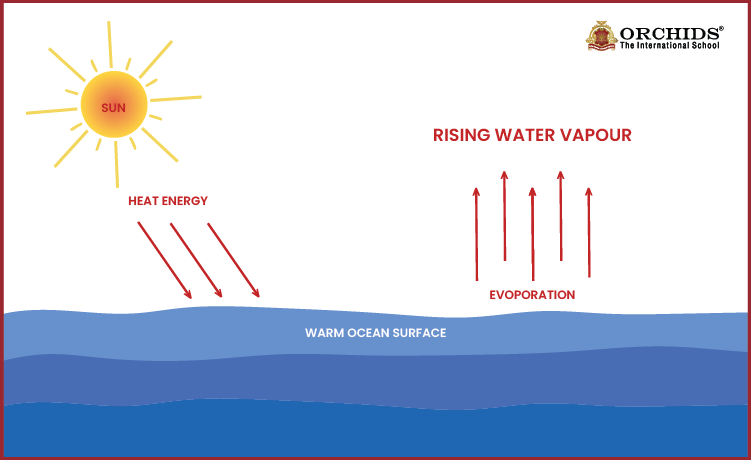
While drawing, this is when you place a water body at the bottom, put the Sun above it, and show upward arrows with the label Evaporation.
2. Then comes Condensation. Once the vapour reaches colder air, it cools down and forms tiny droplets which gather into clouds. 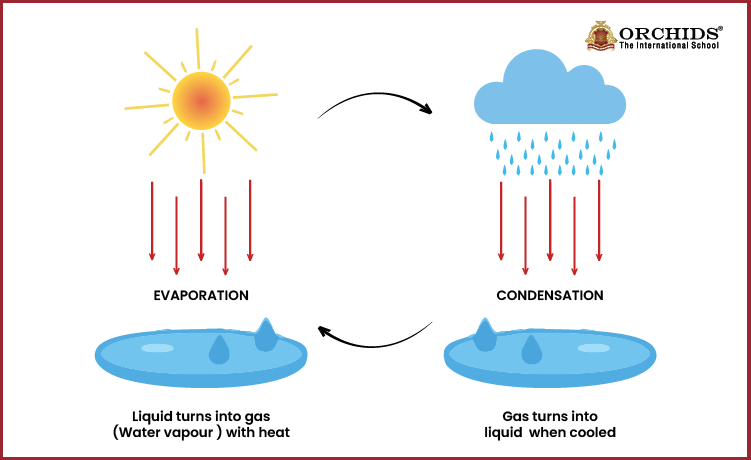
On paper, you now draw clouds in the sky and label that part Condensation.
3. Next is Precipitation. After some time, the drops inside clouds become heavy. They fall as rain, snow, sleet or hail, depending on the weather.
In the diagram, this is simply downward arrows from clouds with the word Precipitation.
4. Finally, the water goes into Collection / Deposition. The fallen water either collects in oceans, lakes and rivers or seeps into the soil and becomes groundwater.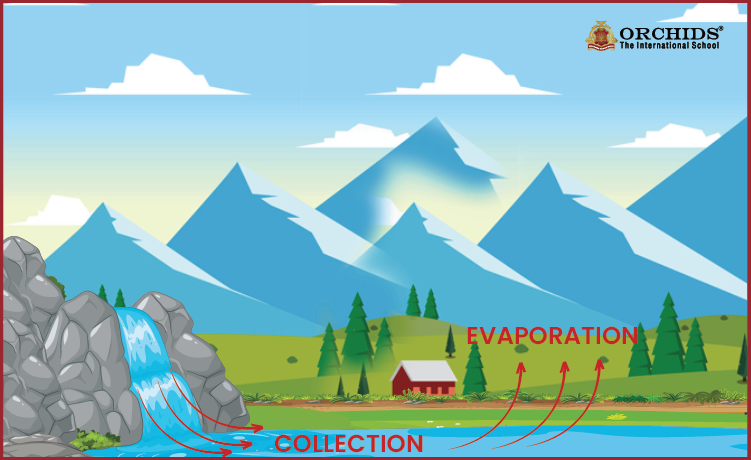
So in the drawing, you complete the loop by showing the water flowing back into the same water body or soaking into land and marking it as 'Collection' or 'Runoff'.
5. Alongside the main four steps, two quiet helpers always run in the background:
Transpiration from plants adds extra vapour to the air, and Infiltration pushes some of the rain underground. You can show them with small side arrows if space allows.
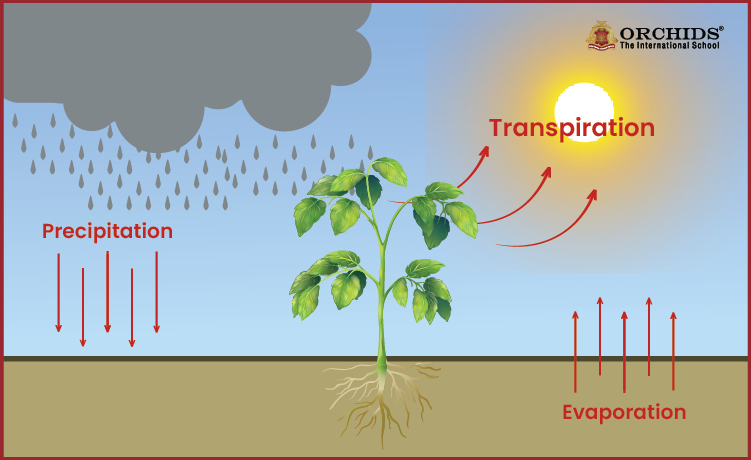
When you colour the Sun yellow, clouds white, rain blue and water deep blue, the whole cycle stops looking like a rough sketch and starts reading like a moving story of water.
How do our everyday actions impact the water cycle?
The diagram of the water cycle is not about drawing practice. It is a compact way of seeing how the process actually happens.
1.The water cycle runs on its own, but what we do in daily life actually pushes or slows some parts of it.
For example, when we cover large areas with roads and buildings, the rainwater has no place to soak in. It rushes off quickly, and that is why cities flood so easily now.
2. And when we cut trees, the air gets less moisture from leaves. That changes how much rain falls in that area. So a forest that once brought regular rain can slowly turn dry.
3. Also, whatever we throw into rivers and lakes does not stay there. That same dirty water later evaporates and goes back into the cycle. So the pollution we create returns to us in some form.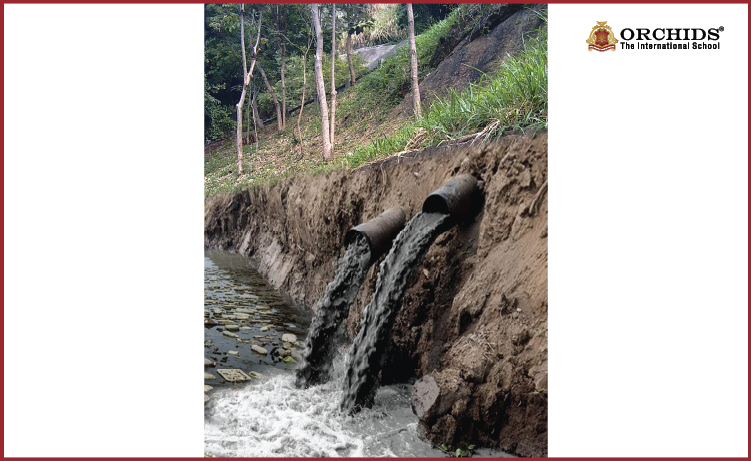
4. The fact!! When we pull too much water from the ground for farms and cities, the underground water does not get enough time to refill. Aquifers drop and then wells go dry.
So even though the cycle is natural, our choices can disturb its balance. Understanding the water cycle is not just science on paper. It also reminds us to act responsibly in real life.
And at last, here are some practice questions that can be asked for your exams:
- Draw a diagram of water cycle
- Draw a well-labelled diagram of the water cycle
- Draw a labelled diagram of the water cycle
In this article, we got to know that the water cycle diagram is a visual shortcut to understand how water moves in nature through evaporation, condensation, precipitation and collection.
Remember that when you’re asked to draw a labelled diagram of the water cycle or draw a well-labelled diagram of the water cycle in exams, you are not just making a picture, you are showing a living loop that supports life, weather and water supply on Earth.
Frequently Asked Questions on Diagram of Water Cycle
1. What is a water cycle diagram?
It is a simple picture that shows how water keeps moving in nature. Water goes up as vapour, forms clouds, and comes back as rain.
2. Why do we draw this diagram so often in school?
Because once you draw it, the concept stays in your mind. A picture makes it easier to remember how the cycle works.
3. What should I definitely label in the water cycle diagram?
Evaporation, Condensation, Precipitation, and Collection are must-have labels. Without these, the diagram is incomplete.
4. Does water get used up or disappear in this cycle?
No. The same water keeps circulating in different forms. It is reused again and again.
5. Where does evaporation take place?
Evaporation mostly happens from oceans, seas, rivers, lakes, wet soil, and plants. Even sweat from our bodies can evaporate.
6. Why do we always show the Sun in the water cycle diagram?
Because the Sun provides the heat that starts evaporation. Without sunlight, the water cycle would not run.
7. Can human activities disturb the water cycle?
Yes. Cutting trees, polluting water, and covering land with buildings can change rainfall patterns and reduce groundwater levels.
Science isn't just a subject, it's the way of seeing the world. Curious how Orchids The International School teaches it that way? Talk to our admissions team.
Admissions Open for 2026-27
What type of concept pages would you prefer?
CBSE Schools In Popular Cities
- CBSE Schools in Bangalore
- CBSE Schools in Mumbai
- CBSE Schools in Pune
- CBSE Schools in Hyderabad
- CBSE Schools in Chennai
- CBSE Schools in Gurgaon
- CBSE Schools in Kolkata
- CBSE Schools in Indore
- CBSE Schools in Sonipat
- CBSE Schools in Delhi
- CBSE Schools in Rohtak
- CBSE Schools in Bhopal
- CBSE Schools in Aurangabad
- CBSE Schools in Jabalpur
- CBSE Schools in Jaipur
- CBSE Schools in Jodhpur
- CBSE Schools in Nagpur
- CBSE Schools in Ahmednagar
- CBSE School In Tumkur











Orchids The International School is one of India's leading chains of CBSE and ICSE schools, with 110+ schools across the country.