

Colon Cancer Symptoms
Colon cancer symptoms can be difficult to spot in the early stages because the disease often starts quietly. Most people experience mild digestive changes, like bloating or irregular bowel habits, that are easy to ignore or mistake for routine stomach issues. However, these early signs become more noticeable as the tumour grows inside the large intestine. If left untreated, colon cancer can spread to the liver, bones, or lungs, making treatment more complicated.
This article explains colon cancer symptoms, early warning signs, causes, and stages in a simple, easy-to-understand manner.
Table of Contents
- What is Colon Cancer?
- Major Colon Cancer Symptoms
- Stages of Colon Cancer
- Frequently Asked Questions on Colon Cancer Symptoms

What is Colon Cancer?
Colon cancer is a disease that begins in the large intestine (colon), which is the final section of the digestive system. The colon absorbs water, salts, and nutrients and compacts waste before elimination.
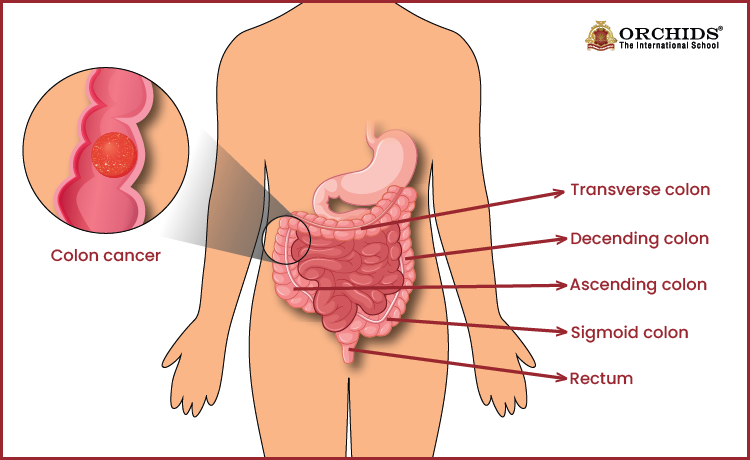
In most cases, colon cancer starts as polyps, small clumps of cells that form inside the colon lining. While most polyps are harmless, some can slowly turn cancerous over time due to DNA mutations.
So, what makes these polyps turn into cancer?
Let’s discuss.
Several factors, such as age, genetic mutations, family history, poor diet, smoking, lack of exercise, and chronic bowel inflammation, can trigger abnormal and uncontrolled cell growth in the colon.
As the tumour increases in size, it begins interfering with bowel movements, nutrient absorption, and the overall functioning of the digestive system.
Recognising the early symptoms of colon cancer is important because timely detection greatly improves recovery and treatment success.
Major Colon Cancer Symptoms
Colon cancer affects people differently depending on the tumour’s size, location, and stage. Early on, symptoms may be very mild. As the cancer grows, symptoms become more noticeable and sometimes severe.
Children rarely develop colon cancer, but adults, especially those above 50 are more prone to stronger, more persistent symptoms.
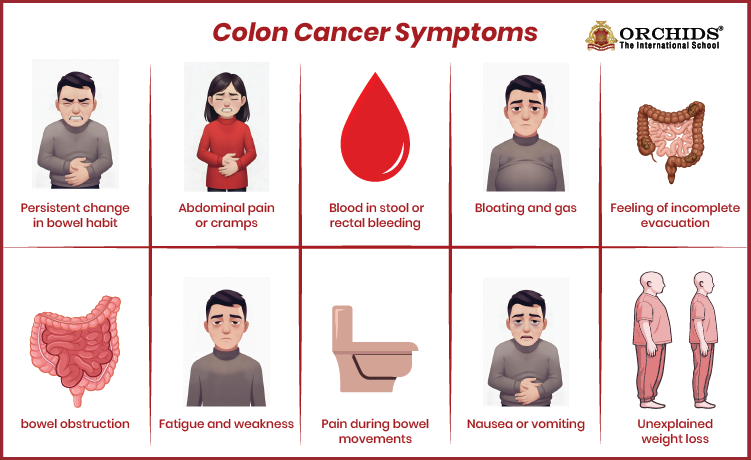
Here are the major symptoms of colon cancer explained clearly:
- Persistent change in bowel habits, diarrhoea, constipation, or irregular bowel movements that continue for weeks may be an early sign of tumour growth.
- Narrow or ribbon-like stools, when a tumour partially blocks the colon, stools appear thinner than usual.
- Abdominal pain or cramps, constant pain in the lower abdomen, happens as the tumour presses against the colon walls.
- Bloating and gas, difficulty moving stool through the large intestine causes gas build-up and discomfort.
- Blood in stool or rectal bleeding, one of the most important colon cancer symptoms. The blood may appear bright red or dark, depending on the location of the tumour.
- Unexplained weight loss, cancer cells use the body’s energy, causing sudden weight loss even without diet changes.
- Fatigue and weakness, slow bleeding inside the colon leads to anaemia, making the person feel tired all the time.
- Nausea or vomiting, as the tumour blocks the intestine, food cannot pass properly, leading to vomiting.
- Pain during bowel movements, tumours near the rectum can cause discomfort or sharp pain while passing stool.
- Feeling of incomplete evacuation, even after using the washroom, one may feel like the bowel hasn’t emptied.
- In advanced cases of colon cancer, a serious complication called bowel obstructionmay occur. When this happens, the digestive pathway becomes partially or completely blocked, leading to symptoms such as:
- Severe abdominal cramps, often coming in waves
- Inability to pass gas or stool, indicating a complete blockage
- Persistent vomiting, sometimes with a foul smell due to backed-up intestinal content
These are medical emergencies and require immediate attention.
Recognising these symptoms of colon cancer early can prevent severe complications. Along with awareness, maintaining a high-fibre diet, going for regular screenings, and following a healthy lifestyle can significantly lower the risk of colon cancer.
Stages of Colon Cancer
After understanding the early symptoms of colon cancer and complications, it’s important to know how colon cancer progresses through different stages.
Colon cancer develops gradually, moving through well-defined stages based on how deeply the tumour has grown and whether it has spread. This staging helps doctors plan treatment and detect the disease early.
- Stage 0: Also called carcinoma in situ. Abnormal cells are limited to the innermost lining of the colon. It is the earliest and most treatable stage.
- Stage 1: Cancer grows into the deeper layers of the colon wall but has not reached the lymph nodes.
- Stage 2: The tumour spreads through the outer layers of the colon but still remains within the organ.
- Stage 3: Cancer reaches nearby lymph nodes but has not yet spread to distant organs.
- Stage 4: The most advanced stage, where cancer spreads to other organs such as the liver, lungs, or bones.
As colon cancer progresses from Stage 0 to Stage 4, symptoms typically intensify because the tumour starts affecting digestion, nearby structures, and eventually other organs in the body.
So far, we have learnt that colon cancer often begins silently, with early symptoms of colon cancer that are easy to overlook. With regular screenings and healthy lifestyle choices, the risk and impact of colon cancer can be significantly reduced.
Frequently Asked Questions on Colon Cancer Symptoms
1. What is the earliest symptom of colon cancer?
Changes in bowel habits and blood in stools are common early symptoms.
2. Where does colon cancer start?
It starts in the large intestine, usually from polyps in the colon lining.
3. How do symptoms progress as colon cancer grows?
Early digestive changes → abdominal pain → blood in stool → weight loss → severe obstruction in later stages.
4. Are colon cancer symptoms different for men and women?
Most symptoms are similar, but women sometimes confuse signs with menstrual or digestive issues.
5. Why is colon cancer often detected late?
Early symptoms are mild and resemble irritable bowel syndrome (IBS) or common stomach problems.
6. How is colon cancer different from IBS?
IBS does not cause bleeding, sudden weight loss, or severe anaemia.
7. What is a colon polyp?
A small growth inside the colon that may turn cancerous over time.
8. What are the systemic symptoms of advanced colon cancer?
Fatigue, jaundice, bone pain, frequent infections, and severe weight loss.
Science isn't just a subject, it's the way of seeing the world. Curious how Orchids The International School teaches it that way? Talk to our admissions team.
Admissions Open for 2026-27
What type of concept pages would you prefer?
CBSE Schools In Popular Cities
- CBSE Schools in Bangalore
- CBSE Schools in Mumbai
- CBSE Schools in Pune
- CBSE Schools in Hyderabad
- CBSE Schools in Chennai
- CBSE Schools in Gurgaon
- CBSE Schools in Kolkata
- CBSE Schools in Indore
- CBSE Schools in Sonipat
- CBSE Schools in Delhi
- CBSE Schools in Rohtak
- CBSE Schools in Bhopal
- CBSE Schools in Aurangabad
- CBSE Schools in Jabalpur
- CBSE Schools in Jaipur
- CBSE Schools in Jodhpur
- CBSE Schools in Nagpur
- CBSE Schools in Ahmednagar
- CBSE School In Tumkur











Orchids The International School is one of India's leading chains of CBSE and ICSE schools, with 110+ schools across the country.