

Understanding Huckel’s Rule: The Key to Aromatic Stability in Chemistry
Have you ever wondered why some molecules like benzene are so stable even though they contain double bonds? The reason lies in a simple yet powerful idea called Huckel’s Rule.
Interestingly! It was proposed by the German scientist Erich Huckel in 1931; this rule helps us decide whether a ring-shaped molecule is aromatic, which means it has a special kind of stability because its electrons are freely moving in a circular loop.
The article provides insight into the page to help you understand Huckel’s Rule as simply and visually as possible. It also focuses on which compounds are aromatic and why these stable rings matter in chemistry, nature, and even your own body!
Table of Contents
- What is Huckel’s Rule with Examples
- Why is Huckel’s Rule Important in Chemistry
- Frequently Asked Questions on Huckels Rule

What is Huckel’s Rule with an Example?
Huckel’s Rule is a test to check if a molecule has aromaticity, which means it is unusually stable and less reactive than expected.
According to the rule, a ring-shaped molecule is aromatic when it has a certain number of π (pi) electrons that fit this formula:
(4n+2)π Here, n can be any whole number like 0, 1, 2, 3, and so on.
This means molecules can have 2, 6, 10, 14, 18... π electrons to be aromatic.
Let’s take benzene as an example. It has 6 π electrons.
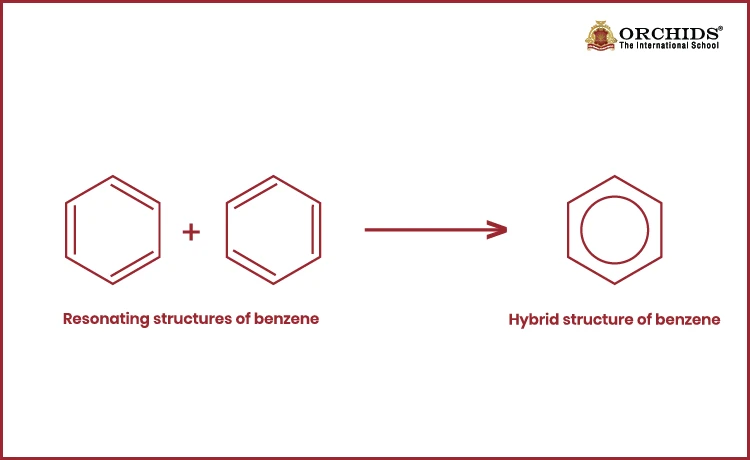
Next, substitute it in the formula below:
4n+2=6 where n=1
It has six carbon atoms arranged in a perfect ring, each contributing one electron to the π system.
So, total π electrons = 6
It's concluded that benzene follows the rule perfectly. The fact that this is why benzene doesn’t easily take part in addition reactions (like alkenes do). Instead, it prefers substitution reactions that keep the stable ring intact.
That’s the beauty of aromatic stability: it protects the molecule’s structure!
Since n = 1 is a whole number, benzene obeys Huckel’s Rule, and that’s why it’s aromatic and exceptionally stable!
Let's Discuss The Four Important Rules of Aromaticity:
For a molecule to be aromatic, it must pass four simple checks, like a “chemistry checklist” that confirms aromaticity:
- It must be cyclic, that is, the molecule must form a ring. If it’s not a ring, electrons can’t circulate properly.
- Molecules must be planar; that is, all atoms should lie in the same flat plane, allowing smooth electron overlap.
- Molecules must be fully conjugated, that is, every atom in the ring must have a p-orbital, so electrons can flow continuously around the ring.
- It must follow Huckel’s Rule (4n+2) Pi, which means the total π electrons should fit this equation.
But how to identify π electrons easily? Wondering how to count π electrons quickly? Here’s the trick:
- Each double bond = 2 π electrons.
- A lone pair on an atom (like N or O) may contribute 2 π electrons if it’s part of a p-orbital in the ring.
- All atoms in the ring must be sp² hybridised (each having one p-orbital for delocalisation).
So, when you see a molecule with alternating single and double bonds, check if it’s cyclic, planar, and follows the 4n+2 rule; that’s your aromatic compound!
Do you know that if any of these rules are broken, the molecule loses aromaticity?
There might be many questions about the 4n + 2 Formula.
The “4n + 2” formula isn’t just a number trick; it's based on molecular orbital theory.
Here’s the simple idea:
- Electrons in a ring arrange themselves in energy levels (orbitals).
- The most stable setup is when all the bonding orbitals are filled and none of the anti-bonding orbitals have electrons.
- This perfect filling happens when the total number of π electrons equals 4n+ 2.
That’s why aromatic compounds, like benzene, are so stable; their electrons form a complete and balanced system that resists breaking apart.
The most interesting thing to study is Aromatic Ions that are not Always Neutral!
Huckel’s Rule isn’t just for neutral compounds; it also works for ions.
- Cyclopentadienyl Anion:
→ Has 6 π electrons → follows 4n+2 (n=1) → aromatic and stable.
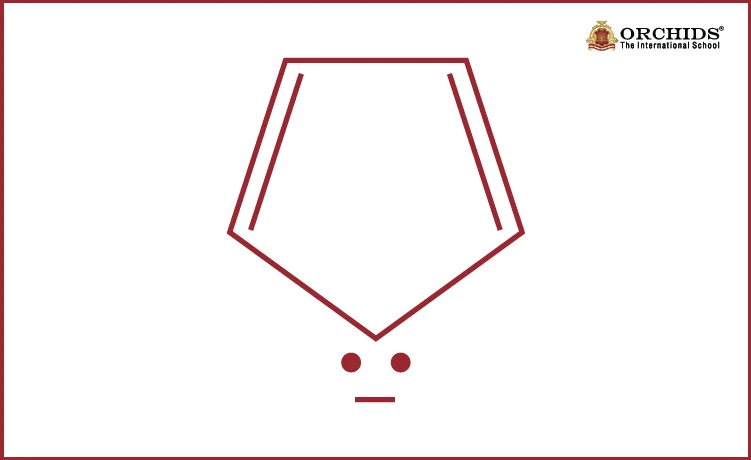
- Cyclopentadienyl Cation
→ Has 4 π electrons → doesn’t fit 4n+2→ not aromatic and unstable.
So, even a negative or positive charge doesn’t matter; what truly matters is the number of π electrons in the ring!
Secondly, aromatic rings don’t always contain only carbon. If other atoms like nitrogen, oxygen, or sulfur join the ring, they’re called heterocyclic compounds.
For example:
- Furan contains oxygen, which contributes one lone pair to the π system, giving 6 π electrons.

- Pyrrole ( N) in which Nitrogen donates one pair of electrons to complete the aromatic system.
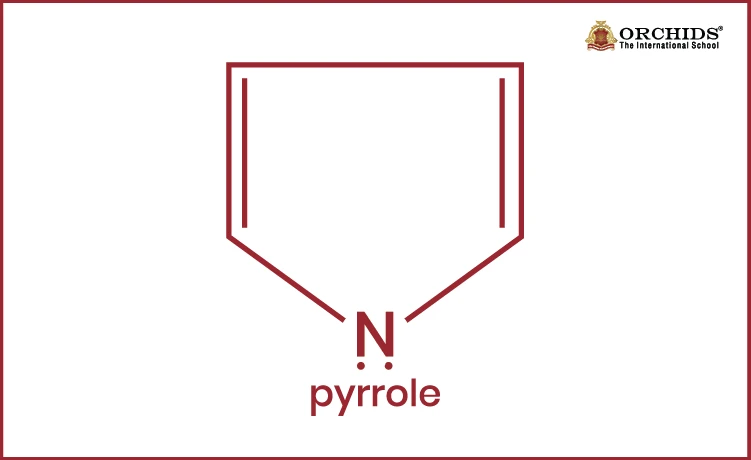
Even though these contain heteroatoms, they still follow Hückel’s Rule and remain aromatic.
That’s why such rings are commonly found in medicines, vitamins, and DNA bases.
Why is Huckel’s Rule Important in Chemistry?
Understanding Huckel’s Rule helps students and scientists in many ways:
- In Organic Chemistry, it explains the unusual stability and reactions of aromatic compounds.
- In Biology: DNA bases like adenine and guanine are aromatic; their stability keeps genetic information safe.
- In Industry: Aromatic compounds form the base of plastics, medicines, dyes, and perfumes.
So, Huckel’s Rule is not just a formula; it's a key to understanding how chemistry builds stable structures, from simple rings to the molecules of life!
Till now, we have learned that Huckel's Rule is one of the most interesting discoveries in organic chemistry. It explains why certain ring-shaped molecules, like benzene, are so stable and how electrons move in harmony inside these structures.
Frequently Asked Questions on Huckels Rule
1. What is the application of Huckel’s rule?
The main application of Huckel's rule is to identify whether a cyclic compound is aromatic or not. It helps predict molecular stability based on the number of π electrons.
2. Which compounds follow Huckel’s rule?
Compounds like benzene, pyrrole, and furan follow the Huckel rule of aromaticity as they have 4n+2 π electrons. These rings are flat, conjugated, and highly stable.
3. How to satisfy Huckel’s rule?
To satisfy the Huckel rule of aromaticity, a molecule must be cyclic, planar, fully conjugated, and contain 4n+2 π electrons. This ensures aromatic stability and resonance.
4. What are the exceptions to the Huckel rule?
Some non-planar or antiaromatic compounds like cyclobutadiene don’t obey Huckel's rule. These molecules have 4n π electrons and show instability instead of aromaticity.
5. What are the limitations of Huckel’s rule?
A key limitation of Huckel's rule is that it mainly applies to monocyclic, planar molecules. Complex polycyclic and non-planar systems often require advanced molecular orbital analysis.
6. How to count Huckel’s rule?
To count for Huckel's rule, identify the total π electrons in the ring and fit them into 4n+2 = total π electrons. If n is a whole number, the molecule is aromatic.
7. What is n in the Huckel rule?
In what is n in the Huckel rule, n represents a whole number (0, 1, 2, 3, etc.) used in the 4n+2 equation. It helps determine if a molecule qualifies as aromatic.
Science isn't just a subject, it's the way of seeing the world. Curious how Orchids The International School teaches it that way? Talk to our admissions team.
Admissions Open for 2026-27
What type of concept pages would you prefer?
CBSE Schools In Popular Cities
- CBSE Schools in Bangalore
- CBSE Schools in Mumbai
- CBSE Schools in Pune
- CBSE Schools in Hyderabad
- CBSE Schools in Chennai
- CBSE Schools in Gurgaon
- CBSE Schools in Kolkata
- CBSE Schools in Indore
- CBSE Schools in Sonipat
- CBSE Schools in Delhi
- CBSE Schools in Rohtak
- CBSE Schools in Bhopal
- CBSE Schools in Aurangabad
- CBSE Schools in Jabalpur
- CBSE Schools in Jaipur
- CBSE Schools in Jodhpur
- CBSE Schools in Nagpur
- CBSE Schools in Ahmednagar
- CBSE School In Tumkur











Orchids The International School is one of India's leading chains of CBSE and ICSE schools, with 130+ schools across the country.