

Atomic Mass of Elements
Atomic Mass of Elements- Have you ever wondered why hydrogen weighs less than oxygen? Or why gold feels at least twice as heavy as aluminum? The answer: atomic mass. Atomic mass of an element is a key concept in chemistry that refers to the weight of one atom of an element.
It also allows us to calculate how much of a substance is in a chemical equation. This Article explains atomic mass simply and provides a convenient list of the atomic masses of the first 30 elements.
Table of Contents
- What is Atomic Mass
- Why is Carbon-12 Used as a Reference
- What is One amu
- How is Atomic Mass Calculated
- Atomic Mass of First 30 Elements
- Quick Tips to Learn Atomic Mass
- Frequently Asked Questions on Atomic Mass of Elements

What is Atomic Mass?
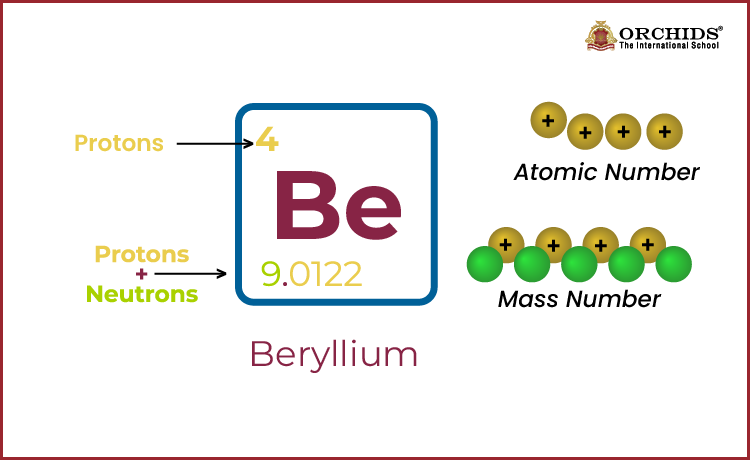
Atomic mass is the mass of the protons and neutrons in the nucleus of the atom. Since electrons are so tiny, their mass is usually ignored in calculations.
Example: Sodium (Na)
-
Atomic number = 11 → So, 11 protons
-
Atomic mass = 23
-
To find neutrons: 23 − 11 = 12 neutrons
-
So, a sodium atom has:
11 protons
12 neutrons
11 electrons (if neutral)
The atomic mass is basically the total of protons + neutrons in the nucleus. Simple!
Same as the Aluminium Mass Number !!
Aluminium has:
-
Atomic number = 13 → which means it has 13 protons
-
Mass number = 27
-
So, to find neutrons: 27 − 13 = 14 neutrons
Aluminium (Al) has 13 protons, 14 neutrons, and 13 electrons in a neutral atom.
Its mass number is 27, which is the total of protons + neutrons.
Each element has a unique atomic mass and is usually written with a decimal, since it is an average of all of the naturally occurring isotopes of that element.
For example, chlorine exists naturally mostly as two isotopes
chlorine 35, and chlorine 37.
So, the atomic mass of chlorine is not a whole number, but an average: 35.5 u (or thereabouts).
Why is Carbon-12 Used as a Reference?
To make calculations easier and consistent, scientists around the world agreed to use carbon-12 as the standard reference. Carbon-12 is an isotope of carbon with exactly 6 protons and 6 neutrons.
So, by definition:
1 atomic mass unit (amu) is 1/12th the mass of a carbon-12 atom.
This helps chemists compare atomic masses of all other elements in a standardised way.
What is One amu?
amu stands for atomic mass unit, and it is used to measure the mass of atoms.
amu stands for atomic mass unit, and it is used to measure the mass of atoms.
-
1 amu = 1.66 x 10⁻²⁷ kilograms
-
It is a very tiny unit because atoms are extremely small!
This unit is now also called the "unified atomic mass unit (u)", and both amu and u are accepted in chemistry.
How is Atomic Mass Calculated?
Atomic mass is not always a whole number. That’s because most elements exist in nature as a mix of isotopes—atoms of the same element with different numbers of neutrons.
So, atomic mass is calculated as a weighted average of all the isotopes.
Formula:
Atomic Mass = (mass of isotope 1 × % abundance) + (mass of isotope 2 × % abundance) + ...
This gives us the average atomic mass that you see on the periodic table.
Example:
For chlorine:
- Cl-35: mass = 35, abundance = 75%
- Cl-37: mass = 37, abundance = 25%
Atomic Mass = (35 × 0.75) + (37 × 0.25) = 26.25 + 9.25 = 35.5 u
Atomic Mass of First 30 Elements
Here's a quick-reference chart for the atomic masses of the first 30 elements:
Atomic Number |
Element |
Symbol |
Atomic Mass (u) |
1 |
Hydrogen |
H |
1.008 |
2 |
Helium |
He |
4.0026 |
3 |
Lithium |
Li |
6.94 |
4 |
Beryllium |
Be |
9.0122 |
5 |
Boron |
B |
10.81 |
6 |
Carbon |
C |
12.011 |
7 |
Nitrogen |
N |
14.007 |
8 |
Oxygen |
O |
15.999 |
9 |
Fluorine |
F |
18.998 |
10 |
Neon |
Ne |
20.180 |
11 |
Sodium |
Na |
22.990 |
12 |
Magnesium |
Mg |
24.305 |
13 |
Aluminium |
Al |
26.982 |
14 |
Silicon |
Si |
28.085 |
15 |
Phosphorus |
P |
30.974 |
16 |
Sulfur |
S |
32.06 |
17 |
Chlorine |
Cl |
35.45 |
18 |
Argon |
Ar |
39.948 |
19 |
Potassium |
K |
39.098 |
20 |
Calcium |
Ca |
40.078 |
21 |
Scandium |
Sc |
44.956 |
22 |
Titanium |
Ti |
47.867 |
23 |
Vanadium |
V |
50.942 |
24 |
Chromium |
Cr |
51.996 |
25 |
Manganese |
Mn |
54.938 |
26 |
Iron |
Fe |
55.845 |
27 |
Cobalt |
Co |
58.933 |
28 |
Nickel |
Ni |
58.693 |
29 |
Copper |
Cu |
63.546 |
30 |
Zinc |
Zn |
65.38 |
Quick Tips to Learn Atomic Mass
- Know the Basics that atomic mass = number of protons + neutrons.
- Remember the Benchmark that 1 amu is based on carbon-12.
- To Avoid Confusion don't mix atomic mass with atomic number (which is just protons).
- Use a Periodic Table like Focus on learning the first 30 elements.
- Understand Isotopes: Atomic mass is an average because of isotopes.
Understanding atomic mass gives you the basis to further explore concepts in chemistry, like moles, chemical formulas, and chemical reactions. Atomic mass is not simply a number on the periodic table, it is important to be able to understand how atoms will react and behave in a chemical reaction and atomic mass enables you to predict how much reaction would take place with certain known quantities of a reactant.
Frequently Asked Questions on Atomic Mass of Elements
1. Which element has the highest atomic mass?
Oganesson (Og), with atomic number 118, currently has the highest known atomic mass among all elements.
Its atomic mass is estimated due to its instability and synthetic nature.
2. Why do some elements have no atomic mass?
Some elements don’t have a listed atomic mass because they exist only as radioactive isotopes with very short lifespans.
Their atomic masses are hard to determine precisely due to rapid decay.
3. What is the concept of atomic mass?
Atomic mass is the weighted average mass of all naturally occurring isotopes of an element.
It helps compare atoms on a relative scale based on the carbon-12 standard.
4. What element has the lowest atomic mass?
Hydrogen has the lowest atomic mass of approximately 1.008 amu.
It’s the lightest and simplest element with only one proton and usually no neutron.
5. What is the atomic mass of elements?
Atomic mass of elements is the average mass of all the atoms of an element, considering its natural isotopes. It tells us how heavy an atom is compared to others.
6. What is the difference between atomic mass number and atomic number?
Atomic number counts only protons, while atomic mass number is the total of both protons and neutrons inside an atom’s nucleus.
7. How is the periodic table with atomic mass helpful?
It helps students easily see how heavy each element is and compare elements side by side while studying reactions and balancing equations.
8. What do atomic and mass numbers tell us?
The atomic number tells us what element it is (based on protons), and the mass number gives a fuller picture by including neutrons too.
9. What is aluminium’s mass number and what does it mean?
Aluminium has a mass number of 27. That means its atoms have 13 protons and 14 neutrons combined in the nucleus.
Science isn't just a subject, it's the way of seeing the world. Curious how Orchids The International School teaches it that way? Talk to our admissions team.
Admissions Open for 2026-27
What type of concept pages would you prefer?
CBSE Schools In Popular Cities
- CBSE Schools in Bangalore
- CBSE Schools in Mumbai
- CBSE Schools in Pune
- CBSE Schools in Hyderabad
- CBSE Schools in Chennai
- CBSE Schools in Gurgaon
- CBSE Schools in Kolkata
- CBSE Schools in Indore
- CBSE Schools in Sonipat
- CBSE Schools in Delhi
- CBSE Schools in Rohtak
- CBSE Schools in Bhopal
- CBSE Schools in Aurangabad
- CBSE Schools in Jabalpur
- CBSE Schools in Jaipur
- CBSE Schools in Jodhpur
- CBSE Schools in Nagpur
- CBSE Schools in Ahmednagar
- CBSE School In Tumkur











Orchids The International School is one of India's leading chains of CBSE and ICSE schools, with 110+ schools across the country.