

Aluminium Phosphate
Aluminium phosphate is an interesting chemical substance that consists of aluminium and phosphate as a strongly bound molecule. It may not look like much, just a plain white powder, but it has a tremendous impact on materials science, medicine and even electronics.
This article provides insights into its structure and properties in plain and straightforward terms.
Table of Contents
- Aluminium Phosphate Formula and Structure
- Aluminium Phosphate Physical Properties
- Chemical Properties of Aluminium Phosphate
- Quick Tips to Learn about Aluminium Phosphate
- Frequently Asked Questions On Aluminium Phosphate

Aluminium Phosphate Formula and Structure
Aluminium phosphate (AlPO₄) is an inorganic compound made of aluminium, phosphorus, and oxygen. It occurs naturally as the mineral berlinite, which is structurally similar to quartz.
The chemical formula for aluminium phosphate is AlPO₄. The compound is made up of:
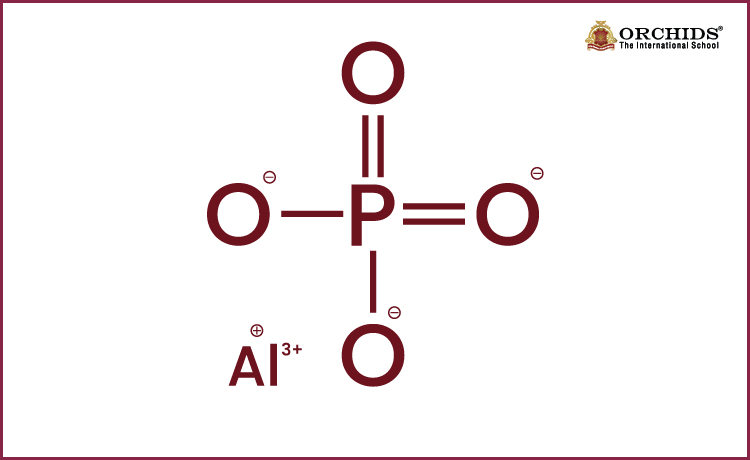
Aluminium phosphate (AlPO₄) can be made from the reaction of one aluminium ion (Al³⁺) reacting with one phosphate group (PO₄³⁻).
The aluminium ions will bind with the oxygen atoms in the phosphate group, which creates a strong three-dimensional crystal lattice.
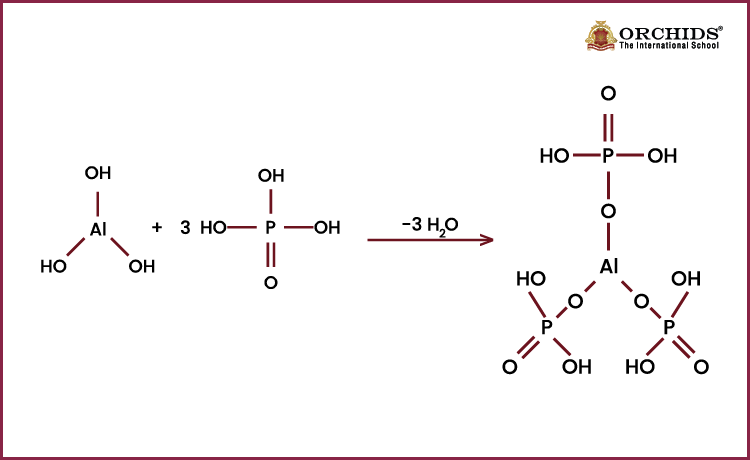
This repeatable structure gives the aluminium phosphate compound strength and stability. The Al³⁺ and PO₄³⁻ will bind strongly to create a stable ionic compound with the same structure as quartz.
Facts: Its natural or native form, berlinite, has a very similar atomic arrangement to quartz. Therefore, aluminium phosphate can be used as a heat attenuating material, and it may be piezoelectric and generate an electric charge when subjected to pressure.
Thus, aluminium phosphate can be looked at like a tightly woven web of atoms, creating a strong, reliable material that can withstand challenging structures.
Aluminium Phosphate Physical Properties
Aluminium phosphate isn’t just about its formula - it has several unique properties that make it valuable in various fields.
-
Formula: AlPO₄
-
Molar Mass: 121.95 grams per mole
-
Appearance: White, odourless crystalline powder
-
Water Solubility: It doesn't dissolve in water, which adds to its stability
-
Solubility in Acid: It can react with strong acids under specific conditions
-
Melting Point: Exceptionally high - about 1,800°C, allowing it to survive extreme heat
-
Density: Roughly 2.56 grams per cubic centimetre
These properties make aluminium phosphate widely used in areas like:
-
Ceramic and glass industries, where it’s added to products exposed to heat
-
Medical applications, including antacids and vaccine additives
-
Electronics, especially in piezoelectric systems
Chemical Properties of Aluminium Phosphate
1. Reaction with Hydrochloric Acid
Aluminium phosphate reacts with hydrochloric acid (HCl) to produce aluminium trichloride (AlCl₃) and phosphoric acid (H₃PO₄).
This reaction occurs because HCl is a strong acid capable of breaking the Al–O–P bonds, replacing phosphate with chloride ions.
Chemical Equation:
Explanation:
-
AlPO₄ acts as a weakly basic salt in the presence of a strong acid.
-
Aluminium trichloride formed is a highly soluble compound, whereas phosphoric acid remains in solution.
-
This reaction demonstrates the acidic reactivity of aluminium phosphate.
2. Reaction with Magnesium Chloride
When aluminium phosphate is treated with magnesium chloride (MgCl₂) at elevated temperatures or under suitable conditions, magnesium phosphate (Mg₃(PO₄)₂) and aluminium trichloride (AlCl₃) are formed.
Chemical Equation:
Explanation:
-
This is essentially a double displacement reaction, where magnesium ions replace aluminium in the phosphate compound.
-
Magnesium phosphate is only sparingly soluble in water, whereas aluminium trichloride is more soluble.
-
Such reactions highlight AlPO₄’s tendency to exchange ions with reactive metal salts.
3. Stability and Other Chemical Behaviour
-
Thermal Stability: AlPO₄ is thermally stable and can withstand high temperatures without decomposing, which is why it is used in ceramics and catalyst supports.
-
Amphoteric Nature: Although primarily insoluble in water, AlPO₄ shows amphoteric tendencies, meaning it can react with both strong acids and bases under appropriate conditions.
-
Resistance to Weak Acids and Bases: It does not readily react with weak acids or dilute alkalis, making it relatively inert in mild chemical environments.
Quick Tips to Learn about Aluminium Phosphate
-
Visuals make the structure easier to understand.
-
Learn Step-by-Step, Start with the formula, then structure, then use.
-
Connect it to daily products like ceramics or toothpaste.
-
Explaining to others helps you remember better.
As we learned, that Aluminium phosphate is a complicated-sounding material, but it's a unique compound that has real-world applicability from medicines to ceramics. Once you understand its structure and properties, you will find that science is a vital part of our lived experience. Keep searching, keep curious, and chemist together one item at a time!
Frequently Asked Questions On Aluminium Phosphate
1. What is the purpose of aluminium phosphate?
Aluminium phosphate is mainly used to strengthen materials that face heat or pressure, like ceramics and glass. It's also helpful in medicines as a safe ingredient in antacids and vaccines.
2. Is aluminium phosphate acidic or basic?
Aluminium phosphate is amphoteric; it can act like both an acid and a base, depending on what it reacts with.
3. Is aluminium phosphate soluble in water?
No, aluminium phosphate doesn’t dissolve in water, which makes it very stable in tough conditions.
4. What are the applications of aluminium phosphate?
It’s used in ceramics, electronics, glassmaking, and even in the medical field, especially in antacids and vaccines.
5. What is the aluminium phosphate formula?
The aluminium phosphate formula is AlPO₄. It represents one aluminium atom bonded to one phosphate group.
6. What is the chemical formula of aluminium phosphate?
The chemical formula of aluminium phosphate is AlPO₄, which is commonly used in ceramics, glass, and even as a food additive.
7. What is aluminium phosphate officially known as?
Aluminium phosphate is officially known as AlPO₄, a versatile compound used in medicines, industrial products, and laboratory applications.
Science isn't just a subject, it's the way of seeing the world. Curious how Orchids The International School teaches it that way? Talk to our admissions team.
Admissions Open for 2026-27
What type of concept pages would you prefer?
CBSE Schools In Popular Cities
- CBSE Schools in Bangalore
- CBSE Schools in Mumbai
- CBSE Schools in Pune
- CBSE Schools in Hyderabad
- CBSE Schools in Chennai
- CBSE Schools in Gurgaon
- CBSE Schools in Kolkata
- CBSE Schools in Indore
- CBSE Schools in Sonipat
- CBSE Schools in Delhi
- CBSE Schools in Rohtak
- CBSE Schools in Bhopal
- CBSE Schools in Aurangabad
- CBSE Schools in Jabalpur
- CBSE Schools in Jaipur
- CBSE Schools in Jodhpur
- CBSE Schools in Nagpur
- CBSE Schools in Ahmednagar
- CBSE School In Tumkur











Orchids The International School is one of India's leading chains of CBSE and ICSE schools, with 110+ schools across the country.