

Variable Valency: Learn Why Some Elements Show More than One Valency
Did you ever wonder why some elements do not seem to stick to just one bonding style? One minute, they're bonding with an element using one valency and the next, they are presenting a completely different valency! This is known as variable valency.This Variable valency guide will outline what valency is, why some elements have variable valency, how it varies, and how you can detect it by using simple formulas.
Table of Contents
- What is Valency
- What is Variable Valency
- What is Electrovalency
- Common Examples of Variable Valency
- How to Find Valency from Compound Formulas
- Quick Tips to Learn Variable Valency
- Frequently Asked Questions on Variable Valency

What is Valency?
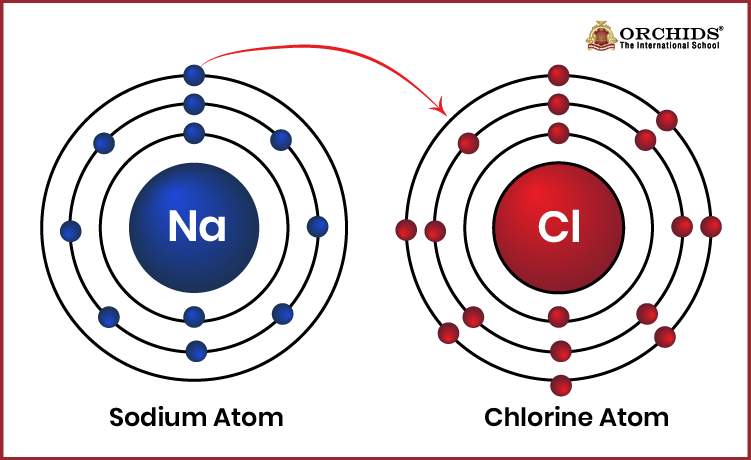
Valency of elements refers to the combining capacity of an element - simply put, it’s the number of electrons an atom needs to gain, lose, or share to achieve stability. Most atoms aim to fill their outermost shell (usually 8 electrons), and they bond accordingly.
For example:
- Oxygen has a valency of 2 because it needs 2 electrons to complete its outer shell.
- Sodium has a valency of 1 because it loses 1 electron to become stable.
What is Variable Valency
While many elements have a fixed valency, some can exhibit more than one valency. This means they can bond in multiple ways, forming different compounds with different chemical formulas. This property is known as variable valency.
This usually happens in transition metals and elements that have more than one stable oxidation state. The electrons in their inner orbitals can also take part in bonding, allowing multiple valency states.
What is Electrovalency?
Electrovalency refers to the valency shown by an element when it forms an ionic bond, where it completely donates or accepts electrons.Some elements show variable electrovalency because they can lose different numbers of electrons depending on the chemical environment. This is commonly seen in:
- Transition metals (like iron, copper, chromium)
- Elements that form both lower and higher oxidation states
That is: Two major factors explain why certain elements exhibit variable valency:
- In transition elements, the small energy gap between the ns and (n–1)d orbitals, and in inner transition elements between ns and (n–2) orbitals, allows different numbers of electrons to be involved in bonding.
- In p-block elements, the inert pair effectmakes the outer s-electrons less likely to participate in bonding.
For example:
- Iron (Fe) can show +2 and +3 oxidation states (Fe²⁺ and Fe³⁺).
- Copper (Cu) shows +1 and +2 valency (Cu⁺ and Cu²⁺).
Another one of the inert pair effects explains why heavier p-block elements sometimes show lower oxidation states than expected.
Read More: Atomic number and Mass-number
But what exactly is the Inner Pair Effect?
The inert pair effect is when the two s-electrons (ns²) in the valence shell of heavy p-block elements prefer to stay “inactive” or inert, instead of joining in chemical bonding.
As atoms get heavier, their outermost s-electrons are held more tightly by the nucleus due to poor shielding by inner electrons. This makes it harder for them to participate in reactions, leaving only the p-electrons to form bonds.
In Groups III A and IV A, lighter elements usually form +3 and +4 states, but as we move down the groups, +1 and +2 states become more stable.
This happens because the two outer s-electrons (ns²) stay “inert,” held tightly by the nucleus and less willing to bond.
As a result, elements like thallium (+1) and lead (+2) prefer lower oxidation states, a key idea behind variable valency.
Common Examples of Variable Valency
Let’s look at a few common elements that exhibit variable valency:
- Copper (Cu):
- Cuprous compounds: Cu⁺ → Valency = 1
- Cupric compounds: Cu²⁺ → Valency = 2
- Iron (Fe):
- Ferrous sulfate (FeSO₄): Fe²⁺ → Valency = 2
- Ferric chloride (FeCl₃): Fe³⁺ → Valency = 3
- Tin (Sn):
- Stannous chloride (SnCl₂): Sn²⁺ → Valency = 2
- Stannic oxide (SnO₂): Sn⁴⁺ → Valency = 4
- Lead (Pb):
- Lead(II) nitrate (Pb(NO₃)₂): Pb²⁺ → Valency = 2
- Lead(IV) oxide (PbO₂): Pb⁴⁺ → Valency = 4
These different forms lead to different chemical and physical properties in the compounds they form.
How to Find Valency from Compound Formulas
Even if you're not given the valency of an element directly, you can easily determine it from the chemical formula of a compound.
Here’s how:
- Identify the valency of the other known element in the compound.
- Use the formula to balance the total valency.
Example:
In FeCl₃, we know that chlorine (Cl) has a valency of 1.
There are three Cl atoms, so the total negative charge = 3.
Therefore, Fe must have a valency of 3 to balance it → Fe³⁺.
Another example:
In Cu₂O, oxygen (O) has a valency of 2.
Two Cu atoms = 2 positive charges,
which means each Cu must be +1 → Cu⁺.
Quick Tips to Learn Variable Valency
- Understand that some elements can lose different numbers of electrons, which leads to variable valency.
- Learn common examples like iron showing valency of 2 and 3, and copper showing 1 and 2.
- Remember that variable valency often comes from the use of inner orbitals such as d-orbitals.
- Know that variable valency results in different oxidation states in different compounds.
Also Read: Atoms and Molecules
Variable valency helps us better understand how elements behave differently in a variety of chemical environments. By learning how to read and interpret compound formulas, you'll be able to identify valencies confidently-a must-have skill for any budding chemist.
Frequently Asked Questions on Variable Valency
1. What is the reason behind variable valency?
Variable valency occurs when an element can lose different numbers of electrons from its outer and penultimate shells. This usually happens in transition elements.
2. Can a non-metal have variable valency?
Yes, some non-metals like nitrogen and chlorine can show variable valency depending on the type of bonding and the compounds they form.
3. Why is iron said to have variable valency?
Iron can lose either two or three electrons, leading to +2 (ferrous) and +3 (ferric) states. This flexibility in losing electrons gives it variable valency.
4. Can chlorine show variable valency?
Yes, chlorine exhibits valencies like 1, 3, 5, or 7 due to its ability to expand its octet by involving d-orbitals in bonding.
5. What is variable valency in chemistry?
Variable valency refers to the ability of certain elements, especially transition metals, to exhibit more than one valency or combining capacity in different chemical compounds.
6. Why do some elements show variable valency?
Elements show variable valency due to the involvement of different electron shells, especially d-orbitals, allowing them to lose different numbers of electrons in different reactions.
Science isn't just a subject, it's the way of seeing the world. Curious how Orchids The International School teaches it that way? Talk to our admissions team.
Admissions Open for 2026-27
What type of concept pages would you prefer?
CBSE Schools In Popular Cities
- CBSE Schools in Bangalore
- CBSE Schools in Mumbai
- CBSE Schools in Pune
- CBSE Schools in Hyderabad
- CBSE Schools in Chennai
- CBSE Schools in Gurgaon
- CBSE Schools in Kolkata
- CBSE Schools in Indore
- CBSE Schools in Sonipat
- CBSE Schools in Delhi
- CBSE Schools in Rohtak
- CBSE Schools in Bhopal
- CBSE Schools in Aurangabad
- CBSE Schools in Jabalpur
- CBSE Schools in Jaipur
- CBSE Schools in Jodhpur
- CBSE Schools in Nagpur
- CBSE Schools in Ahmednagar
- CBSE School In Tumkur











Orchids The International School is one of India's leading chains of CBSE and ICSE schools, with 130+ schools across the country.