

Atomic Number and Mass Number
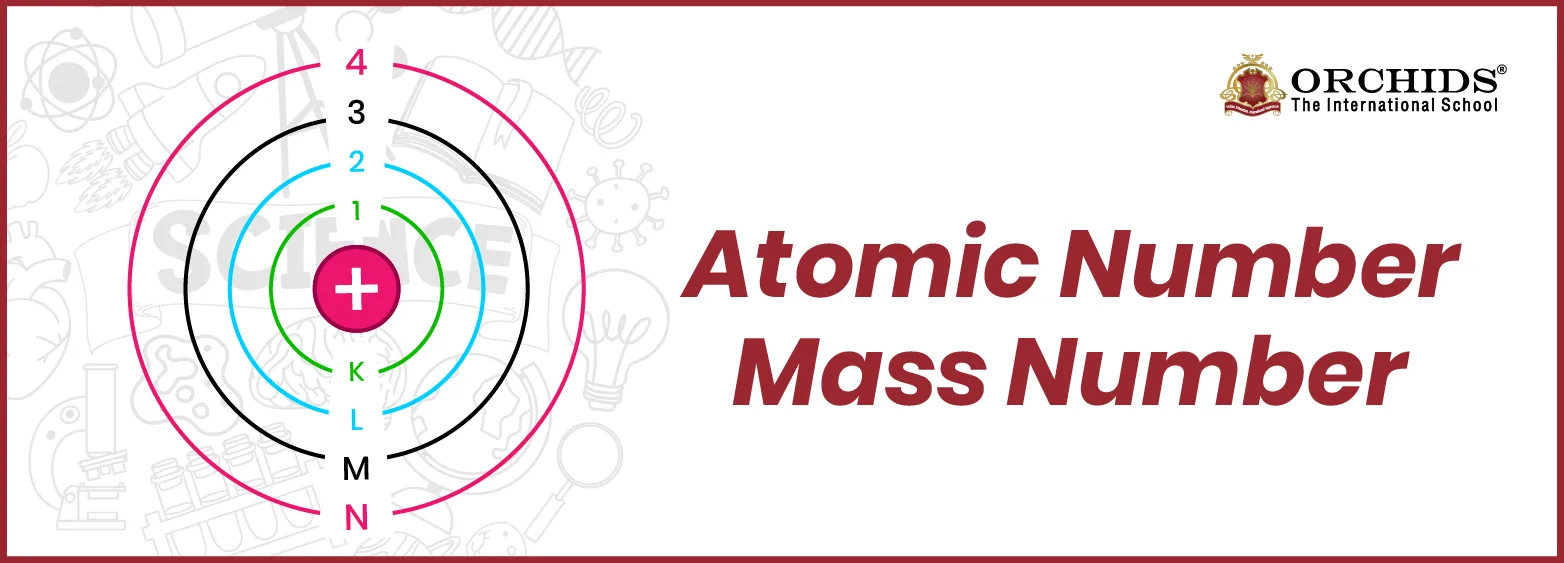
Atomic Number and Mass Number- Do you know that the atomic number and mass number are two of the most important basics of chemistry? These numbers tell us what an element consists of and how it interacts. If you are a student trying to get a handle on atoms, or are simply curious about how the periodic table works,
This article provides exactly what you need to know, from the meaning of the atomic number and the mass number to how the respective numbers are calculated.
Table of Contents
- About Atomic Number
- Electron Shells and Atomic Number: What's the Connection?
- What is the Mass Number?
- Atomic Number, Mass Number & Valency: Know the Key Differences
- Frequently Asked Questions on Atomic Number and Mass Number

About Atomic Number
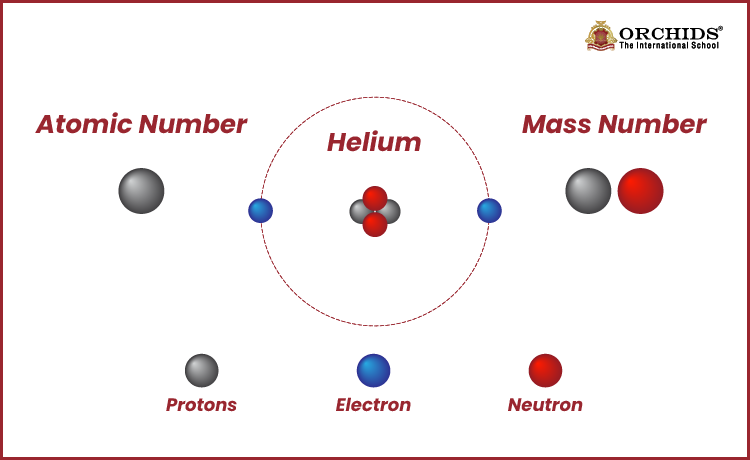
The atomic number is the backbone of atomic theory; it's the basis of every chemical element in the periodic table. The atomic number Z signifies the number of protons in the nucleus of an atom, and this affects the number of positive charges in an atom (since positive protons are charged particles).
Let's understand that in a neutral atom, the number of protons equals the number of electrons of the negatively charged particles that orbit the nucleus. This balance ensures the atom has no net charge unless it becomes an ion (by gaining or losing electrons).
What Does It Really Mean?
The atomic number (Z) of an element is the number of protons present in the nucleus of an atom. The atomic number determines:
- The actual element
- Where it is placed on the periodic table
- Its fundamental chemical properties
For example, because every hydrogen atom has only 1 proton, it has an atomic number of 1.
Same as for Carbon Atoms:
For carbon, it is atomic number 6 because it has 6 protons. If the number of protons had changed in a carbon atom, it would be another element, completely.
Electron Shells and Atomic Number: What's the Connection?
The electrons fill the space surrounding the nucleus in energy levels (or shells) determined by the atomic number.
Electrons are arranged in shells called K, L, M, N....
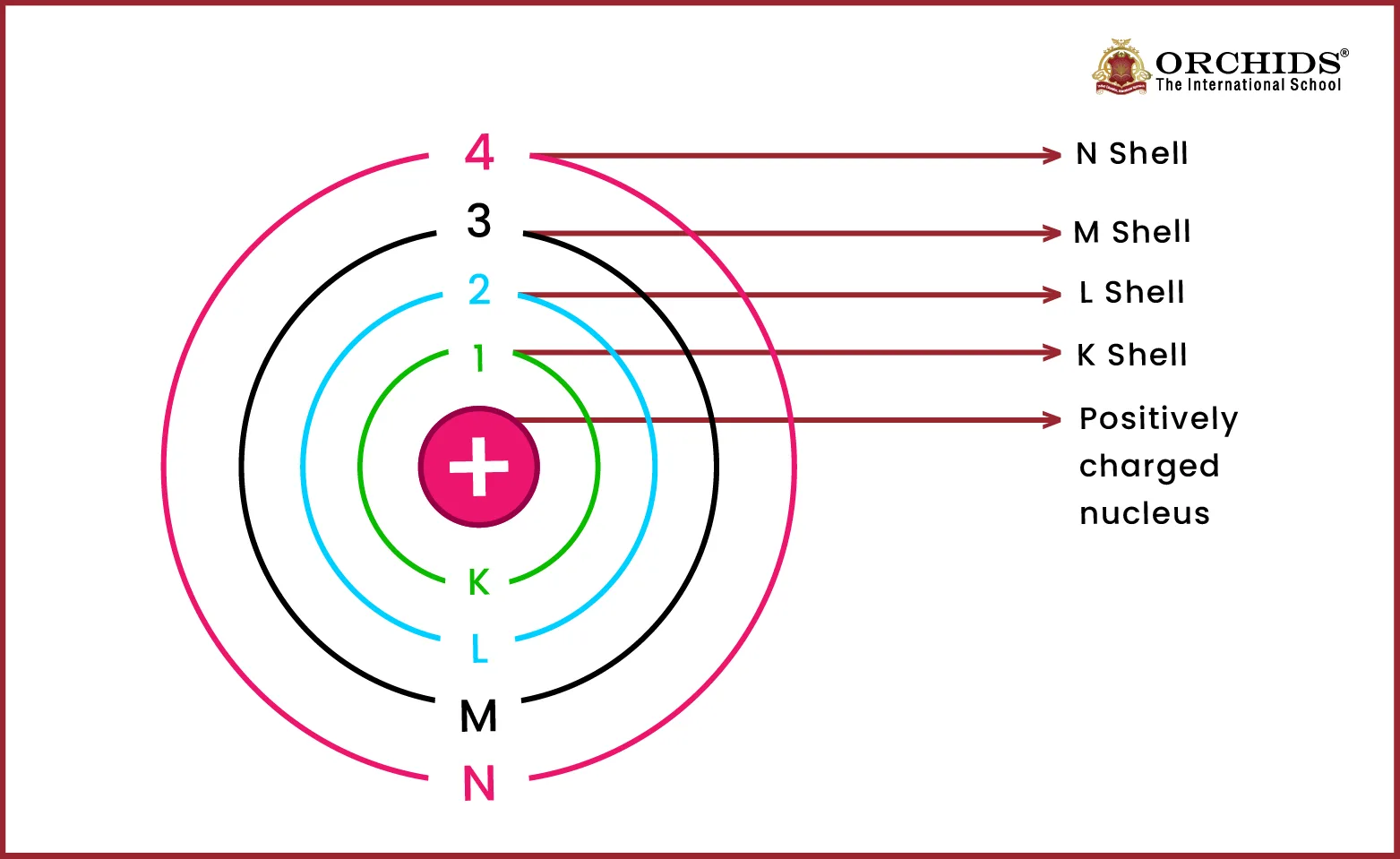
Each shell has a maximum number of electrons:
- Shell K (1st shell) - 2 electrons
- Shell L (2nd shell) - 8 electrons
- Shell M (3rd shell) - 18 electrons
- and so on.
For example:
- Hydrogen (Z = 1): 1 electron → K shell → 1s¹
- Oxygen (Z = 8): 8 electrons → 1s² 2s² 2p⁴
- Calcium (Z = 20): 1s² 2s² 2p⁶ 3s² 3p⁶ 4s²
What is the Mass Number?
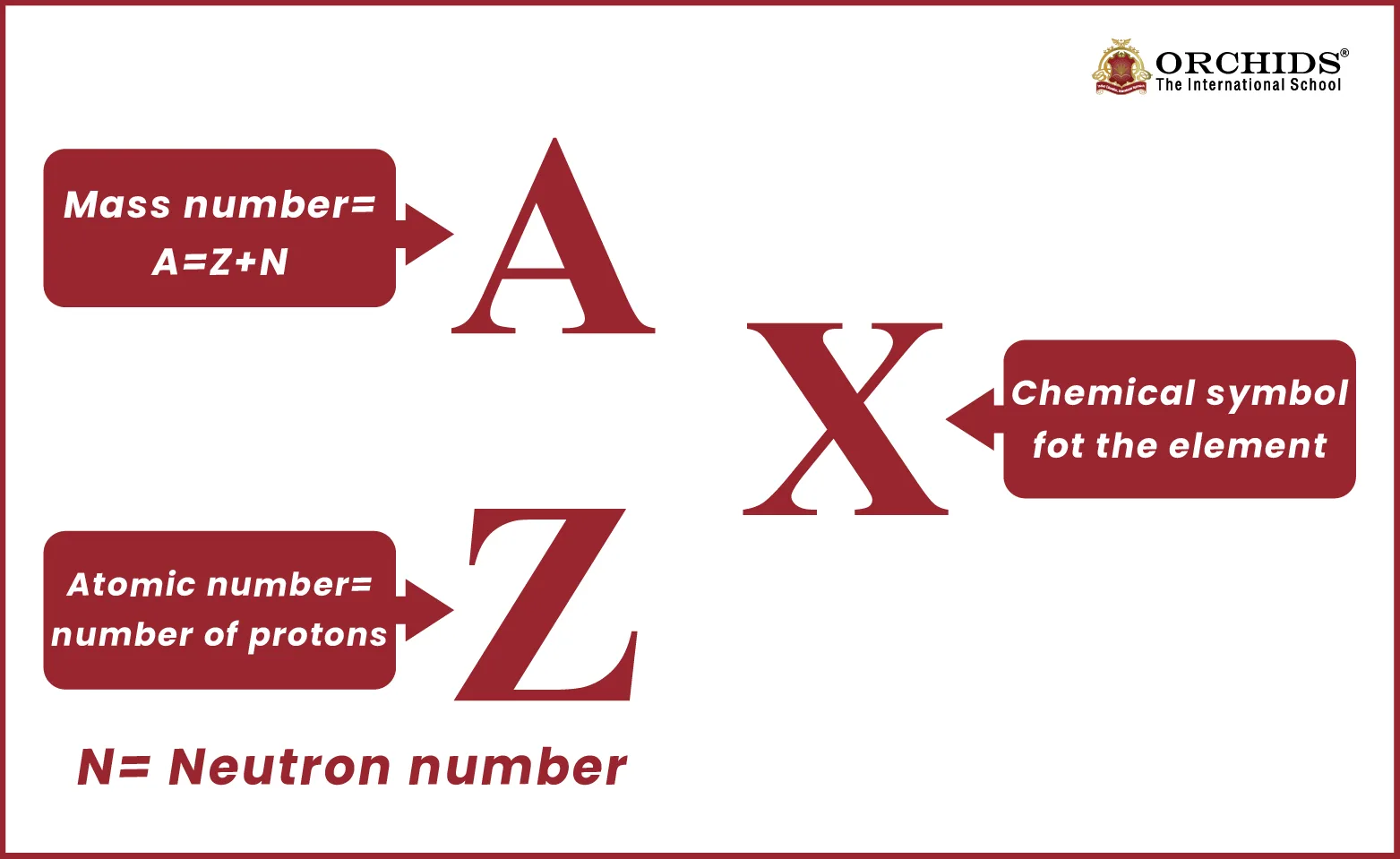
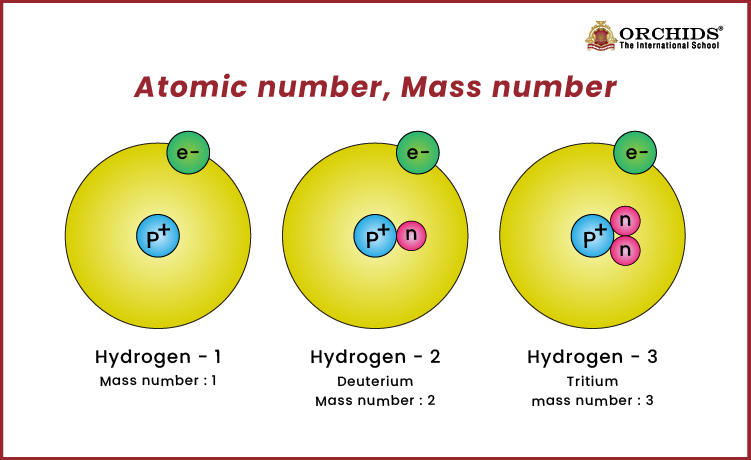
While the atomic number only counts protons, the mass number (A) is the total number of protons and neutrons in the nucleus of the atom.
Formula:
Mass Number (A) = Number of Protons (Z) + Number of Neutrons (N)
Protons and neutrons have nearly equal mass and they provide the entire mass of an atom since electrons are so small their mass is usually not considered when calculating the mass of an atom.
Example
Carbon usually has:
- 6 protons (Z = 6)
- 6 neutrons
Mass number (A) = 6 + 6 = 12
It is also important to note that atoms of the same element can have a different number of neutrons. These variants are referred to as isotopes, which have different mass numbers but the same atomic number.
The way electrons are arranged in shells, especially the outermost shell, directly determines an element’s valency, which is its ability to bond with other atoms.
Atomic Number, Mass Number & Valency: Know the Key Differences
It’s easy to confuse valency, mass number (A), and atomic number (Z):
|
Concept |
Meaning |
Purpose |
|
Atomic Number (Z) |
Number of protons |
Identifies the element |
|
Mass Number (A) |
Number of protons + neutrons |
Indicates the total mass of the nucleus |
|
Valency |
Number of electrons gained/lost/shared |
Shows bonding capacity and reactivity |
Having an understanding of atomic number and mass number lays a solid foundation in chemistry. This understanding not only provides context to our explanation of valency and isotopes, and periodicity, but will help you to improve your ability to carry out chemical equations and understand topics related to scientific study.
Frequently Asked Questions on Atomic Number and Mass Number
1. What is the significance of the atomic number and mass number?
The atomic number tells us what element it is by counting protons, while the mass number helps us understand the total mass by adding both protons and neutrons.
2. Which one is bigger, atomic mass or atomic number?
Atomic mass is always bigger because it includes both protons and neutrons, while the atomic number only counts the protons.
3. What is another name for the atomic number?
The atomic number is sometimes called the proton number, because it counts the number of protons in an atom’s nucleus.
4. What is the difference between atomic number and mass number?
The mass number is the total of protons and neutrons, while the atomic number is just the number of protons. Together, they describe the full structure of an atom.
5. Can two elements have the same atomic number?
No, each element has a unique atomic number. If the number of protons changes, it becomes a different element altogether.
6. Do all atoms of an element have the same mass number?
Atoms of the same element can have different numbers of neutrons, which gives them different mass numbers. These are called isotopes.
Science isn't just a subject, it's the way of seeing the world. Curious how Orchids The International School teaches it that way? Talk to our admissions team.
Admissions Open for 2026-27
What type of concept pages would you prefer?
CBSE Schools In Popular Cities
- CBSE Schools in Bangalore
- CBSE Schools in Mumbai
- CBSE Schools in Pune
- CBSE Schools in Hyderabad
- CBSE Schools in Chennai
- CBSE Schools in Gurgaon
- CBSE Schools in Kolkata
- CBSE Schools in Indore
- CBSE Schools in Sonipat
- CBSE Schools in Delhi
- CBSE Schools in Rohtak
- CBSE Schools in Bhopal
- CBSE Schools in Aurangabad
- CBSE Schools in Jabalpur
- CBSE Schools in Jaipur
- CBSE Schools in Jodhpur
- CBSE Schools in Nagpur
- CBSE Schools in Ahmednagar
- CBSE School In Tumkur











Orchids The International School is one of India's leading chains of CBSE and ICSE schools, with 130+ schools across the country.