

Ammonium Acetate (C₂H₇NO₂)
Ammonium acetate is a salt most often formed by mixing ammonia with acetic acid. It is a useful salt because it can behave as a weak acid and a weak base, making it very versatile in laboratories, in pharmaceuticals and more.
This article provides insights into the structure, properties, preparation, chemical behaviour, and application of ammonium acetate.
Table of Contents
- About Ammonium Acetate (C₂H₇NO₂)
- Structure of Ammonium Acetate - C₂H₇NO₂
- Features of Ammonium Acetate
- Ammonium Acetate - Production
- Chemical Reactions with Ammonium Acetate
- Applications of Ammonium Acetate
- Health Risks and Safety Precautions while Handling Ammonium Acetate
- Tricks to Remember Ammonium Acetate
- Frequently Asked Questions on Ammonium Acetate (C₂H₇NO₂)

About Ammonium Acetate (C₂H₇NO₂)
The ammonium acetate is a white, hygroscopic salt employed in laboratory, chemical, biological, and industrial applications.
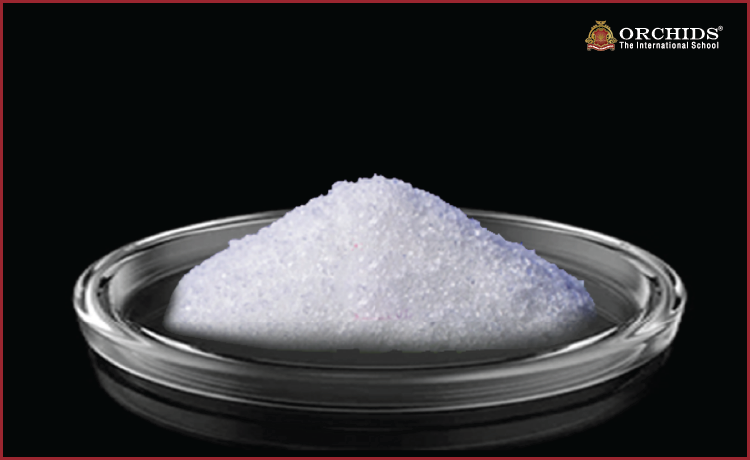
Ammonium acetate can act as both a weak acid and a weak base, so it is a convenient buffer for laboratory purposes. Ammonium acetate is the salt of ammonia (NH₃) and acetic acid (CH₃COOH) in those terms.
And the most searched question is what the Ammonium acetate formula is.
The answer is it's denoted by C₂H₇NO₂.
Structure of Ammonium Acetate - C₂H₇NO₂
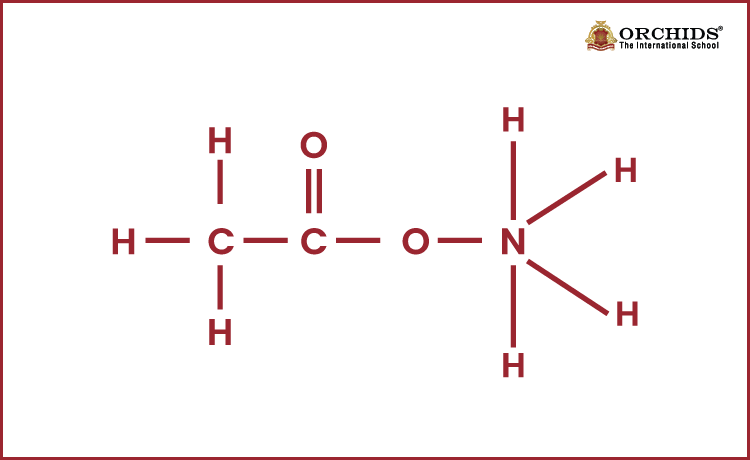
Ammonium acetate is represented by the chemical formula, C₂H₇NO₂. This compound itself has two principal ions:
-
Ammonium ion (NH₄⁺), comes from ammonia.
-
Acetate ion (CH₃COO⁻), comes from acetic acid.
These ions are held together by ionic bonding. The acetate ion has a carboxylate (COO⁻) and a methyl (CH₃), and the ammonium ion is tetrahedral in configuration, surrounded by 4 hydrogen atoms.
Features of Ammonium Acetate
|
Property |
Description |
|
Chemical Formula |
C₂H₇NO₂ |
|
Molar Mass |
77.08 g/mol |
|
Appearance |
White crystalline solid |
|
Solubility |
More soluble in water and alcohol than acetate or acetate |
|
Acidity |
Slight vinegar-like smell |
|
Melting Point |
Approximately 114 °C (decomposes when heated) |
|
pH (1M solution) |
Approximately 7 (neutral) |
Since ammonium acetate decomposes upon heating, rather than just having a boiling point, it is sometimes used as an alternative where volatility is needed.
Production of Ammonium Acetate
Ammonium acetate can be produced via a straightforward acid-base neutralisation reaction:
As an alternative method, the ammonium acetate may also be prepared by mixing ammonium carbonate with acetic acid, or directly reacting ammonia gas with acetic acid under controlled conditions.
This reaction is exothermic (gives off heat); the mixture of ammonium acetate solution in water can be crystallised to a solid.
Ammonium Acetate - Production
The direct, acid-base neutralisation reaction can produce ammonium acetate:
Chemical Reactions with Ammonium Acetate
Ammonium acetate can undergo a variety of reactions, particularly on account of its ionic nature (as a salt which can release NH₄⁺ and CH₃COO⁻):
- Thermal Decomposition
If ammonium acetate is heated, it will undergo thermal decomposition to produce acetamide and water:
-
Reaction with Strong Acids
Ammonium acetate will produce acetic acid if mixed with HCl or any other strong acid. -
Reaction with Strong Bases
Ammonium acetate can generate ammonia when treated with a strong base such as NaOH. -
Buffer Action
Ammonium acetate acts as a buffer solution and works well to maintain pH when small amounts of acid or base are added.
Applications of Ammonium Acetate
There are many applications of ammonium acetate because it is a buffer and is soluble:
-
Used as a reagent or an ingredient in pharmaceutical formulations. It is also used in some cough syrups and electrolyte solutions.
-
Approved for use in small amounts as a food additive or acidity regulator (E no. E264).
-
Ammonium acetate is used by laboratories that perform soil analyses, especially those that involve extractions of cations (potassium or calcium).
-
It is also occasionally used in organic synthesis as the source of nitrogen in reactions requiring a mild nitrogen source.
Health Risks and Safety Precautions while Handling Ammonium Acetate
While ammonium acetate is generally regarded as safe in small amounts:
-
Dust or vapours may cause mild irritation of the respiratory tract.
-
Some skin irritation or reddening may occur after handling ammonium acetate.
Safety Precautions:
-
Always wear gloves and eye protection when using ammonium acetate.
-
Use ammonium acetate only in well-ventilated and/or fume hood areas.
Tricks to Remember Ammonium Acetate
-
Double A means Ammonium plus Acetate
-
Heating changes it to acetamide and water
-
Just like ice turns to water, it quietly shifts
-
Works as a pH balancer in lab setups
-
Always keeps reactions stable and calm
-
Imagine snow forming in a beaker
As we learned, ammonium acetate is significant, more than just a lab salt. Ammonium Acetate helps stabilise a solution during research and preserves food in the market and testing soils for agriculture. Ammonium acetate is a versatile compound. With appropriate use and safety, ammonium acetate continues to contribute to a large range of scientific and industrial uses.
Frequently Asked Questions on Ammonium Acetate (C₂H₇NO₂)
1. What are the benefits of ammonium acetate?
Ammonium acetate is quite handy in labs; it works as a buffer to keep pH levels stable. It’s also used in making medicines and helps in chemical analysis.
2. What happens when ammonium acetate is heated?
When you heat ammonium acetate, it breaks down into acetamide and water vapour. It’s a simple reaction that’s often used in organic chemistry experiments.
3. How do you purify ammonium acetate?
To purify ammonium acetate, scientists usually dissolve it in water and then let it slowly form clean crystals. This helps remove unwanted impurities.
4. What are the uses of strong ammonium acetate?
Strong solutions of ammonium acetate are often used in labs for things like protein testing and chromatography. They help create the right environment for these tests.
5. Is ammonium acetate safe to handle in a lab?
It’s generally safe if you use it properly, but like most chemicals, it should be handled with gloves and care to avoid skin or eye irritation.
6. What is the formula of ammonium acetate?
The formula of ammonium acetate is CH₃COONH₄, showing it is made of an ammonium ion (NH₄⁺) and an acetate ion (CH₃COO⁻).
7. Is ammonium acetate an acid or a base?
Ammonium acetate is neutral in nature because it is the salt of a weak acid (acetic acid) and a weak base (ammonium hydroxide).
8. How to make ammonium acetate?
Ammonium acetate can be made by reacting acetic acid with ammonia, which produces a solid salt that is highly soluble in water.
Science isn't just a subject, it's the way of seeing the world. Curious how Orchids The International School teaches it that way? Talk to our admissions team.
Admissions Open for 2026-27
What type of concept pages would you prefer?
CBSE Schools In Popular Cities
- CBSE Schools in Bangalore
- CBSE Schools in Mumbai
- CBSE Schools in Pune
- CBSE Schools in Hyderabad
- CBSE Schools in Chennai
- CBSE Schools in Gurgaon
- CBSE Schools in Kolkata
- CBSE Schools in Indore
- CBSE Schools in Sonipat
- CBSE Schools in Delhi
- CBSE Schools in Rohtak
- CBSE Schools in Bhopal
- CBSE Schools in Aurangabad
- CBSE Schools in Jabalpur
- CBSE Schools in Jaipur
- CBSE Schools in Jodhpur
- CBSE Schools in Nagpur
- CBSE Schools in Ahmednagar
- CBSE School In Tumkur











Orchids The International School is one of India's leading chains of CBSE and ICSE schools, with 110+ schools across the country.