

Bond Energy
Bond energy helps us understand how much energy is required to break a chemical bond and why certain reactions release or absorb energy.
Have you ever wondered why some molecules are stable while others are highly reactive? The secret often lies in the strength of the bonds holding the atoms together. This is where bond energy comes in.
This article is to explain bond energy in simple, easy-to-understand terms, highlight its importance, and show how it differs from related concepts like bond dissociation energy.
Table of Contents
- What is Bond Energy?
- Bond Energy vs Bond Dissociation Energy
- Factors That Affect Bond Energy
- Real-Life Examples of Bond Energy
- Applications of Bond Energy
- Quick Tips for Bond Energy Calculations
- Frequently Asked Questions on Bond Energy

What is Bond Energy?
Bond energy, also called average bond enthalpy, measures the strength of a chemical bond.
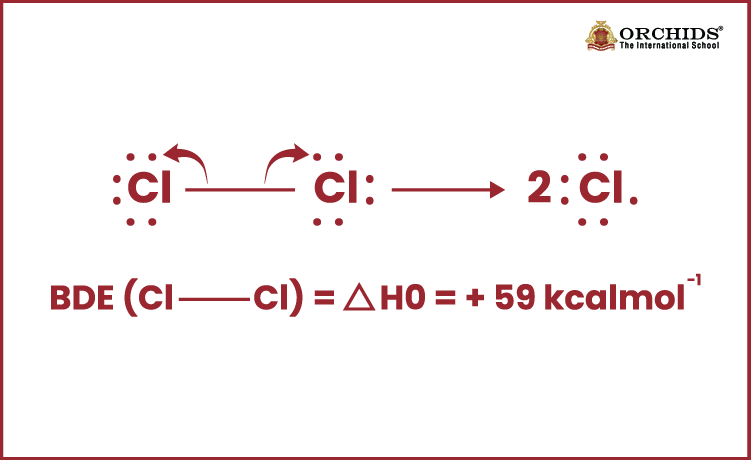
In simpler words, it is the average energy required to break one mole of a specific type of bond in a gaseous molecule.
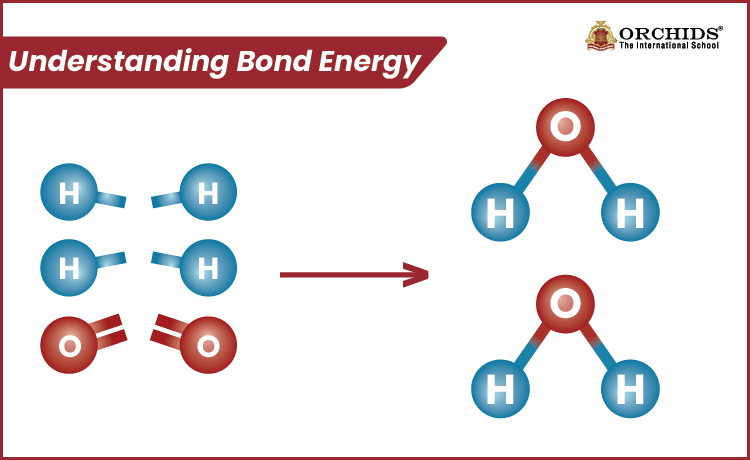
According to the International Union of Pure and Applied Chemistry (IUPAC), bond energy is “the average value obtained from the bond dissociation enthalpies of all chemical bonds of a specific type in a compound.”
For instance, consider methane . Methane has four carbon-hydrogen bonds, and each bond requires slightly different energy to break due to changes in the molecular environment as the molecule is progressively broken down:
The stepwise bond dissociation of methane ( ) can be represented as:
The bond energy of the C–H bond in methane is calculated as the average of all four bond dissociation energies:
This shows that bond energy gives an average measure of bond strength across all similar bonds in a molecule.
Let's learn what Bond Energy and Molecular Stability relate!!
Bond energy is directly linked to how stable a molecule is. The higher the bond energy, the stronger the bond, and the more stable the molecule.
For example, the nitrogen triple bond in
It is extremely strong, with a bond energy of 945 kJ/mol, making nitrogen molecules very stable and relatively unreactive.
On the other hand, weaker bonds, like the H–H bond in hydrogen (436 kJ/mol), break more easily and can participate in reactions more readily.
Breaking a high-energy bond consumes more energy, while forming a strong bond releases energy, creating the energetic balance in chemical reactions. Understanding bond energy also explains why some reactions are exothermic (release energy) and others are endothermic (absorb energy).
Many people confuse bond energy with bond dissociation energy (BDE), but they are subtly different.
Let's Discuss!!
Bond Energy vs Bond Dissociation Energy
-
Bond Dissociation Energy (BDE) refers to the energy required to break a specific bond in a molecule via homolytic cleavage, producing free radicals. This energy is measured for a particular bond in a specific molecule and depends on conditions like temperature.
-
Bond Energy is the average of all bond dissociation energies for a particular type of bond in a molecule. It provides a broader perspective rather than focusing on a single bond.
Example – Hydrogen-Oxygen Bond in Water ( )
Breaking one O–H bond in water:
To calculate the average bond energy of O–H bonds in water:
This difference shows that bond dissociation energy focuses on a single bond, while bond energy gives the average across all similar bonds in the molecule.
Factors That Affect Bond Energy
Several factors influence bond energy:
-
It depends upon the Bond Type; that is, single bonds are weaker than double bonds, which are weaker than triple bonds.
-
The Bond Length is major as Shorter bonds tend to be stronger and require more energy to break.
-
Electronegativity Difference is the main factor on which bond energy majorly relies; that is, Bonds between highly electronegative atoms tend to be stronger due to polar attraction.
-
Resonance, hybridisation, and electron delocalisation can increase bond strength, as seen in aromatic compounds like benzene.
These factors help chemists predict how molecules behave in chemical reactions and design stable compounds for practical use.
Real-Life Examples of Bond Energy
Bond energy can be observed in simple molecules:
-
Hydrogen ( ) – H–H: 436 kJ/mol
-
Oxygen ( ) – O=O: 498 kJ/mol
-
Nitrogen ( ) – N≡N: 945 kJ/mol
-
Methane ( ) – C–H: 412 kJ/mol
These examples highlight that multiple bonds (double, triple) are much stronger than single bonds, contributing to molecular stability.
Applications of Bond Energy
Bond energy is applied in many areas of chemistry and beyond:
-
It serves well in thermodynamics perspect as it is used to calculate the enthalpy change (ΔH\Delta HΔH) of reactions.
-
Strong bond energies explain why materials like diamond are so hard and durable and is beneficial in material Science sector.
-
It helps in understanding the breakdown of pollutants and greenhouse gases in the atmosphere and maintaining Environmental conditions.
-
It contributes to Energy Research such as fuels are studied in terms of bond energies to maximise energy release.
Quick Tips for Bond Energy Calculations
1. Stepwise Approach includes breaking bonds one at a time and noting each bond’s energy, like peeling layers of an onion.
2. Sum all bond dissociation energies and divide by the number of identical bonds to get the average.
3. Keep Units Consistent, that is, always use kJ/mol or the same unit throughout to avoid calculation errors.
4. Draw the molecule and label each bond (BDE1, BDE2…) to stay organised.
5. Spot the strongest bond first often dominates stability and reaction energy.
6. For identical bonds, calculate one bond’s energy and multiply if allowed. It saves time!
7. Know the Difference between Average bond energy vs. bond dissociation energy. Check what the question requires.
We have learned that bond energy is a central concept in chemistry, linking molecular structure, stability, and reaction energetics. This knowledge is crucial in research, industry, and even everyday life, from understanding fuel combustion to designing new medicines.
Frequently Asked Questions on Bond Energy
1. What is bond energy?
Bond energy is the average amount of energy required to break one mole of a specific type of chemical bond in a gaseous molecule. It indicates how strong and stable a bond is.
2. What does the bond energy depend on?
Bond energy depends on factors like bond type, bond length, electronegativity difference between atoms, and the molecular environment. Shorter and stronger bonds usually have higher bond energies.
3. Why does bond energy decrease down the group?
As you go down a group in the periodic table, atoms get larger and bond lengths increase. Longer bonds are weaker, so less energy is needed to break them.
4. What is bond energy also known as?
Bond energy is also called average bond enthalpy or bond enthalpy, representing the energy needed to break a bond on average in a molecule.
5. Which bond requires more energy to break?
Generally, triple bonds require more energy to break than double bonds, and double bonds require more energy than single bonds. Stronger bonds are harder to break and more stable.
6. Bond energy examples
For example, the H–H bond in hydrogen has a bond energy of 436 kJ/mol, O=O in oxygen is 498 kJ/mol, and N≡N in nitrogen is 945 kJ/mol. Methane’s C–H bond has about 412 kJ/mol.
Science isn't just a subject, it's the way of seeing the world. Curious how Orchids The International School teaches it that way? Talk to our admissions team.
Admissions Open for 2026-27
What type of concept pages would you prefer?
CBSE Schools In Popular Cities
- CBSE Schools in Bangalore
- CBSE Schools in Mumbai
- CBSE Schools in Pune
- CBSE Schools in Hyderabad
- CBSE Schools in Chennai
- CBSE Schools in Gurgaon
- CBSE Schools in Kolkata
- CBSE Schools in Indore
- CBSE Schools in Sonipat
- CBSE Schools in Delhi
- CBSE Schools in Rohtak
- CBSE Schools in Bhopal
- CBSE Schools in Aurangabad
- CBSE Schools in Jabalpur
- CBSE Schools in Jaipur
- CBSE Schools in Jodhpur
- CBSE Schools in Nagpur
- CBSE Schools in Ahmednagar
- CBSE School In Tumkur











Orchids The International School is one of India's leading chains of CBSE and ICSE schools, with 110+ schools across the country.